


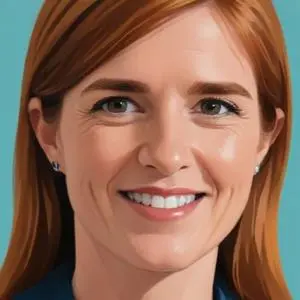
An Irish-American journalist, academic, and diplomat who served as the 28th United States Ambassador to the United Nations, known for her humanitarian work and advocacy for human rights.
Samantha Power is a renowned American journalist, diplomat, and government official, best known for her unwavering commitment to promoting human rights and preventing genocide around the world. As the 28th United States Ambassador to the United Nations (2013-2017) and currently serving as the Administrator of the United States Agency for International Development (USAID), Power has been a driving force behind some of the most significant international humanitarian efforts of our time.
Power's journey began as a war correspondent covering the Yugoslav Wars, where she witnessed firsthand the devastating effects of ethnic cleansing and genocide. This experience instilled in her a deep sense of responsibility to speak out against human rights abuses and to advocate for the protection of vulnerable populations.
Her subsequent roles, including Founding Executive Director of the Carr Center for Human Rights Policy at Harvard Kennedy School and Senior Adviser to Senator Barack Obama, further solidified her reputation as a champion of human rights and international diplomacy.
Power's work is deeply rooted in her philosophical belief that the international community has a moral obligation to prevent genocide and protect human rights. Her Pulitzer Prize-winning book, A Problem from Hell: America and the Age of Genocide (2003), is a seminal work that examines the U.S. foreign policy response to genocide and challenges the notion that the United States is powerless to prevent such atrocities.
Power's commitment to human rights and international cooperation has been recognized globally, earning her numerous awards and accolades, including the National Endowment for Democracy's Democracy Service Medal (2012) and the Henry A. Kissinger Prize (2016).
Power's tireless efforts have contributed significantly to shaping modern international relations and human rights discourse. Her work has inspired a new generation of human rights advocates and diplomats, and her unwavering commitment to preventing genocide and promoting human dignity has left an indelible mark on global politics.
Power's advocacy for military intervention in opposition to atrocities abroad has sparked controversy, with some critics arguing that her stance is overly hawkish. However, her unwavering commitment to protecting human rights and preventing genocide has earned her widespread recognition and respect within the international community.
"The United States is not immune from criticism, and we must be willing to listen to the voices of others and to examine our own actions."
These words, spoken during her tenure as U.N. Ambassador, reflect Power's commitment to diplomatic collaboration and her recognition of the importance of international cooperation in promoting human rights and preventing genocide.
Samantha Power's remarkable career serves as a beacon of hope for those who believe in the power of diplomacy and human rights advocacy to shape a more just and peaceful world. Her tireless efforts to prevent genocide, promote human dignity, and strengthen international cooperation have cemented her place as one of the most influential figures in modern international relations.
As the world continues to grapple with humanitarian crises and human rights abuses, Samantha Power's legacy will undoubtedly serve as a guiding force for future generations of diplomats, policymakers, and human rights advocates. Her unwavering commitment to promoting human rights and preventing genocide will continue to inspire and motivate individuals around the world to work towards a more just and peaceful future.
As the Administrator of USAID, Power's focus on addressing the root causes of poverty, inequality, and human suffering will undoubtedly shape the course of international development policy in the years to come. Her leadership will be instrumental in forging stronger partnerships between governments, NGOs, and local communities to tackle some of the world's most pressing humanitarian challenges.
65 Years Old
The first African American to hold the office, he served two terms as President of the United States, earning a Nobel Peace Prize for his efforts to strengthen international diplomacy and cooperation. He's known for his charismatic leadership and commitment to progressive values.
83 Years Old
The 46th President of the United States, currently serving as the leader of the country, known for his efforts in addressing climate change and promoting unity.
61 Years Old
The 24th United States National Security Advisor, serving under President Barack Obama, is a highly influential figure in American foreign policy and international relations, known for shaping global security strategies.
79 Years Old
A highly influential American politician and diplomat who served as Secretary of State and First Lady, known for her advocacy on women's rights and international diplomacy.
Born in 1917
A multitalented artist who made significant contributions to French New Wave cinema, directing iconic films like "Maya" and "Claude Sautet or The Invisible Master".
89 Years Old
The first female US Secretary of State, serving from 1997 to 2001, who played a key role in shaping American foreign policy during the Clinton administration. She's known for her strong diplomatic efforts and advocacy for democracy and human rights.
71 Years Old
The first African American woman to serve as Secretary of State, she played a crucial role in shaping US foreign policy during a tumultuous period, earning her a lasting legacy in international relations.
89 Years Old
The first African American to serve as Secretary of State, he played a crucial role in shaping US foreign policy during the Gulf War and War on Terror. He's also known for his diplomatic efforts and leadership in the military.
