


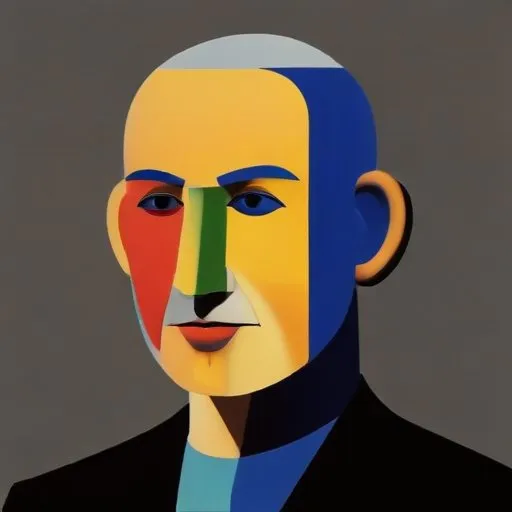
A Polish-Israeli artist who created sculptures and paintings that often depicted Jewish culture and the Holocaust, leaving a lasting impact on the art world. His works serve as a powerful reminder of the past.
Born on February 16, 1923, in Czstochowa, Poland, Willenberg's early life was marked by his family's strong cultural heritage. His father, Perec Willenberg, was a talented painter and visual artist, as well as a teacher at a local Jewish school, while his mother, Maniefa Popow, was a Polish Orthodox Christian who converted to Judaism after their wedding.
In the wake of the Nazi German invasion of Poland on September 6, 1939, Willenberg, then just 16 years old, joined the Polish Army as a volunteer. Shortly thereafter, he was severely wounded in a skirmish with the Red Army near Chem and captured. After three months, he escaped from the hospital and reunited with his family in Rado, now a part of Warsaw.
Willenberg's family, including his mother and two sisters, was eventually forced into the Opatow Ghetto in early 1940. However, as the Nazis began herding Polish Jews into ghettos across the country, Willenberg was deported to Treblinka, where he became a member of the Sonderkommando, a group of Jewish prisoners tasked with operating the gas chambers and crematoria.
On August 2, 1943, Willenberg participated in the Sonderkommando's planned revolt, which resulted in the escape of approximately 300 prisoners. He was one of the fortunate few who managed to survive the war, eventually making his way to Warsaw, where he took part in the Warsaw Uprising before the war's end.
After the war, Willenberg emigrated to Israel, where he dedicated his life to art and writing. He became a prolific sculptor and painter, drawing inspiration from his experiences during the Holocaust. His memoir, Revolt in Treblinka, was published between 1986 and 1991 in Hebrew, Polish, and English, providing a firsthand account of the horrors he witnessed and the bravery he exhibited during the war.
Willenberg received Poland's highest orders, including the Virtuti Militari and the Commander's Cross of the Order of Merit, awarded by President Lech Kaczynski in recognition of his heroic actions during the war.
At the time of his passing on February 19, 2016, Samuel Willenberg was the last surviving participant of the August 1943 Treblinka prisoners' revolt. His remarkable story serves as a testament to the resilience of the human spirit and a poignant reminder of the atrocities committed during the Holocaust.
Samuel Willenberg's extraordinary life serves as a powerful testament to the human capacity for courage, resilience, and creativity in the face of unimaginable adversity. Through his art, writing, and unwavering dedication to sharing his story, Willenberg has left an indelible mark on our collective understanding of the Holocaust and its survivors.
Born in 1913
A Belarusian-born Israeli politician who served as Prime Minister of Israel and was awarded the Nobel Peace Prize for his efforts to establish a peace treaty with Egypt. He's known for his strong leadership and commitment to Israeli security.
Born in 1922
A renowned Israeli leader and peacemaker who played a crucial role in shaping the country's history and was awarded the Nobel Prize for his efforts towards peace in the Middle East.
Born in 1923
A Nobel Peace Prize winner who served as Israel's President and Prime Minister, known for his efforts to bring peace to the Middle East through diplomatic negotiations.
