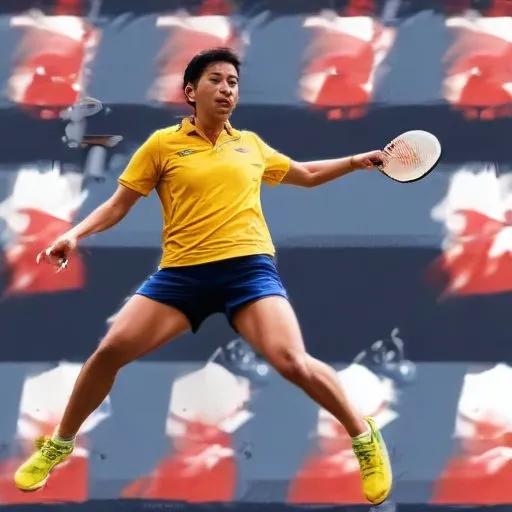
Saw Swee Leong: The Illustrious Malaysian Badminton Player
The Thomas Cup Legacy
Saw Swee Leong, a Malaysian badminton player of unparalleled prowess, is renowned for his pivotal role in supporting the Malaysian National Team in the prestigious Thomas Cup competitions. Specifically, his valiant efforts in the 1976 Thomas Cup, where the team reached the finals, albeit ultimately succumbing to Indonesia with a 9-0 defeat, cemented his status as a national hero.
Career Highlights and Major Works
Throughout his illustrious career, Saw Swee Leong's dedication to the sport was exemplified in his appearances in multiple major tournaments. Notably, in the 1980 World Cup, he participated in the men's singles event, where he was eventually defeated in the opening match by Syed Modi of India. Furthermore, in the 1982 Thomas Cup, the Malaysian team, with Saw Swee Leong as a key member, achieved a commendable fifth-place finish, ultimately being eliminated by England in the quarterfinals with a 5-4 score.
Sporting Achievements and Career Milestones
- Participated in the 1976 Thomas Cup, where the Malaysian team reached the finals
- Competed in the men's singles event at the 1980 World Cup
- Represented Malaysia in the 1982 Thomas Cup, contributing to the team's fifth-place finish
Personal Milestones and Key Life Events
Born on July 16, 1955, in Penang, Malaysia, Saw Swee Leong's early life was marked by an unwavering passion for badminton. As he grew in stature, his commitment to the sport only intensified, ultimately propelling him to the pinnacle of international badminton.
Historical Context and Legacy
Saw Swee Leong's contribution to Malaysian badminton is deeply embedded in the country's sporting history. His participation in the Thomas Cup competitions signifies a bygone era, where Malaysian badminton players vied for international recognition. As a pioneering figure, Saw Swee Leong's achievements serve as an inspiration to subsequent generations of Malaysian badminton players, perpetuating the nation's rich badminton heritage.
Influence on Modern Society
The impact of Saw Swee Leong's accomplishments extends beyond the realm of sports, permeating Malaysian society as a whole. His dedication, perseverance, and sportsmanship have instilled a sense of national pride, fostering a culture that values excellence and teamwork. Moreover, his legacy has contributed to the growth of badminton as a popular recreational activity in Malaysia, promoting a healthy and active lifestyle among the populace.
Comparative Analysis with Contemporaries
When juxtaposed with his contemporaries, Saw Swee Leong's achievements are all the more remarkable. His ability to hold his own against formidable opponents, such as Syed Modi, demonstrates his exceptional skill and tenacity. Furthermore, his team's performance in the Thomas Cup competitions, particularly in 1976, underscores the collective prowess of the Malaysian badminton team during that era.
FAQ
What was Saw Swee Leongs badminton career like?
Saw Swee Leong was a Malaysian badminton player who competed at the international level from the 1960s to the 1970s. He won several national and international titles, including the Malaysian Open and the Southeast Asian Games.
What were Saw Swee Leongs most notable badminton achievements?
Saw Swee Leong won three consecutive Malaysian Open titles from 1969 to 1971, and was a member of the Malaysian team that won the Southeast Asian Games in 1969.
How did Saw Swee Leong contribute to Malaysian badminton?
Saw Swee Leong helped to establish Malaysia as a force in international badminton, paving the way for future generations of Malaysian players. He is remembered as one of the pioneers of Malaysian badminton.
What is Saw Swee Leongs legacy in Malaysian badminton?
Saw Swee Leong is celebrated as a badminton legend in Malaysia, known for his skill, sportsmanship, and dedication to the sport. He has been inducted into the Malaysian Sports Hall of Fame.
How has Saw Swee Leongs badminton career been recognized?
Saw Swee Leong has been recognized for his contributions to badminton, including being awarded the Ahli Mangku Negara (AMN) by the Malaysian government in 1971.