


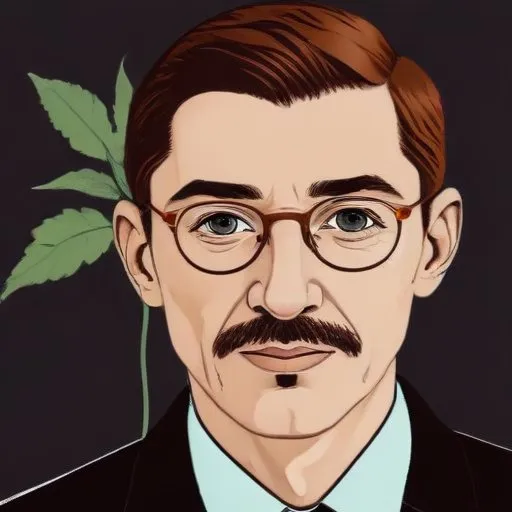
French botanist and mycologist who classified and described numerous plant and fungi species, making significant contributions to the field of botany.
Sébastien Vaillant, a French botanist, left an indelible mark on the world of botany and medicine in the 17th century. He is renowned for his meticulous documentation of plant species, particularly in and around Paris, and his innovative approach to botany, which earned him the position of Director of the Royal Garden.
Vaillant was born on May 26, 1669, in Vigny, Val d'Oise, France. His fascination with nature began at a tender age, with his parents nurturing his interest by allowing him to collect and transplant plants in their garden. Vaillant's love for botany only grew stronger as he pursued his education, studying medicine and surgery at the hospital in Pontoise, where he was exposed to the concept of botany as an integral part of medical studies.
Vaillant's remarkable talent caught the attention of Joseph Pitton de Tournefort, a prominent botanist, who took him under his wing as a student. Vaillant's expertise was instrumental in the creation of Tournefort's seminal work, Histoire des plantes qui naissent aux environs de Paris (History of the plants that are born around Paris), published in 1698. This collaboration propelled Vaillant into the spotlight, and he soon became the protégé of Guy-Crescent Fagon, the King's physician and botanist.
As Director of the Royal Garden, Vaillant was granted unlimited access to the garden's vast collections. He dedicated himself to the study and documentation of plant species, significantly expanding the garden's collections. Vaillant's work went beyond the confines of Paris, as he collaborated with botanists from the colonies, amassing a vast wealth of knowledge on plant species from around the world.
Vaillant's contributions to botany have had a lasting impact on the field. His meticulous documentation and classification of plant species paved the way for future generations of botanists. His work in the Royal Garden helped establish it as a hub for botanical research, and his legacy continues to inspire botanists and naturalists to this day.
Vaillant's work embodied the Renaissance spirit of curiosity and exploration. He believed in the importance of meticulous observation and documentation, laying the groundwork for future scientific discoveries. His approach to botany was holistic, recognizing the interconnectedness of plants and their role in the natural world.
Vaillant's contributions to botany have had a lasting impact on modern society. His work laid the foundation for advancements in fields such as medicine, agriculture, and conservation. His legacy continues to inspire new generations of botanists, naturalists, and environmentalists, emphasizing the importance of preserving and protecting our natural world.
Born in 1744
A French soldier, biologist, and academic who developed a theory of inheritance of acquired characteristics, proposing that organisms adapt to their environment and pass on those traits to their offspring.
Born in 1748
French botanist and author who developed a system of plant classification still used today, and wrote influential books on botany.
