


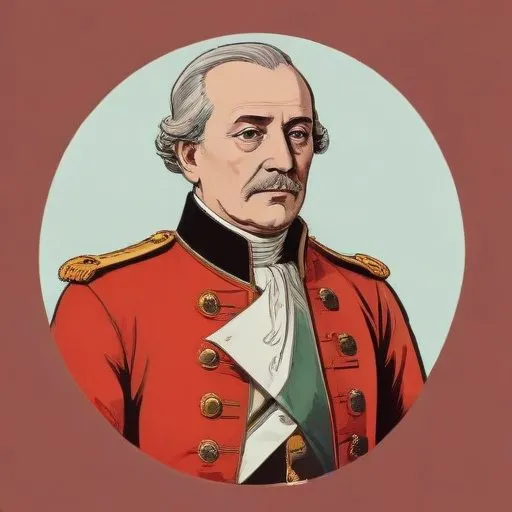
A 17th-century Dutch naval commander who led several expeditions to the Indian Ocean and the Spice Islands, known for his bravery and strategic skills in battle. He played a significant role in the Dutch East India Company's expansion and colonization efforts.
Sebald de Weert, a Flemish captain and vice-admiral of the Dutch East India Company, is most widely remembered for his remarkable achievement of accurately plotting the Falkland Islands in 1600. This significant discovery marked a major milestone in the history of exploration and navigation, cementing de Weert's place as a prominent figure in the annals of maritime history.
Born on May 2, 1567, in Antwerp, Sebald de Weert was the sixth of 17 children to Johannes Sweerts de Weert and Clara Wonderer. The family's frequent relocations, driven by the need to escape persecution and tyranny, took them from Antwerp to Cologne, Amsterdam, and eventually Middelburg. It was in Amsterdam that de Weert began his career as a ship's navigator with the Dutch East India Company (VOC), gradually working his way up to vice-admiral.
In 1598, de Weert was part of a voyage of five ships that set out from Rotterdam, bound for the Moluccas in the Dutch East Indies. The expedition, financed by Pieter van den Hagen and Johan van der Veken, aimed to navigate the treacherous Straits of Magellan in South America and then turn northwest towards Asia. De Weert captained the ship Blijde Boodschap (Good Tiding), also known as Vliegend Hart (Flying Heart) prior to the voyage.
On January 24, 1600, de Weert's expedition reached the Falkland Islands, which they charted and named "Sebald Islands" in honor of their captain. De Weert's meticulous mapping of the islands was a significant achievement, as it provided accurate navigational data for future explorers. This discovery not only enhanced de Weert's reputation but also opened up new trade routes for the Dutch East India Company.
Sebald de Weert's accomplishments as a navigator, explorer, and cartographer have left an indelible mark on the history of maritime exploration. His accurate plotting of the Falkland Islands has inspired generations of sailors, cartographers, and explorers. De Weert's legacy serves as a testament to the power of human curiosity, perseverance, and innovation.
Sebald de Weert's remarkable life and achievements continue to inspire and captivate historians, explorers, and enthusiasts alike, cementing his place as one of the most notable figures in the history of maritime exploration.
Born in 1565
Led the first Dutch expedition to Indonesia, establishing a trade route that brought wealth and power to the Netherlands. He is credited with opening up the Spice Islands to European trade.
Born in 1587
Founded the Dutch East India Company's headquarters in Batavia, Java, and played a crucial role in establishing the Dutch colonial empire in Indonesia. He's infamous for his brutal suppression of native populations and rival trading companies.
