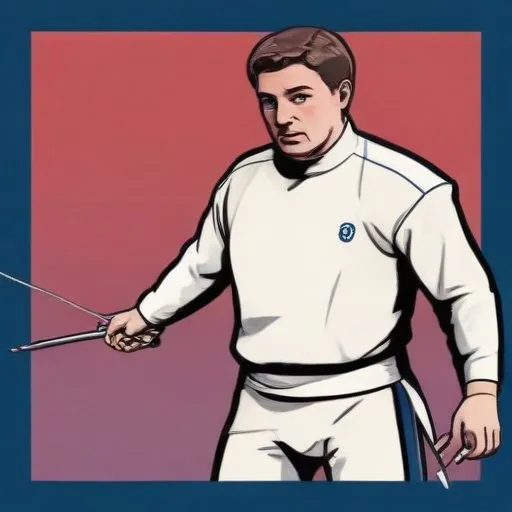
Sergey Sharikov: The Fencing Maestro
A Legacy of Gold
Sergey Sharikov, a Russian Olympic champion, left an indelible mark on the world of fencing. With a staggering collection of four Olympic medals, including two golds, a silver, and a bronze, Sharikov cemented his position as one of the greatest sabre fencers of all time.
Early Life and Fencing Roots
Born on June 18, 1974, in Moscow, Russia, Sharikov was introduced to fencing at the tender age of 12. Under the guidance of his mentor, David Tyshler, a renowned sabre fencer, Sharikov honed his skills and quickly rose through the ranks. His Jewish heritage and Russian nationality only added to the rich tapestry of his early life.
Fencing Career
Sharikov's fencing career spanned over a decade, during which he dominated the sabre event. He was a mainstay of the Russian national fencing team from 1994 to 2005, earning him the reputation as one of the best sabre fencers in the world. His impressive performance at the World University Games, European Championships, and World Championships solidified his position as a force to be reckoned with.
World University Games
Sharikov's impressive haul at the World University Games included bronze medals in 1997 and 1999, followed by a stunning gold medal at the 2001 Summer Universiade. He was part of the Russian team that clinched the team gold, defeating Hungary with a score of 45-37.
Sharikov's European Championships saw him claim the top spot in 2000, followed by a silver medal in 2002, and a bronze in 2004. His team won gold medals in 2000 and 2004, showcasing their strength and cohesiveness.
In 1994, Sharikov won an individual gold medal at the Junior World Fencing Championships. He followed this up with a team silver medal at the 1995 World Fencing Championships and an individual silver medal at the Fencing World Cup. Sharikov's impressive showing at the World Championships continued, with him securing individual bronze medals in 1998 and 2000, and a team bronze in 1999.
Olympic Glory
Sharikov's Olympic career spanned three Olympiads, during which he won an unprecedented four medals for Russia. At the 1996 Atlanta Games, he competed in both individual and team events, ranking fourth in the world. His Olympic medal tally includes two golds, a silver, and a bronze, making him the most decorated fencer in Russian history.
Sharikov's passing on June 6, 2015, left a void in the fencing community. However, his legacy lives on, inspiring generations of fencers to strive for excellence. His impressive medal count, coupled with his dedication and perseverance, has cemented his place as one of the greatest fencers of all time.
- Won four Olympic medals, including two golds, a silver, and a bronze
- Won individual gold medals at the Junior World Fencing Championships and World University Games
- Part of the Russian team that won gold medals at the European Championships and World Championships
Sharikov's story serves as a beacon of inspiration, reminding us that with hard work, determination, and passion, we can achieve greatness.
FAQ
What is Sergey Sharikovs most notable achievement as a fencer?
Sergey Sharikov is a two-time Olympic champion, winning gold medals in the individual sabre event at the 1992 and 1996 Summer Olympics.
What team has Sergey Sharikov coached?
Sergey Sharikov has coached the Russian national fencing team, leading them to several international titles, including World Championship and European Championship medals.
What is Sergey Sharikovs career in fencing like?
Sergey Sharikov has had a decorated career in fencing, winning numerous international titles, including two Olympic gold medals, three World Championship titles, and five European Championship titles.
What is Sergey Sharikovs coaching style?
Sergey Sharikov is known for his attention to detail and emphasis on technical skill. He is also praised for his ability to motivate and inspire his athletes.
What awards has Sergey Sharikov won?
Sergey Sharikov has won several awards for his contributions to fencing, including the Order of Honour and the Order of Friendship, both awarded by the Russian government.