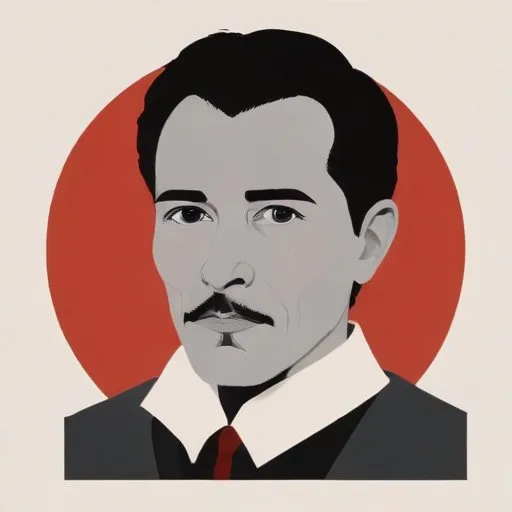
Sergio Badilla Castillo: The Poetic Visionary of Transrealism
Founding Father of Poetic Transrealism
Sergio Badilla Castillo is renowned for being the founder of poetic transrealism, a literary movement that has captivated readers worldwide with its unique blend of reality and fantasy. This Chilean poet's work has been widely acclaimed for its innovative style, which seamlessly merges the tangible with the intangible, creating a distinctive narrative voice.
Early Life and Influences
Born on November 30, 1947, in Valparaiso, Chile, Badilla Castillo's early life was marked by a sense of wanderlust, courtesy of his sailor father. This innate desire for exploration would later influence his writing, as he drew inspiration from his travels across Europe, North Africa, and the Middle East. During his 20-year sojourn in Scandinavia, he was exposed to the works of Finnish poets like
Edith Södergran, Elmer Diktonius, and Paavo Haavikko, which greatly shaped his writing style.
Education and Career
Badilla Castillo graduated in journalism from the University of Chile in 1972 and later obtained a degree in Methodology of Social Anthropology from Stockholm University. His professional trajectory has been marked by stints as a culture journalist at The Swedish Radio Broadcasting Co. and as a translator of Scandinavian, British, and American poetry.
Major Works and Literary Contributions
Badilla Castillo's literary oeuvre is characterized by its unique blend of Nordic influences and Chilean sensibilities. Some of his notable works include:
- Amid the Cement and the Grass (1973), his debut poetry collection, which set the tone for his transrealist approach.
- Lower from my Branch (1980), a collection of short stories that garnered critical acclaim in Sweden.
- The Dwelling (1981-1987), a trilogy of poetry books that cemented his reputation as a master of poetic transrealism.
Impact and Recognition
Badilla Castillo's contributions to literature have been recognized globally. According to the Massachusetts Institute of Technology's Pantheon 1 project, he ranks 12th among the most notorious public figures of Chile in the world community. He also features among the top four most famous Chilean writers of all time.
Philosophical Contributions and Beliefs
Badilla Castillo's poetry is underpinned by a deep sense of curiosity and a desire to explore the human condition. His work often grapples with the complexities of identity, culture, and the human experience, reflecting his fascination with the intersection of reality and fantasy.
Legacy and Influence
Sergio Badilla Castillo's innovative approach to poetry has inspired a new generation of writers and intellectuals. His unique brand of poetic transrealism has left an indelible mark on Chilean literature, making him one of the most important literary figures of our time.
FAQ
What is Sergio Badilla Castillos most famous work?
Sergio Badilla Castillos most famous work is the poetry collection La Morada del Signo which explores themes of love, identity, and politics.
What language does Sergio Badilla Castillo primarily write in?
Sergio Badilla Castillo primarily writes in Spanish, but he has also been translated into several languages including English and Swedish.
What awards has Sergio Badilla Castillo won for his writing?
Sergio Badilla Castillo has won several awards for his writing, including the Pablo Neruda Ibero-American Poetry Award and the Stockholm Prize for Literature.
How does Sergio Badilla Castillos work reflect his Chilean heritage?
Sergio Badilla Castillos work reflects his Chilean heritage through his exploration of themes such as politics, identity, and cultural heritage.
What is Sergio Badilla Castillos approach to translation?
Sergio Badilla Castillo takes a nuanced approach to translation, seeking to preserve the cultural and linguistic nuances of the original text.