


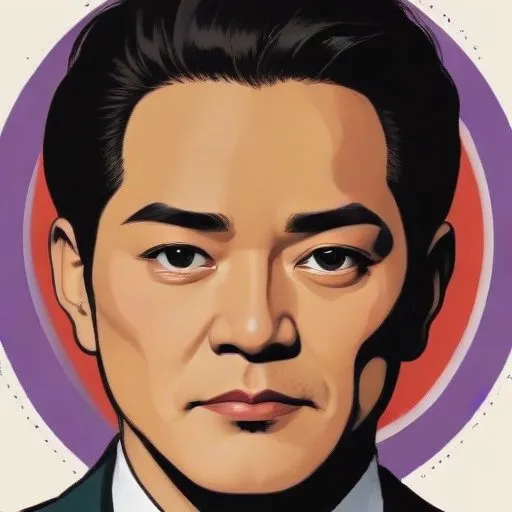
A pioneering Japanese actor and producer who broke cultural barriers in Hollywood during the silent film era, starring in films like "The Cheat" and producing over 80 movies.
Sessue Hayakawa was a Japanese actor and matinee idol who shattered racial barriers in Hollywood during the silent film era of the 1910s and early 1920s. He was the first actor of Asian descent to achieve stardom as a leading man in the United States and Europe, captivating audiences with his brooding good looks and charismatic on-screen presence.
Hayakawa was born on June 10, 1886, in Chiba, Japan. He was enrolled in the Japanese naval academy, but his life took a dramatic turn when he attempted suicide at the age of 18. Fortunately, he survived and went on to attend the University of Chicago, where he studied political economics to fulfill his wealthy parents' desire for him to become a banker.
After graduating, Hayakawa traveled to Los Angeles, intending to board a ship back to Japan. However, he stumbled upon the world of acting in Little Tokyo, impressing Hollywood figures with his talent. He was quickly signed to star in his debut film, The Typhoon (1914), which marked the beginning of his illustrious career.
Hayakawa's breakthrough role came with The Cheat (1915), a film that cemented his status as a forbidden lover and matinee idol. He went on to star in numerous films, earning a staggering $5,000 per week in 1915 and $2 million per year through his own production company from 1918 to 1921. Hayakawa's success was unprecedented, making him one of the highest-paid stars of his time.
Rising anti-Japanese sentiment and business difficulties led Hayakawa to leave Hollywood in 1922. He spent several years performing on Broadway and in Japan and Europe before making his Hollywood comeback in Daughter of the Dragon (1931). This marked a new chapter in his career, as he transitioned from silent films to talkies.
Hayakawa is perhaps best known for his roles in Swiss Family Robinson (1960) and The Bridge on the River Kwai (1957), for which he earned an Academy Award nomination for Best Supporting Actor. With a career spanning over 80 feature films, Hayakawa left an indelible mark on the film industry. He passed away on November 23, 1973, but his legacy continues to inspire generations of actors and filmmakers.
"I never thought of myself as a Japanese actor, but as an actor who happened to be Japanese."
Hayakawa's remarkable journey serves as a testament to his perseverance, talent, and dedication to his craft. As a trailblazer for Asian representation in Hollywood, he paved the way for future generations of actors to follow in his footsteps.
Born in 1920
A legendary Japanese actor who dominated the silver screen with his intense, brooding presence and unparalleled martial arts skills, starring in iconic films like "Seven Samurai" and "Rashomon".
Born in 1910
A visionary filmmaker who crafted visually stunning and emotionally resonant movies that explored humanity, often blending Japanese culture with Western influences. His works continue to inspire generations of filmmakers and artists.
Born in 1920
A Russian-born actor and dancer who originated iconic roles in Broadway's "The King and I" and its film adaptation, winning an Academy Award for his powerful performance.
Born in 1924
A cultural icon who revolutionized acting with his intense, nuanced performances, earning him numerous accolades, including two Oscars. He's synonymous with iconic roles in "A Streetcar Named Desire" and "The Godfather".
95 Years Old
Iconic actor of 1950s Hollywood, symbolizing youthful rebellion and nonconformity through memorable roles in "Rebel Without a Cause," "East of Eden," and "Giant."
Born in 1925
Leading man of 1950s and 60s romantic comedies and dramas, known for his charming on-screen presence and iconic roles in "Giant" and "Pillow Talk".
94 Years Old
A glamorous and talented actress who dazzled audiences with her iconic film roles and dedication to charitable causes.
Born in 1925
A legendary actor, philanthropist, and entrepreneur who founded a food company that donates all profits to charity, starring in iconic films like "Butch Cassidy" and "The Sting".
