


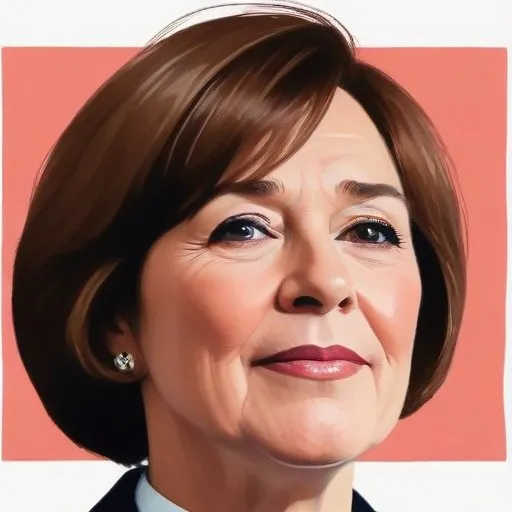
A Canadian journalist and politician who served as Deputy Prime Minister, known for her advocacy on women's rights and social justice issues. She was a prominent figure in Canadian politics during the 1990s.
Sheila Copps, the sixth Deputy Prime Minister of Canada, is known for her unwavering commitment to progressive ideals, her unapologetic stance on social issues, and her unrelenting advocacy for women's rights, marijuana legalization, and environmental protection. This trailblazing politician has left an indelible mark on Canadian politics, inspiring generations to come.
Hailing from a family steeped in politics, Copps' early life was marked by a strong sense of public duty. Her father, Victor Copps, was the mayor of Hamilton, Ontario, while her mother, Geraldine Florence Guthro Copps, served as a Hamilton city councillor. This heritage of public service paved the way for Copps' own entry into politics.
Copps earned a Bachelor of Arts degree in French and English from Kings University College at the University of Western Ontario and pursued further studies at McMaster University and the University of Rouen in France. She began her career as a newspaper journalist with the Hamilton Spectator and the Ottawa Citizen, before entering provincial politics in the 1977 provincial election.
Copps' political career was marked by her unwavering commitment to progressive ideals. She was a vocal advocate for women's rights, minority rights, and environmental protection. Her support for marijuana legalization and her critiques of corporate power earned her a reputation as a fearless and unapologetic champion of social justice.
Copps is married to Austin Thorne, her third husband, and has one daughter, Danelle, from her second marriage. She made history as the first sitting Member of Parliament in Canadian history to give birth while in office.
Copps' electoral career was marked by both triumph and tribulation. She lost her first bid for office in 1977, finishing a mere 14 votes behind incumbent Mike Davison. However, she persevered, eventually winning a seat in the Canadian House of Commons in 1984. She went on to serve as Deputy Prime Minister of Canada from 1993 to 1996 and again from 1996 to 1997.
Copps' legacy extends far beyond her electoral victories and defeats. She has inspired generations of Canadians to engage in politics, particularly women and marginalized communities. Her unwavering commitment to social justice has shaped the Canadian political landscape, making her a beloved figure on the left.
Copps has received numerous awards and honors for her contributions to Canadian politics and society, including the Order of Canada, the highest civilian honor in Canada.
Sheila Copps' unapologetic voice and unwavering commitment to progressive ideals have left an indelible mark on Canadian politics. Her legacy continues to inspire generations of Canadians to engage in the political process and fight for social justice.
92 Years Old
The 20th Prime Minister of Canada, serving from 1993 to 2003, known for his leadership during the Quebec sovereignty movement and his role in shaping Canada's national unity. He implemented policies like the Clarity Act and the National Child Benefit.
45 Years Old
American professional ice hockey player who won two Stanley Cup championships and was a four-time NHL All-Star. Known for his rugged defensive play and physical presence on the ice.
Born in 1919
The charismatic leader who championed Canadian unity and implemented progressive policies, known for his iconic style and influential legacy in shaping modern Canada.
79 Years Old
The first and only female Prime Minister of Canada, serving for a brief four months in 1993, known for her efforts to reform the country's justice system. She was also a strong advocate for women's rights and gender equality.
87 Years Old
The 18th Prime Minister of Canada, a skilled lawyer and politician, led the country from 1984 to 1993, known for negotiating the Canada-US Free Trade Agreement and introducing the Goods and Services Tax.
97 Years Old
The 17th Prime Minister of Canada, serving from 1984 to 1985, is most known for his brief tenure and struggles to maintain party unity. He's also recognized for his prior role as Minister of Justice, where he introduced significant reforms.
87 Years Old
The 16th Prime Minister of Canada, serving from 1979 to 1980, is known for being a Progressive Conservative and leading a brief but significant term in Canadian politics. He's also a journalist and politician who played a key role in shaping Canada's foreign policy.
90 Years Old
A Canadian pilot and politician who served as leader of the New Democratic Party and was a prominent advocate for social justice and human rights. He's known for his progressive policies and charismatic leadership.
