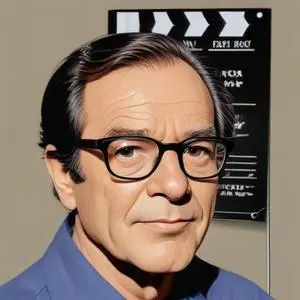
Sidney Lumet: The Master of Gritty Realism
A Life Dedicated to Storytelling
Sidney Lumet, the renowned American film director, is best known for his gritty, realistic, and thought-provoking movies that tackled social injustices, questioned authority, and delved into the human condition. His impressive body of work, spanning over five decades, has left an indelible mark on the world of cinema.
Early Life and Influences
Born on June 25, 1924, in Philadelphia, Pennsylvania, Lumet grew up in the Lower East Side neighborhood of Manhattan, surrounded by the vibrant world of Yiddish theater. His parents, Baruch and Eugenia Lumet, were both veterans of the Yiddish stage, and his father was a multi-talented actor, director, producer, and writer. This rich cultural heritage laid the foundation for Lumet's future in the performing arts.
A Journey into Film and Theater
Lumet's career began in theater, where he studied at the Professional Children's School of New York and Columbia University. He made his Broadway acting debut in the 1935 play "Dead End" and went on to direct several Broadway plays, including "Night of the Auk" (1956), "Caligula" (1960), and "Nowhere to Go But Up" (1962).
In the 1950s, Lumet transitioned to television, directing for prominent shows such as "Goodyear Television Playhouse," "Kraft Television Theatre," and "Playhouse 90." His work in television earned him a Primetime Emmy Award nomination for Outstanding Directing for a Drama Series for NBC's "Sunday Showcase" in 1961.
A Film Career Marked by Controversy and Acclaim
Lumet's film career, which spanned over 40 years, was marked by controversy, critical acclaim, and numerous awards and nominations. His directorial debut, "12 Angry Men" (1957), earned him his first Academy Award nomination for Best Director. This was followed by other notable films, including "A View from the Bridge" (1962), "Long Day's Journey into Night" (1962), "The Pawnbroker" (1964), and "Fail-Safe" (1964).
The 1970s saw Lumet directing some of his most iconic films, such as "Serpico" (1973), "Murder on the Orient Express" (1974), and "Dog Day Afternoon" (1975), for which he received his second Academy Award nomination for Best Director. The decade also saw the release of "Network" (1976), a satirical drama that earned him his third Academy Award nomination for Best Director.
Awards and Honors
Throughout his career, Lumet received numerous awards and honors, including:
- Five Academy Award nominations, including four for Best Director and one for Best Adapted Screenplay
- The Academy Honorary Award in 2004
- A Golden Globe nomination for Best Director for "Dog Day Afternoon" (1975)
- A BAFTA Award nomination for Best Direction for "Dog Day Afternoon" (1975)
- A Primetime Emmy Award nomination for Outstanding Directing for a Drama Series for "Sunday Showcase" (1961)
Legacy and Impact
Sidney Lumet's legacy in the world of cinema is undeniable. His gritty, realistic, and thought-provoking films continue to inspire generations of filmmakers and audiences alike. His influence can be seen in the work of directors such as
Martin Scorsese,
Spike Lee, and
Christopher Nolan, who have all cited Lumet as a source of inspiration.
Lumet's impact extends beyond the cinematic world, as his films have tackled social injustices, corruption, and the human condition, sparking important conversations and raising awareness about critical issues.
Personal Life and Later Years
Lumet married three times, first to actress Rita Gam, then to
Gloria Vanderbilt, and finally to Mary Gimbel. He had two daughters, Jenny Lumet and Amy Lumet, both of whom also work in the film industry.
Lumet continued to direct until his later years, releasing his final film, "Before the Devil Knows You're Dead," in 2007. He passed away on April 9, 2011, leaving behind a legacy of cinematic excellence and a body of work that continues to inspire and provoke.