


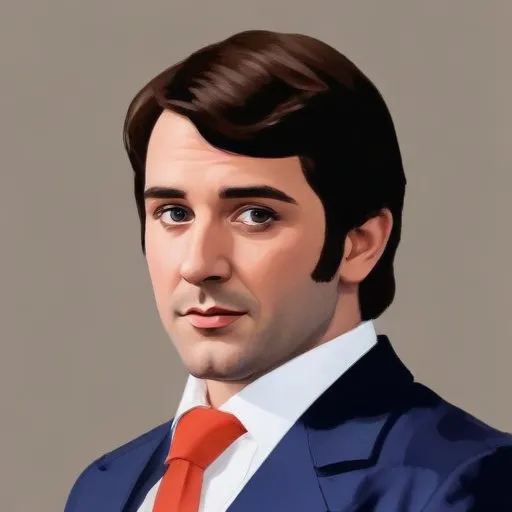
A renowned opera singer and actor of the Victorian era, celebrated for his powerful voice and charismatic stage presence, particularly in Shakespearean roles.
Sims Reeves, born on October 21, 1821, was a renowned English operatic, oratorio, and ballad tenor vocalist who mesmerized audiences during the mid-Victorian era. With his powerful, rich, and brilliant voice, he established himself as a leading figure on the opera and concert stage, interpreting ballads like no other.
Reeves was born in Shooters Hill, Kent, England, to John Reeves, a musician of Yorkshire origin, and his wife, Rosina. He received his earliest musical education from his father, a bass soloist in the Royal Artillery Band, and probably through the bandmaster, George McKenzie. By the age of 14, he was appointed choirmaster of North Cray church and performed organist duties.
Reeves initially studied medicine, but upon gaining his adult voice, which was initially a baritone, he trained under Thomas Simpson Cooke. He later studied piano under Johann Baptist Cramer and learned oboe, bassoon, violin, cello, and other instruments. His earliest appearance was at Newcastle in 1838 or 1839 as the Gipsy boy in Henry Bishop's Guy Mannering, and as Count Rodolfo in La sonnambula, performing baritone parts.
In summer 1843, Reeves studied in Paris under the tenor and pedagogue Marco Bordogni of the Paris Conservatoire. Bordogni was responsible for opening and developing the upper tenor octave of his voice, transforming it into the famous rich and brilliant tone that would captivate audiences worldwide.
Reeves' career spanned over four decades, with notable performances at the Drury Lane theatre, the Grecian Saloon, and the Royal Opera House. He was particularly acclaimed for his interpretations of The Messiah, Judas Maccabeus, and Samson and Delilah. His vocal range and expressiveness earned him critical acclaim and numerous accolades.
In his later years, Reeves dedicated himself to teaching and writing about singing. He authored several books on vocal technique and interpretation, sharing his expertise with aspiring singers. His pedagogical contributions significantly influenced the development of vocal instruction in the late 19th and early 20th centuries.
Reeves was known for his strong convictions about the importance of vocal technique and artistic expression. He emphasized the need for singers to cultivate their own unique voice, rather than emulating others, and to approach performances with sincerity and passion.
Sims Reeves' legacy extends far beyond his own performances. He inspired generations of singers and contributed significantly to the development of vocal pedagogy. His commitment to artistic expression and technical excellence raised the standards of vocal performance, shaping the course of opera and concert music in the Victorian era and beyond.
Reeves' strong personality and uncompromising artistic standards sometimes led to controversies and disagreements with colleagues and critics. However, his unwavering dedication to his craft earned him widespread respect and admiration from audiences and peers alike.
"The voice is an instrument, and like any instrument, it must be tuned and played with skill and art."
Reeves' performances and teachings have influenced numerous famous singers, including Enrico Caruso, who often cited Reeves as a major inspiration. His impact on vocal pedagogy and performance practices continues to be felt in the world of opera and concert music today.
Born in 1843
A renowned 19th-century opera singer celebrated for her powerful, expressive voice and captivating stage presence, earning her the title "Queen of Song."
Born in 1820
A renowned Swedish soprano and actress, known for her captivating voice and performances in opera and theater, earning her the nickname "Swedish Nightingale".
Born in 1873
The most popular operatic tenor of the early 20th century and the first great recording star, known for his powerful and emotive voice that captivated audiences worldwide through his recordings and live performances.
Born in 1921
A renowned tenor and actor, known for his powerful voice and iconic film performances, particularly in the 1940s and 1950s.
