


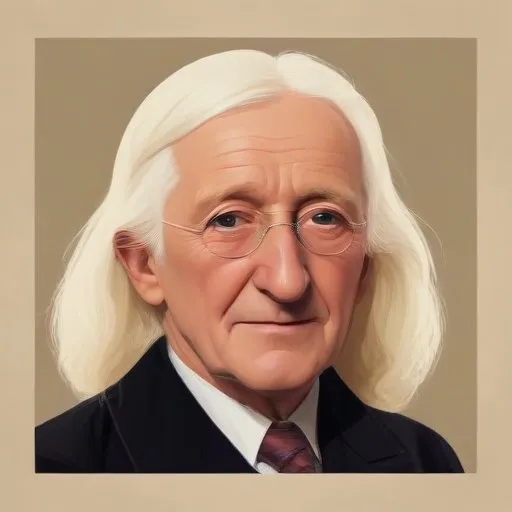
A 16th-century polymath who translated Greek mathematical texts, introducing ancient knowledge to Europe, and made significant contributions to astronomy and mathematics.
Sir Henry Savile is renowned for endowing the Savilian chairs of Astronomy and of Geometry at Oxford University, a testament to his profound impact on the pursuit of knowledge. As a distinguished scholar, mathematician, and translator, Savile's contributions to the academic world continue to resonate to this day.
Born on November 30, 1549, in Over Bradley, Stainland, near Halifax, West Yorkshire, England, Savile was the son of an old county family, the Saviles of Methley. His intellectual curiosity was evident from an early age, and he matriculated at Brasenose College, Oxford in 1561. He later became a Fellow of Merton College in 1565, where he established himself as a Greek scholar and mathematician.
Savile's academic reputation was cemented through his volunteer lectures on Ptolemy's Almagest, demonstrating his mastery of ancient Greek texts. His translation of four books of the Histories of Tacitus, accompanied by a learned commentary on Roman warfare in 1591, further solidified his position as a leading scholar of his time.
In addition to his academic pursuits, Savile played a role in public life. He was appointed Greek tutor to Queen Elizabeth in 1578 and served as a member of the Parliament of England for Bossiney in 1589 and for Dunwich in 1593. His connections with prominent figures such as Lord Burghley and Secretary Walsingham proved instrumental in his appointment as Warden of Merton College in 1585.
Savile's endowment of the Savilian chairs of Astronomy and of Geometry at Oxford University remains his most enduring legacy. These chairs, established in 1619, have fostered a rich tradition of academic excellence, shaping the course of scientific inquiry and discovery. Through his scholarship, teaching, and patronage, Savile has left an indelible mark on the academic landscape.
Sir Henry Savile's unwavering dedication to the pursuit of knowledge and his contributions to the academic world have left a lasting impact on the intellectual landscape. As a testament to his legacy, the Savilian chairs of Astronomy and of Geometry continue to inspire generations of scholars, ensuring his place in the annals of history as a true Renaissance scholar.
Born in 1561
A 16th-17th century Renaissance figure who pioneered the scientific method and empiricism, and served as a prominent government official.
Born in 1577
A 17th-century polymath who wrote extensively on melancholy, anatomy, and literature, producing influential works that shaped the Renaissance era's understanding of human emotions and the natural world.
Born in 1588
A 17th-century philosopher who introduced the concept of social contract, arguing that people voluntarily give up some rights to a sovereign power in exchange for protection and stability. His ideas shaped modern political thought and the nature of government.
Born in 1596
Developed influential philosophical and mathematical concepts, including the famous phrase "I think, therefore I am," and laid the foundation for modern Western philosophy.
Born in 1656
Predicted celestial events, including the return of a comet that bears his name, and made significant contributions to navigation, astronomy, and mathematics.
Born in 1614
A 17th-century polymath who made significant contributions to the fields of astronomy, physics, and mathematics, and is credited with coining the term "microscope".
