


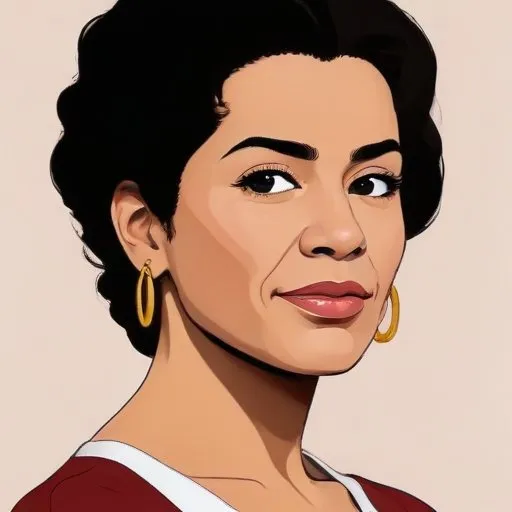
Ecuadorian writer and educator, known for her contributions to children's literature and advocacy for women's rights and social justice. Her works often explored themes of identity, culture, and social inequality.
Sonia Manzano Vela, a renowned Ecuadorian writer and poet, has left an indelible mark on the literary world with her evocative poetry and poignant short stories. Known for her unique voice and style, Manzano has been a driving force in Ecuadorian literature since the 1970s, captivating readers with her exploration of themes such as love, loneliness, and the human condition.
Born on February 27, 1947, in Guayaquil, Ecuador, Manzano's literary journey began in the 1970s, when her poems were featured in the anthology Generación Huracanada, a literary group she was part of. Her first poetry book, El nudo y el trino, was published in 1972, marking the beginning of a prolific writing career that would span over four decades.
Manzano's poetry is characterized by its lyrical quality, introspection, and exploration of the human experience. Her work often delves into themes of love, nostalgia, and the fragility of life. With over 10 poetry books to her credit, including Casi siempre las tardes (1974), La gota en el cráneo (1976), and Full de reinas (1991), Manzano has established herself as one of Ecuador's most celebrated poets.
In addition to her poetry, Manzano has also made significant contributions to Ecuadorian short fiction and novel writing. Her short story collection, Flujo escarlata, won the 1999 Joaquín Gallegos Lara National Fiction Prize. Her novel, Y no abras la ventana todavía, won the first prize in the Bienal de Novela Ecuatoriana contest in 1993. Her latest novel, Solo de vino a piano lento, published in 2013, was hailed by literary critic Antonio Sacoto as the best novel written by an Ecuadorian woman in the 21st century.
Sonia Manzano Vela's contributions to Ecuadorian literature have been immense, inspiring generations of writers and readers alike. Her work has not only enriched the cultural landscape of Ecuador but has also resonated with readers globally, exploring universal themes that transcend borders and languages.
"La literatura es una forma de vivir la vida dos veces, de reflexionar sobre la experiencia y de intentar otorgarle sentido." ("Literature is a way of living life twice, of reflecting on experience and trying to give it meaning.") - Sonia Manzano Vela
