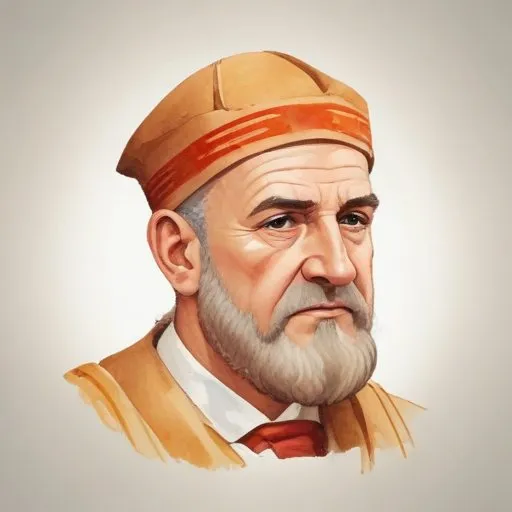
Spyridon Marinatos

Spyridon Marinatos

Spyridon Marinatos was born on November 4th, 1901

Full Name: Spyridon Nikolaou Marinatos
Place of Birth: Lami, Greece
Profession: Archaeologist and Academic
Nationality: Greek
Known For: Akrotiri Excavations
Date of Birth: November 4, 1901
Death Date: September 1, 1974
Academic Career: University of Athens

A renowned Greek archaeologist who unearthed the ancient city of Akrotiri on the island of Santorini, providing valuable insights into Minoan civilization. His excavations and writings have significantly contributed to our understanding of ancient Greek history.

Written by: Fatima Ahmed Fatima Ahmed

Spyridon Marinatos: Unveiling the Secrets of Ancient Greece

Spyridon Marinatos, a renowned Greek archaeologist, is best known for his groundbreaking excavation of the Minoan site of Akrotiri on Santorini, which he conducted between 1967 and 1974. This remarkable discovery has had a profound impact on our understanding of the Bronze Age Minoan and Mycenaean civilizations.

Early Life and Education

Born on November 4, 1901, in Kephallonia, Greece, Marinatos was destined to make a mark in the world of archaeology. He pursued his education at the University of Athens, Humboldt University of Berlin, and the University of Halle, where he was mentored by esteemed archaeologists such as Panagiotis Kavvadias, Christos Tsountas, and Georg Karo.

A Career Marked by Discovery and Controversy

Marinatos joined the Greek Archaeological Service in 1919 and spent much of his early career on the island of Crete, where he excavated several Minoan sites and served as director of the Heraklion Museum. His work led him to formulate the theory that the collapse of Neopalatial Minoan society was the result of the eruption of the volcanic island of Santorini around 1600 BCE.

Marinatos' career was not without controversy. In the 1930s, he was close to the quasi-fascist dictatorship of Ioannis Metaxas, under whom he initiated legislation to restrict the roles of women in Greek archaeology. He later became an enthusiastic supporter of the military junta that ruled Greece between 1967 and 1974, during which time he served as the head of the Greek Archaeological Service.

Major Contributions and Excavations

Awards and Honors

Marinatos received numerous honors in Greece and abroad for his contributions to the field of archaeology. He was recognized for his dedication to uncovering the secrets of ancient Greece and his tireless efforts to promote the country's rich cultural heritage.

Legacy and Impact

Spyridon Marinatos' work has had a profound impact on our understanding of the Bronze Age Minoan and Mycenaean civilizations. His excavation of Akrotiri on Santorini has been hailed as one of the most significant archaeological discoveries of the 20th century. Through his work, Marinatos has left an indelible mark on the field of archaeology, inspiring future generations of scholars and researchers.

Marinatos passed away on October 1, 1974, but his legacy continues to inspire and educate us about the rich cultural heritage of ancient Greece.

Timeline
1901
Born in Lixouri, Greece
Spyridon Marinatos was born on November 4, 1901, in Lixouri, Greece.
1927
Earned Ph.D. in archaeology
Marinatos earned his Ph.D. in archaeology from the University of Athens.
1937
Discovery of the Royal Tombs of Vergina
Marinatos discovered the Royal Tombs of Vergina, one of the most significant archaeological finds in Greece.
1940
Excavation of the Palace of Knossos
Marinatos led the excavation of the Palace of Knossos, uncovering the ancient Minoan civilization.
1974
Died in Athens, Greece
Marinatos passed away on October 1, 1974, in Athens, Greece, leaving behind a legacy in the field of archaeology.
Spyridon Marinatos

Spyridon Marinatos Quiz

What is Spyridon Marinatos most famous for discovering?

Score: 0/5
FAQ
What were Spyridon Marinatoss most significant archaeological discoveries?
Spyridon Marinatoss most significant archaeological discoveries include the uncovering of the ancient city of Akrotiri on the island of Santorini and the excavation of the palace of Knossos in Crete. These discoveries shed new light on Minoan civilization and its culture.
How did Spyridon Marinatoss work impact our understanding of ancient Greek civilization?
Spyridon Marinatoss work had a profound impact on our understanding of ancient Greek civilization, as he uncovered new evidence about the Minoans and their relationships with other ancient cultures. His discoveries helped to reshape our understanding of Bronze Age Greece and its cultural achievements.
What was Spyridon Marinatoss approach to archaeology?
Spyridon Marinatos was known for his meticulous and interdisciplinary approach to archaeology, combining archaeological excavation with historical research and cultural analysis. His approach helped to provide a more nuanced understanding of ancient cultures and their complexities.
How did Spyridon Marinatoss work influence the development of Greek archaeology?
Spyridon Marinatoss work had a significant impact on the development of Greek archaeology, as he helped to establish the field as a distinct academic discipline and promoted the preservation of Greeces cultural heritage. His legacy continues to inspire future generations of archaeologists and scholars.
What is Spyridon Marinatoss legacy in the field of archaeology?
Spyridon Marinatoss legacy in the field of archaeology is that of a pioneering scholar who expanded our understanding of ancient Greek civilization and promoted the importance of cultural heritage preservation. His work continues to inspire and inform archaeological research and discovery.

Related People:

Georgios Mylonas

Born in 1919

The 11th Greek Minister of Culture, a politician who oversaw the preservation and promotion of Greece's rich cultural heritage, including its ancient ruins and historical landmarks.

Evangelos Venizelos

69 Years Old

A prominent Greek politician who served as Deputy Prime Minister and Minister of Foreign Affairs, known for his key role in shaping Greece's economic and foreign policy during a critical period.