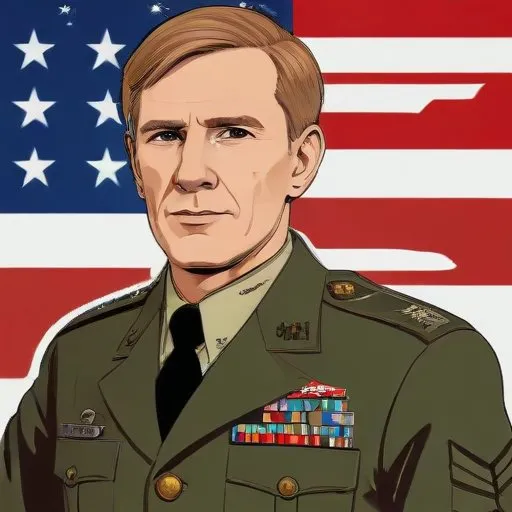
Stanley A. McChrystal: The Finest Warrior and Leader in Combat
A Legacy of Bravery and Controversy
Stanley A. McChrystal is a retired United States Army general, best known for his command of Joint Special Operations Command (JSOC) from 2003 to 2008, where his organization was credited with the death of
Abu Musab al-Zarqawi, the leader of Al-Qaeda in Iraq. This remarkable feat earned him widespread recognition and set the tone for his illustrious yet controversial career.
Early Life and Career
Born on August 14, 1954, on the Fort Leavenworth U.S. Army base in Kansas, McChrystal's early life was shaped by his military upbringing. His father, Herbert J. McChrystal, was a Major General in the Army, and his family relocated frequently, exposing Stanley to diverse cultures and environments. This nomadic lifestyle instilled in him a sense of adaptability and resilience, essential traits for a future military leader.
Rise to Prominence
McChrystal's military career spanned over three decades, during which he held various leadership positions, including Director of the Joint Staff from August 2008 to June 2009. His unflinching dedication and innovative strategies earned him the reputation as a brilliant and fearless commander. In 2009, he was appointed Commander of the International Security Assistance Force (ISAF) and Commander of the United States Forces in Afghanistan (USFOR-A), a position that would test his mettle like never before.
Afghanistan and the Controversy That Followed
As the commander in Afghanistan, McChrystal was known for his candid assessments of the war effort, often speaking truth to power. His unvarnished remarks, though appreciated by some, ruffled the feathers of the Obama administration. A Rolling Stone article in 2010 quoted McChrystal and his aides making disparaging comments about Vice President
Joe Biden and other administration officials, leading to his recall to Washington, D.C. President
Barack Obama ultimately accepted his resignation as commander in Afghanistan, citing the need for a "unity of effort" in the war effort.
Legacy and Later Life
Despite the controversy surrounding his departure from Afghanistan, McChrystal's legacy as a warrior and leader remains untarnished. Former Defense Secretary
Robert Gates described him as "perhaps the finest warrior and leader of men in combat I ever met." Since his retirement in 2010, McChrystal has taught courses in international relations at Yale University as a Senior Fellow of the university's Jackson Institute for Global Affairs.
Philosophical Contributions and Beliefs
Throughout his career, McChrystal has been known for his unconventional thinking and willingness to challenge conventional wisdom. He has advocated for a more agile and adaptive approach to modern warfare, emphasizing the importance of understanding local cultures and building relationships with indigenous forces. His leadership philosophy emphasizes the importance of trust, discipline, and innovation, earning him the respect of his peers and subordinates alike.
Personal Milestones and Key Life Events
- Graduated from West Point in 1976
- Completed Ranger School and Special Forces training
- Held various command positions, including Commander of the 75th Ranger Regiment
- Appointed Director of the Joint Staff in 2008
- Became Commander of ISAF and USFOR-A in 2009
- Resigned as commander in Afghanistan in 2010
- Retired from the Army in 2010
- Began teaching at Yale University in 2010
Impact on Modern Society
Stanley A. McChrystal's legacy extends beyond his military accomplishments. His leadership philosophy and commitment to innovation have inspired a new generation of military leaders and beyond. His willingness to speak truth to power, even in the face of controversy, has made him a respected voice in the national security community.
Inspirational Quotes
- "The greatest mistake a leader can make is to underestimate the power of the people he leads."
- "The most important thing a leader can do is to create a sense of purpose and direction."
- "You can't just sit back and hope for the best. You have to get out and make it happen."
Historical Context and Legacy
Stanley A. McChrystal's remarkable career has left an indelible mark on modern military history. His bravery, innovative spirit, and willingness to challenge the status quo have earned him a place among the most respected military leaders of our time. As we reflect on his legacy, we are reminded that true leaders are not defined by their achievements alone, but by the positive impact they have on those around them.
FAQ
What was Stanley McChrystals role in the US military?
Stanley McChrystal was a four-star general in the United States Army, serving as the Commander of the International Security Assistance Force and Commander of US Forces in Afghanistan from 2009 to 2010.
What controversy led to Stanley McChrystals resignation?
Stanley McChrystal resigned as Commander of US Forces in Afghanistan after making critical comments about the Obama administration in a Rolling Stone article, which was seen as insubordination.
What are some of Stanley McChrystals notable military achievements?
Stanley McChrystal was a highly decorated officer, earning a number of awards and commendations for his service, including the Distinguished Service Medal, the Defense Superior Service Medal, and the Legion of Merit.
What has Stanley McChrystal done since retiring from the military?
Since retiring from the military, Stanley McChrystal has pursued a number of ventures, including writing books, teaching at Yale University, and founding a consulting firm, the McChrystal Group.
What is Stanley McChrystals approach to leadership?
Stanley McChrystals approach to leadership emphasizes the importance of teamwork, adaptability, and innovation, and he has spoken and written extensively on these topics.