


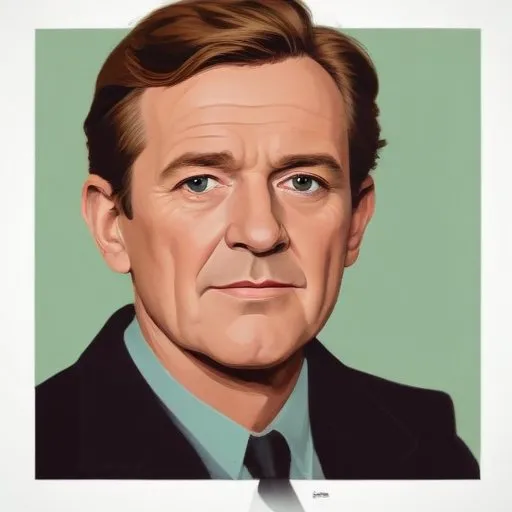
Pioneering filmmaker who co-founded the Australian Broadcasting Corporation and produced numerous documentaries and films, showcasing Australian culture and stories.
Stanley Hawes, a British-born documentary film producer and director, is best known for his pioneering work as the Producer-in-Chief of the Australian National Film Board (later renamed the Commonwealth Film Unit and eventually Film Australia) from 1946 to 1969. During his tenure, he played a pivotal role in shaping the country's documentary filmmaking landscape, leaving an indelible mark on the industry.
Born on January 19, 1905, in London, England, Hawes began his career in 1922 as a committee clerk with the City of Birmingham Corporation. However, his passion for film soon took center stage, leading him to co-found the Birmingham Film Society in 1931. This marked the beginning of his illustrious career in documentary filmmaking.
In 1946, Hawes arrived in Australia from the National Film Board of Canada to take up the position of Producer-in-Chief with the Australian National Film Board. What was initially intended as a temporary assignment became a permanent appointment within a couple of years, marking the start of an extraordinary chapter in Australian documentary filmmaking history.
Hawes' aesthetic preference for the classical documentary style, influenced by his work with John Grierson in the 1930s, is evident in his films such as School in the Mailbox, Flight Plan, and The Queen in Australia. This style, characterized by its objective and factual approach, became a hallmark of his work during his tenure at the Australian National Film Board.
In recognition of his contributions to the film industry, Hawes was awarded an MBE (Member of the Order of the British Empire) in 1970. He also received the Raymond Longford Award from the Australian Film Institute. In 1997, the Australian National Film Board established the Stanley Hawes Award, a prestigious honor recognizing his exceptional support for independent filmmakers.
Hawes' legacy extends beyond his impressive filmography. He played a significant role in shaping the Australian film industry, nurturing talent, and promoting cultural exchange through his work with UNESCO and the National Film Theatre of Australia. His influence can still be felt in the industry today, with many filmmakers drawing inspiration from his classical documentary style.
"The documentary is a weapon, a tool for social change." - Stanley Hawes
Hawes' work during the 1940s to 1960s coincided with a period of significant cultural and social change in Australia. His films, which often focused on everyday life, education, and social issues, provided a unique window into the country's development during this era. Today, his legacy continues to inspire filmmakers, and his contributions to the Australian film industry are still celebrated and recognized.
Hawes' influence on modern society can be seen in the many filmmakers who have been inspired by his classical documentary style. His films, which often tackled complex social issues, also helped to raise awareness and promote cultural understanding. Today, his legacy continues to shape the Australian film industry, with many filmmakers drawing inspiration from his work.
Born in 1916
Australian film director and producer known for his work on documentaries and feature films, often focusing on social and environmental issues.
Born in 1926
Noted for his work behind the camera, directing and photographing films, as well as his acting roles in various movies and TV shows. He's also known for his marriages to actresses Ursula Andress and Bo Derek.
