


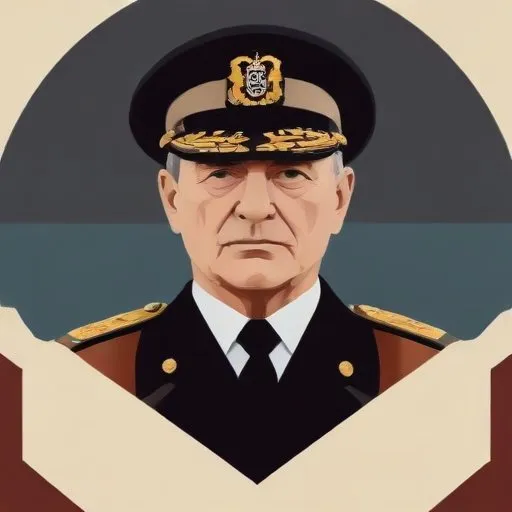
The 12th Director of Central Intelligence led the CIA during a pivotal time in American history, overseeing significant reforms and intelligence gathering operations. He's also known for his academic pursuits and naval career.
Stansfield Turner, a towering figure in American military and intelligence circles, is best known for his distinguished career as a naval officer, culminating in his appointment as Director of Central Intelligence (DCI) under President Jimmy Carter's administration. From 1977 to 1981, Turner oversaw the CIA, implementing reforms and guiding the agency's response to pivotal global events, including the Iranian Revolution and the Soviet-Afghan War.
Turner was born on December 1, 1923, in Highland Park, Illinois, to Oliver Stansfield Turner and Wilhelmina Josephine Wagner. Raised in a Christian Science family, Turner remained a devout member of the Christian Science Church throughout his life. He graduated from Highland Park High School in 1941 and attended Amherst College before joining the United States Naval Reserve in 1943. Turner received an appointment to the United States Naval Academy, graduating in 1947.
Turner's military career spanned over three decades, during which he commanded warships, a carrier group, and NATO's military forces in southern Europe. Notable assignments include serving as President of the Naval War College (1972-1974) and commander of the United States Second Fleet (1974-1975). Turner's distinguished service earned him numerous decorations, including the Navy Distinguished Service Medal, the Legion of Merit, and the Meritorious Service Medal.
As DCI, Turner implemented significant reforms, downsizing the CIA's clandestine arm and emphasizing technical intelligence collection over human intelligence. His tenure was marked by controversy, particularly regarding the agency's response to the Iranian Revolution and the Soviet-Afghan War. Turner's leadership style and decisions have been subject to both praise and criticism, with some lauding his efforts to modernize the CIA and others accusing him of being overly cautious.
After leaving the CIA in 1981, Turner transitioned to the private sector, authoring several books and remaining an influential voice on national security and foreign policy issues. He was a senior research scholar at the University of Maryland's School of Public Policy and continued to criticize subsequent administrations, including the Bush administration's handling of the Iraq War. Turner passed away on January 18, 2018, leaving behind a complex and multifaceted legacy.
Throughout his career, Turner was guided by a strong sense of duty and a commitment to the principles of Christian Science. He believed in the importance of integrity, fairness, and compassion, and his leadership style reflected these values. Turner's approach to intelligence gathering and national security was characterized by a pragmatic, analytical mindset, earning him both admirers and detractors.
Turner's legacy extends beyond his military and intelligence careers. His reforms and decisions as DCI continue to shape the CIA's approach to intelligence gathering and national security. As a vocal critic of subsequent administrations, Turner's opinions and writings have influenced public discourse on foreign policy and national security issues.
"The CIA is not a secret police force. It is an agency designed to provide information to the President and other policymakers."
"Intelligence is not just about collecting secrets; it's about analyzing and interpreting information to inform sound policy decisions."
Turner's published works include:
These publications offer insight into Turner's thoughts on intelligence, national security, and foreign policy, and remain relevant to contemporary discussions on these topics.
Stansfield Turner's complex and multifaceted legacy continues to shape American national security and foreign policy. His reforms, decisions, and writings have left an indelible mark on the CIA and beyond. Turner's commitment to duty, integrity, and compassion serves as a testament to his enduring influence on modern society.
Born in 1924
The 41st President of the United States, a decorated war hero and skilled diplomat, led the country through the end of the Cold War and Gulf War. He's known for his foreign policy expertise and "kinder, gentler nation" vision.
Born in 1911
The charismatic leader who championed conservative policies, helped end the Cold War, and is often credited with restoring American pride and optimism. He's also remembered for his folksy, actor-honed communication style.
Born in 1924
A naval officer turned politician who served as the 39th President of the United States, known for his commitment to human rights and social justice, and awarded the Nobel Peace Prize in 2002.
89 Years Old
The first African American to serve as Secretary of State, he played a crucial role in shaping US foreign policy during the Gulf War and War on Terror. He's also known for his diplomatic efforts and leadership in the military.
94 Years Old
The 13th United States Secretary of Defense, a high-ranking government official, oversaw the US military during the Iraq War and was known for his controversial decisions and quotes. He's infamous for his "known unknowns" phrase.
83 Years Old
The 22nd United States Secretary of Defense, serving from 2006 to 2011, is a highly respected figure in American politics and defense, known for his pragmatic approach to national security and foreign policy. He's also a renowned academic and author, having served as the president of Texas A&M University.
88 Years Old
The 23rd United States Secretary of Defense, a key figure in shaping national security policies and overseeing military operations, known for his leadership during the Iraq and Afghanistan wars.
73 Years Old
A highly decorated four-star general who led the US military efforts in Iraq and Afghanistan, later becoming the head of the CIA, known for his strategic thinking and leadership.
