


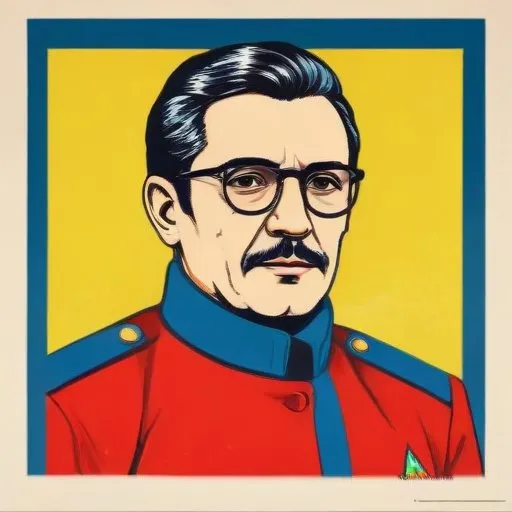
A Ukrainian-Polish engineer and journalist who designed submarines and wrote about technology, making significant contributions to the development of underwater vessels. He's also recognized for his literary works on science and technology.
Stefan Drzewiecki, a Polish scientist, journalist, engineer, and inventor, is renowned for designing and constructing the world's first electric-powered submarine, revolutionizing underwater exploration. This trailblazing innovation, achieved in 1884, cemented his place in history as a pioneer in the field of marine engineering.
Born on July 26, 1844, into a Polish aristocratic family of national patriots, Drzewiecki's upbringing was imbued with a sense of duty and passion for innovation. His grandfather, Józef Drzewiecki, served under generals Kościuszko and Dąbrowski, while his father, Karol Drzewiecki, took part in the November Uprising against Russia.
Drzewiecki's educational pursuits took him to France, where he graduated in mathematics from the École Centrale Paris and received his engineering diploma. At just 19, he returned to Poland to participate in the January Uprising against Russia, showcasing his commitment to his homeland's struggle for independence.
In 1867, Drzewiecki created his first invention, a kilometer counter for horse-drawn carriages, marking the beginning of a prolific career in innovation. Following the fall of the Paris Commune in 1871, he moved to Vienna, where he dedicated himself to inventing, and later, to St. Petersburg, where he worked as a mechanical engineer under the patronage of Grand Duke Konstantin.
Drzewiecki's contributions to aviation and shipbuilding were profound. He developed an instrument that automatically drew on a map the route traveled by a ship at sea, demonstrating his ingenuity in navigation and cartography. His work during the Russo-Turkish War (1877-1878) further showcased his expertise in mechanical engineering.
In 1884, Drzewiecki successfully designed and constructed the world's first electric-powered submarine, a feat that underscored his visionary approach to innovation. This pioneering achievement not only marked a significant milestone in marine engineering but also paved the way for future advancements in underwater exploration.
Drzewiecki's legacy extends beyond his inventions, as he also independently developed the blade element theory (BET), a mathematical process used to determine the behavior of propellers. This fundamental contribution to aeronautics and hydrodynamics has had a lasting impact on various fields of engineering.
Throughout his life, Drzewiecki exemplified a passion for exploration, intellectual pursuits, and innovation. His travels took him across Europe, from France to Russia, and his interactions with prominent figures, such as Grand Duke Konstantin, demonstrate his ability to navigate complex networks of influence and patronage.
Drzewiecki's remarkable life serves as a testament to the power of human ingenuity, creativity, and perseverance. As we reflect on his achievements, we are reminded of the boundless potential that lies within us, waiting to be unleashed.
Stefan Drzewiecki's groundbreaking contributions to marine engineering, aeronautics, and hydrodynamics have left an indelible mark on modern society. His inventions, theories, and discoveries have inspired generations of scientists, engineers, and innovators, shaping the course of human progress.
As we celebrate the life and achievements of this remarkable individual, we honor not only his legacy but also the spirit of curiosity, creativity, and innovation that defines us all.
Born in 1856
A Ukrainian literary icon, celebrated for his poetry and novels that explored themes of social justice, Ukrainian identity, and folk culture. His works are considered a cornerstone of Ukrainian literature.
Born in 1866
A Ukrainian historian, academic, and politician who played a key role in Ukraine's struggle for independence and is considered the father of Ukrainian historiography. He's renowned for his extensive research and writings on Ukrainian history, shaping the country's national identity.
Born in 1842
A Ukrainian musical mastermind who composed and conducted works that showcased his country's rich cultural heritage, and was a pioneer in promoting Ukrainian music and arts.
