


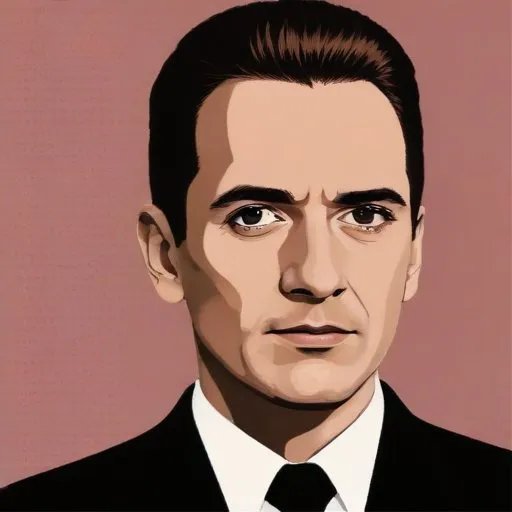
A renowned Polish actor and producer, known for his contributions to the development of Polish theater and cinema, starring in numerous films and plays.
Stefan Jaracz was a Polish actor and theatre producer who left an indelible mark on the country's cultural landscape during the interwar period. As the artistic director of Ateneum Theatre in Warsaw, he revolutionized the Polish theatre scene with his groundbreaking productions, earning the theatre a reputation as a beacon of Poland's new intelligentsia.
Born on December 24, 1883, in Stare ukowice, near Tarnw, Jaracz grew up during the Partitions of Poland. He pursued studies in law, history of art, and literature at the Jagiellonian University of Krakw, but eventually abandoned his academic pursuits to follow his passion for theatre.
Jaracz began his theatre career in Pozna, where he signed a contract, only to be drafted into the Austrian army in 1907. After a year, he settled in d, performing until 1911. His nomadic career took him to Warsaw in the Russian Partition, where he worked in Teatr May and Teatr Polski between 1913 and 1915.
Following Poland's independence in 1918, Jaracz embarked on an energetic career in national and experimental theatre, taking his performances to over ninety cities and towns until 1928. His talents eventually landed him the directorship of Ateneum Theatre in Warsaw, where he reigned from 1930 to 1933.
During his tenure, Jaracz collaborated with other visionaries, including Leon Schiller, to produce avant-garde works that captivated audiences. His productions of Dantons Death by Georg Bchner (1931), The Captain of Kpenick by Carl Zuckmayer (1932), Ladies and Husars by Aleksander Fredro (1932), and The Open House by Micha Baucki (1932) solidified Ateneum Theatre's reputation as a hub for innovative and daring artistic expression.
With the Nazi-Soviet invasion of Poland in 1939, Jaracz's life took a dramatic turn. He became involved with the Catholic underground organization Unia, which opposed the occupation. After the assassination of actor Igo Sym in 1941, Jaracz was arrested, along with other prominent artists, in acts of reprisal.
Imprisoned in Warsaw's Pawiak prison, Jaracz was eventually deported to Auschwitz-Birkenau concentration camp in April 1941. Although he was released, his experiences during this turbulent period left an indelible mark on his life and art.
Stefan Jaracz's contributions to Polish theatre are immeasurable. He championed innovative productions, fostered a sense of national identity, and inspired future generations of artists. His life, marked by both triumph and tragedy, serves as a testament to the power of art to challenge, inspire, and transform.
Jaracz's visionary spirit continues to influence Polish theatre, inspiring new waves of artists to push the boundaries of creative expression.
