


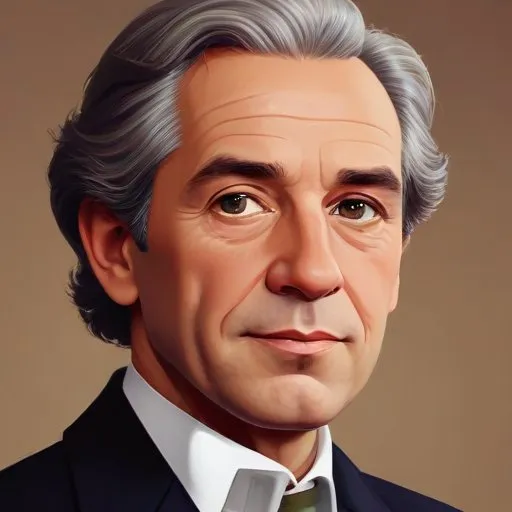
Developed the first practical ultrasonic fuel level sensor, revolutionizing the automotive industry with more accurate and efficient fuel measurement.
Stephen Butterworth, a British physicist, is renowned for inventing the Butterworth filter, a class of electrical circuits that separates electrical signals of different frequencies. This groundbreaking innovation has had a profound impact on the field of electrical engineering, shaping the course of modern technology.
Born on August 11, 1885, in Rochdale, Lancashire, England, Butterworth was the second of four children to Alexander Butterworth, a postman, and Elizabeth Wynn. He pursued his passion for physics at the Victoria University of Manchester, earning a Bachelor of Science degree in physics with first-class honors in 1907, followed by a Master of Science degree in 1908.
Butterworth's academic excellence led him to become a physics lecturer at the Manchester Municipal College of Technology, where he spent 11 years shaping young minds. In 1921, he joined the Admiralty's Research Laboratory, working on classified projects that prohibited publication. Despite this, his contributions to the field of electrical engineering were significant, including the determination of electromagnetic fields around submarine cables and the investigation of underwater explosions.
During World War II, Butterworth played a crucial role in investigating magnetic mines and developing degaussing techniques to protect ships. His outstanding contributions earned him the Order of the British Empire in 1942. After retiring from the Admiralty Research Laboratory in 1945, he passed away on October 28, 1958, at the age of 73.
The Butterworth filter, patented in the 1930s, revolutionized the field of electrical engineering. This innovative design enabled the separation of electrical signals of different frequencies, paving the way for significant advancements in telecommunications, signal processing, and electronics.
The Butterworth filter's influence on modern technology is undeniable. It has been instrumental in the development of radio communication systems, medical equipment, and even space exploration. The filter's ability to separate signals has enabled the creation of secure communication channels, ensuring the integrity of data transmission.
Butterworth's published works include "On the viscosity of metals" (December 1911), showcasing his dedication to advancing the field of physics.
Stephen Butterworth's remarkable life and legacy serve as a testament to the power of innovation and dedication. His pioneering work on the Butterworth filter has left an indelible mark on the world of electrical engineering, shaping the course of modern technology and inspiring future generations of scientists and engineers.
Born in 1871
A pioneer in nuclear physics, he discovered the nucleus of an atom and developed the Rutherford model, revolutionizing our understanding of the atomic structure.
Born in 1885
A pioneer in quantum mechanics, he introduced the concept of wave-particle duality, revolutionizing our understanding of atomic structure. His philosophical approach to science also explored the nature of reality and human understanding.
Born in 1901
A pioneer in quantum mechanics, he formulated the uncertainty principle, which revolutionized our understanding of the atomic world. His groundbreaking work reshaped modern physics.
Born in 1902
A brilliant mind who formulated the Dirac equation, a fundamental concept in quantum mechanics, and predicted the existence of antimatter. His work revolutionized our understanding of the universe.
Born in 1892
A French physicist and Nobel laureate who proposed that particles, such as electrons, can exhibit wave-like behavior, revolutionizing quantum mechanics. His hypothesis led to major breakthroughs in understanding the atomic structure.
