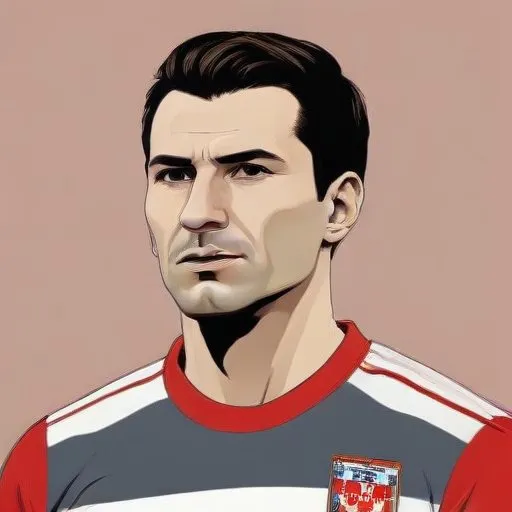
Stjepan Bobek

Stjepan Bobek

Stjepan Bobek was born on December 3rd, 1923

Full Name: Stjepan Bobek
Place of Birth: Zagreb, Kingdom of Yugoslavia (now Croatia)
Nationality: Croatian
Occupation: Footballer, manager
Born: December 3, 1923
Died: August 22, 2010
Teams: Partizan Belgrade, Yugoslavia
Football Position: Attacking midfielder

A Croatian-Serbian footballer and manager who played for Yugoslavia's national team and later coached several clubs, earning recognition for his achievements in the sport. He's a notable figure in Eastern European football history.

Written by: Penelope Wildwood Penelope Wildwood

The Legendary Striker: Stjepan Bobek

Regarded as one of Yugoslavia's greatest players, Stjepan Bobek was a trailblazing football striker and later, a successful manager, leaving an indelible mark on the sport. His exceptional technique, vision, and goalscoring ability earned him a revered status in the world of football.

Early Life and Club Career

Born on 3 December 1923, in Zagreb, Croatia, Bobek's love affair with football began at the tender age of 13, when he started playing for Viktorija, a lower league club. He used his brother's registration papers to join the team, showcasing his determination to pursue his passion. By the time he was 20, Bobek had become the center-forward of Graanski Zagreb.

Rise to Prominence: Partizan and Beyond

In 1946, Bobek joined FK Partizan, where he would spend the next 13 years, etching his name in the club's history books. During his tenure, he played an astonishing 468 games and scored a record 403 goals, making him the club's all-time top scorer. He led Partizan to two Yugoslav League titles and four Yugoslav Cup victories. His exceptional form earned him the top scorer title in the Yugoslav First League twice, in 1945 and 1954.

International Glory

Bobek's impressive performance at the club level earned him a call-up to the Yugoslavia national team. He went on to represent his country 63 times, scoring 38 goals, making him the second-highest scorer in the team's history. He was a key member of the Yugoslav squads that won two Olympic silver medals in 1948 and 1952, and played in two FIFA World Cups in 1950 and 1954.

Managerial Career

After retiring from active football in 1959, Bobek transitioned into coaching, enjoying a successful managerial career. He guided Partizan to Yugoslav national titles and led Panathinaikos to Greek national titles. His expertise and leadership skills earned him recognition as one of the top managers in the region.

Legacy and Impact

In 1995, Partizan honored Bobek by naming him the club's greatest player in history. His incredible achievements on the field and in the dugout have inspired generations of footballers. Bobek's legacy extends beyond his impressive statistics, as he embodied the spirit of Yugoslavian football, showcasing the nation's rich talent and passion for the beautiful game.

Stjepan Bobek's remarkable journey serves as a testament to his dedication, hard work, and love for football. His impressive achievements and lasting impact on the sport have cemented his place as one of the greatest footballers of all time.

Timeline
1923
Born in Zagreb, Croatia
Stjepan Bobek was born on December 3, 1923, in Zagreb, Croatia. He would go on to become a renowned footballer and manager.
1946
Started playing for NK Zagreb
Bobek started his professional football career with NK Zagreb in 1946, playing for the team until 1952.
1952
Joined Partizan Belgrade
Bobek joined Partizan Belgrade in 1952 and played for the team until 1959, winning two Yugoslav First League titles.
1959
Retired from playing
Bobek retired from playing football in 1959, but went on to become a successful manager, managing several teams including Partizan Belgrade.
1994
Inducted into Yugoslav Football Hall of Fame
Bobek was inducted into the Yugoslav Football Hall of Fame in 1994, recognizing his contributions to the sport.
Stjepan Bobek

Stjepan Bobek Quiz

What nationality was Stjepan Bobek?

Score: 0/5
FAQ
What was Stjepan Bobeks most notable footballing achievement?
Stjepan Bobeks most notable footballing achievement was his role in Yugoslavias 1948 Olympic silver medal, during which he scored 4 goals and provided 3 assists. He was praised for his vision, creativity, and clinical finishing ability.
What was Stjepan Bobeks playing style?
Stjepan Bobeks playing style was characterized by its flair, technical skill, and vision. He was known for his ability to control the tempo of the game, create scoring opportunities, and score goals from midfield.
How did Stjepan Bobeks experience in the Yugoslav First League influence his playing career?
Stjepan Bobeks experience in the Yugoslav First League significantly influenced his playing career, providing him with the opportunity to develop his skills, gain exposure, and compete against top-level opponents.
What was Stjepan Bobeks role in Yugoslav football administration?
Stjepan Bobek played a significant role in Yugoslav football administration, serving as a coach, selector, and administrator. He was known for his tactical acumen, developmental expertise, and ability to inspire young players.
What is Stjepan Bobeks legacy in Yugoslav football?
Stjepan Bobeks legacy in Yugoslav football is one of excellence, innovation, and dedication. He remains a celebrated figure in the sport, revered for his playing achievements, coaching expertise, and contributions to the development of Yugoslav football.

Related People:

80 Years Old

A Yugoslav footballer who played as a midfielder and is best known for his skills on the pitch, earning him numerous accolades and a spot in the UEFA Team of the Year.

Davor Ĺ uker

58 Years Old

Croatian striker who played for top European clubs like Real Madrid and Arsenal, scoring crucial goals in major tournaments, including the 1998 World Cup.

Zvonimir Boban

57 Years Old

A former midfielder who played for AC Milan and the Croatian national team, now a popular sports commentator and pundit.

56 Years Old

Former Croatian footballer who played as a defender and won several titles with clubs like Lazio and Middlesbrough, also earning 40 caps for the Croatian national team.