


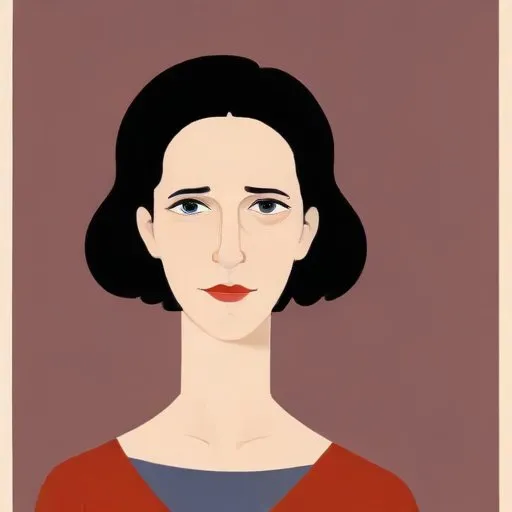
Austrian psychologist who developed the "Rubinstein Test" to measure intelligence and cognitive abilities in children, and made significant contributions to the field of child psychology.
Susanna Rubinstein, a pioneering Austrian psychologist, made history by becoming the first woman to earn a doctorate from the University of Bern in Switzerland. Her groundbreaking achievement in 1874 paved the way for future generations of women in academia, solidifying her place as a trailblazer in the field of psychology.
Born on September 20, 1847, in Czernowitz, Austria (now Chernivtsi, Ukraine), Rubinstein was raised in a family that valued education. Her father, Isak Rubinstein, a banker and parliamentarian, encouraged his children, including Susanna and her three siblings, to pursue their academic interests. Following her mother's early passing, Rubinstein's father arranged for her to receive private lessons, and later, she sat for high school examinations before an academic committee from a boys' high school.
Rubinstein's academic journey took her to the University of Prague, where she studied psychology and German literature in the spring of 1870. She later continued her studies at Leipzig University in 1873. Although denied admission to the doctoral program in Basel, Switzerland, she enrolled at the University of Bern, where she successfully defended her thesis, Über die sensoriellen und sensitiven Sinne (About the sensory and sensitive senses), and earned her Ph.D. in psychology and German literature in 1874.
In 1878, Rubinstein published Psychologisch-Ästhetische Essays (Psychological-Aesthetic Essays), a seminal work that explored the complexities of human emotions. This publication not only showcased her expertise in psychology but also demonstrated her ability to tackle complex subjects, solidifying her position as a prominent figure in the field.
Rubinstein's trailblazing achievements have inspired generations of women to pursue careers in academia, psychology, and beyond. Her work continues to influence contemporary scholars, and her legacy serves as a testament to the importance of ensuring equal access to education and opportunities for all.
Susanna Rubinstein passed away on March 29, 1914, in Würzburg, Germany, leaving behind a rich legacy that continues to inspire and motivate individuals today.
Born in 1856
Pioneering psychoanalyst who developed theories on the subconscious mind, childhood experiences, and the structure of personality, revolutionizing our understanding of human behavior and psychology.
Born in 1870
Developed the concept of individual psychology, focusing on the importance of early childhood experiences and the drive for superiority to overcome feelings of inferiority.
Born in 1875
Developed the concept of collective unconscious and archetypes, and founded analytical psychology, which emphasizes the integration of opposites and the process of individuation.
