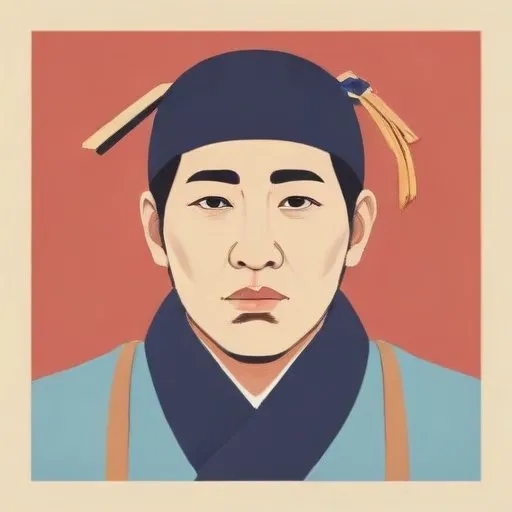
Taejo of Joseon: The Visionary Founder of the Joseon Dynasty
A Legacy of Continuity and Progress
Taejo of Joseon, born Yi Seong-gye in 1335, is revered as the founder and first monarch of the Joseon dynasty, one of the most enduring and influential dynasties in Korean history. He is known for overthrowing the Goryeo dynasty in 1392 and establishing a new era of peace, prosperity, and cultural flourishing that would last for nearly five centuries.
Early Life and Upbringing
Born in the Ssangseong Prefecture, on the frontiers of the Yuan dynasty, Taejo's early life was marked by turmoil and upheaval. His father, Yi Chachun, was an official of Korean ethnicity serving the Mongol-led Yuan dynasty, while his mother, Lady Choe, came from a family originally from Deungju, present-day Anbyon County, North Korea. In 1356, the Yi family defected from the Ssangseong Prefecture to Goryeo, helping Goryeo seize control of the province from its governor Cho Sosaeng.
Path to Power
Taejo's rise to power was marked by strategic alliances, military victories, and a deep understanding of the complexities of the time. He capitalized on the weaknesses of the Goryeo dynasty, which was plagued by internal conflicts, corruption, and the lingering influence of the Mongol Empire. By 1392, Taejo had amassed sufficient power and support to overthrow the Goryeo dynasty and establish the Joseon dynasty, with himself as its first monarch.
Reign and Legacy
Taejo's reign was marked by a focus on continuity and stability. He eschewed radical reforms, instead opting to build upon the existing institutions and power structures of the Goryeo dynasty. This approach allowed him to maintain the support of the ruling elite and ensure a smooth transition of power. He also reestablished amicable ties with Japan and improved relations with Ming China, setting the stage for a period of relative peace and prosperity.
Philosophical Contributions
Taejo's philosophical contributions were shaped by his experiences as a military leader and his understanding of the complexities of power. He believed in the importance of balance and harmony, both in governance and in personal relationships. His emphasis on continuity over change reflected his commitment to preserving the cultural and institutional heritage of Korea.
Personal Milestones and Key Life Events
- Born on November 4, 1335, in the Ssangseong Prefecture
- Defected from the Ssangseong Prefecture to Goryeo in 1356
- Overthrew the Goryeo dynasty and established the Joseon dynasty in 1392
- Abdicated the throne in 1398, citing poor health
- Died on June 27, 1408, at the age of 72
Historical Context and Legacy
Taejo's legacy extends far beyond his own lifetime. He established a dynasty that would last for nearly five centuries, produce some of Korea's most celebrated cultural and artistic achievements, and shape the course of Korean history. His emphasis on continuity and stability laid the foundations for a period of relative peace and prosperity, allowing the Joseon dynasty to flourish and cement its place as one of the most enduring and influential dynasties in Korean history.
Comparative Analysis with Contemporaries
Taejo's approach to power and governance can be contrasted with that of his contemporaries, who often resorted to radical reforms and violent purges to consolidate their power. His emphasis on continuity and stability reflects a more nuanced understanding of the complexities of power and a deeper commitment to preserving the cultural and institutional heritage of Korea.
Inspirational Stories and Motivations
Taejo's life and legacy serve as a powerful inspiration to those seeking to navigate the complexities of power and governance. His commitment to balance and harmony, both in governance and in personal relationships, offers a powerful model for leaders and individuals seeking to make a positive impact on the world.
FAQ
Who was Taejo of Joseon and what was his significance?
Taejo of Joseon was the founder of the Joseon Dynasty, which ruled Korea from 1392 to 1910. He played a crucial role in establishing the dynasty and is remembered for his military conquests and administrative reforms.
How did Taejo of Joseon unify Korea?
Taejo of Joseon unified Korea by conquering the rival kingdoms of Goryeo, Baekje, and Silla, and establishing a strong centralized government. He also created a new capital city, Hanseong, which is now modern-day Seoul.
What were Taejo of Joseons military campaigns?
Taejo of Joseon led several successful military campaigns against the Mongols, the Red Turban Invaders, and the Chinese Ming dynasty, expanding Koreas borders and securing its independence.
What was Taejo of Joseons relationship with Buddhism?
Taejo of Joseon was a devout Buddhist and promoted the religion throughout his reign. He built numerous temples and supported Buddhist scholars and monks, leading to a flourishing of Buddhism in Korea.
How is Taejo of Joseon remembered in Korean history?
Taejo of Joseon is remembered as a hero and a great leader in Korean history. He is revered for his role in unifying Korea and establishing a strong and stable government, and is still celebrated today with festivals and ceremonies.