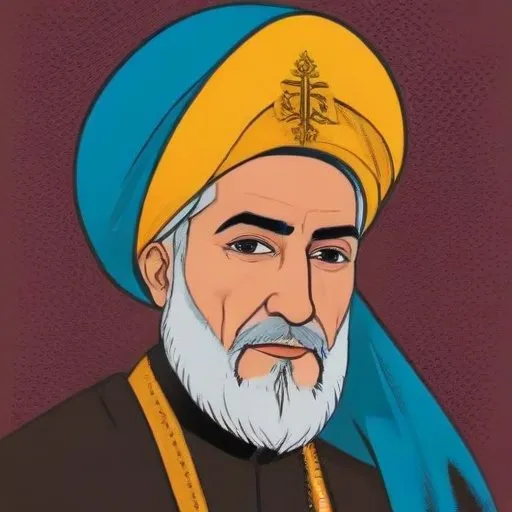
Tahmasp I

Tahmasp I

Tahmasp I was born on February 22nd, 1514

Nationality: Iranian
Profession: Shah
Era: Safavid dynasty
Reign: 1524-1576
Territory: Persia
Successor: Ismail II
Predecessor: Ismail I
House: Safavid dynasty

The second shah of the Safavid Empire, known for establishing a strong centralized government and promoting the arts, particularly in architecture and literature.

Written by: Fatima Ahmed Fatima Ahmed

Tahmasp I: The Visionary Shah of Safavid Iran

Tahmasp I, the second shah of Safavid Iran, is renowned for his unwavering commitment to Shia Islam, his patronage of the arts, and his resilient leadership in the face of formidable adversaries, including the Ottoman Empire and the Uzbeks of Bukhara.

A Turbulent Rise to Power

Born on February 22, 1514, Tahmasp was the eldest son of Shah Ismail I and his principal consort, Tajlu Khanum. Following his father's death on May 23, 1524, Tahmasp ascended to the throne, marking the beginning of a tumultuous period of civil wars between the Qizilbash leaders.

Asserting Authority and Consolidating Power

By 1532, Tahmasp had successfully quelled the factional rivalries and established himself as an absolute monarch. This newfound authority enabled him to focus on the myriad challenges facing his kingdom, including the looming threat of the Ottoman Empire.

The Long and Bloody Conflict with the Ottoman Empire

The war with the Ottomans, which spanned over three decades, was a defining feature of Tahmasp's reign. The Ottoman Sultan, Suleiman the Magnificent, repeatedly attempted to install his own candidates on the Safavid throne, prompting Tahmasp to respond with military vigor. The conflict ultimately ended with the Peace of Amasya in 1555, with the Ottomans gaining sovereignty over Iraq, Kurdistan, and western Georgia.

Cultural and Artistic Achievements

Tahmasp was an accomplished painter and a generous patron of the arts. He established a royal house of arts, providing a haven for painters, calligraphers, and poets. However, later in his reign, he grew disillusioned with the poetic community, leading to the exile of many prominent poets to the Mughal court of India.

Religious Piety and Zealotry

Tahmasp was deeply devoted to Shia Islam, bestowing numerous privileges upon the clergy and entrusting them with judicial and administrative responsibilities. In 1544, he even demanded that the fugitive Mughal emperor Humayun convert to Shiism in exchange for military assistance to reclaim his throne in India.

Diplomatic Maneuvers and Alliances

Despite his unwavering commitment to Shia Islam, Tahmasp deftly navigated the complex web of international relations, forging alliances with Christian powers such as the Republic of Venice and the Habsburg monarchy, who shared his animosity towards the Ottoman Empire.

A Turbulent Succession and Legacy

Tahmasp's succession was marked by dispute and upheaval, ultimately culminating in a devastating civil war that decimated the royal family. Despite this tumultuous conclusion, Tahmasp's remarkable achievements and unwavering dedication to Shia Islam have cemented his place as one of the most significant figures in Safavid history.

Key Dates

Timeline
1514
Born in Isfahan
Tahmasp I was born on February 22, 1514, in Isfahan, Iran, to Shah Ismail I and Tajlu Khanum.
1524
Became Shah of Iran
Tahmasp became the Shah of Iran in 1524, following the death of his father.
1532
Defeated Uzbek Forces
Tahmasp led the Safavid armies to victory against the Uzbek forces in 1532, securing a major military triumph.
1544
Conquered Kandahar
Tahmasp conquered the city of Kandahar in modern-day Afghanistan in 1544, expanding the Safavid Empire.
1576
Died in Qazvin
Tahmasp died on May 14, 1576, in Qazvin, Iran, after a long and eventful reign.
Tahmasp I

Tahmasp I Quiz

Tahmasp I is known for establishing a strong _______________ government.

Score: 0/5
FAQ
Who was Tahmasp I and what were his achievements as the Shah of Iran?
Tahmasp I was the Shah of Iran from 1524 to 1576, during which he expanded the Safavid Empire and consolidated its power. He also patronized the arts and architecture, commissioning famous works such as the Masoumeh Mosque.
What was Tahmasp Is relationship with the Ottoman Empire?
Tahmasp I had a complex and often contentious relationship with the Ottoman Empire, with which the Safavid Empire frequently clashed. Despite this, he was able to maintain a fragile peace and even formed alliances with the Ottomans on occasion.
How did Tahmasp I promote Shia Islam in Iran?
Tahmasp I was a devout Shia Muslim and worked to promote Shia Islam throughout Iran. He built mosques, madrasas, and other religious institutions, and encouraged the development of Shia theology and scholarship.
What was Tahmasp Is approach to governance and administration?
Tahmasp I was known for his administrative reforms, which helped to centralize power and streamline governance in the Safavid Empire. He also promoted the development of a strong bureaucratic system.
What is Tahmasp Is legacy in Iranian history?
Tahmasp Is legacy in Iranian history is one of strength, stability, and cultural flourishing. He helped to establish the Safavid Empire as a major power and promoted the development of Iranian art, literature, and architecture.