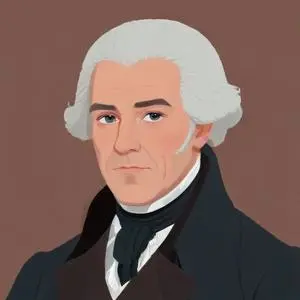
Thomas Clarkson

Thomas Clarkson

Thomas Clarkson was born on March 28th, 1760

Full Name: Thomas Clarkson
Birthplace: Wisbech, England
Nationality: English
Occupation: Activist and Abolitionist
Notable Work: Essay on the Slavery and Commerce of the Human Species
Influence: William Wilberforce
Role: British abolitionist movement
Achievement: Ending the slave trade in Britain

Leading abolitionist who gathered evidence and testimony to end the slave trade, playing a crucial role in its eventual abolition in the British Empire.

Written by: Carlos Hernandez Carlos Hernandez

Thomas Clarkson: The Unwavering Abolitionist

Thomas Clarkson, a renowned English abolitionist, dedicated his life to eradicating the inhumane practice of slavery, becoming a leading campaigner against the slave trade in the British Empire. His tireless efforts ultimately led to the passage of the Slave Trade Act of 1807, marking a significant milestone in the fight against slavery.

Clarkson was born on March 28, 1760, in Wisbech, England, to Reverend John Clarkson, a Church of England priest, and his wife Anne. He was the eldest son, with two siblings, John and Anne. Clarkson's early education took place at Wisbech Grammar School, where his father served as headmaster. After his father's passing, the family moved to a new residence, marked by a blue plaque, where Clarkson continued his education.

Clarkson's academic prowess earned him an exhibition to St. Paul's School in London in 1775. He then proceeded to St. John's College, Cambridge, in 1779, where he excelled and received his Bachelor of Arts degree in 1783.

In 1785, Clarkson's life took a dramatic turn when he entered a Latin essay competition at the university, focusing on the topic of slavery. This experience opened his eyes to the atrocities of the slave trade, and he became deeply committed to its abolition. This turning point marked the beginning of his lifelong dedication to the cause.

Clarkson co-founded the Society for Effecting the Abolition of the Slave Trade (also known as the Society for the Abolition of the Slave Trade) in 1787. Through his unwavering efforts, he played a crucial role in achieving the passage of the Slave Trade Act of 1807, which banned British trade in slaves.

In his later years, Clarkson expanded his focus to campaign for the global abolition of slavery. In 1840, he became the key speaker at the British and Foreign Anti-Slavery Society's first convention in London, urging action to end slavery in other countries.

In 1816, Clarkson adopted pacifism, and along with his brother John, became one of the twelve founders of the Society for the Promotion of Permanent and Universal Peace.

Clarkson's personal motto, "May we not, by our conduct, help to rivet the fetters of the slave, instead of breaking them?" reflected his unwavering dedication to the abolitionist cause.

Thomas Clarkson's tireless efforts led to significant milestones in the fight against slavery, earning him a revered place in history. His legacy continues to inspire generations to strive for freedom, equality, and justice.

Through his unrelenting passion and perseverance, Clarkson played a pivotal role in shaping modern society, paving the way for future abolitionists and human rights activists.

  • Timeline:
    • 1760: Born in Wisbech, England
    • 1775: Attends St. Paul's School in London
    • 1779: Enters St. John's College, Cambridge
    • 1783: Receives Bachelor of Arts degree
    • 1785: Enters Latin essay competition, focusing on slavery
    • 1787: Co-founds the Society for Effecting the Abolition of the Slave Trade
    • 1807: Passage of the Slave Trade Act
    • 1816: Adopts pacifism and co-founds the Society for the Promotion of Permanent and Universal Peace
    • 1840: Key speaker at the British and Foreign Anti-Slavery Society's first convention
    • 1846: Passes away, leaving behind a legacy of unwavering dedication to the abolitionist cause

Thomas Clarkson's remarkable life serves as a testament to the power of determination, conviction, and compassion. His unwavering commitment to ending slavery continues to inspire generations, cementing his place as a pioneering figure in the fight for human rights and freedom.

Timeline
1760
Born in Wisbech, England
Thomas Clarkson was born in Wisbech, England, and would go on to become a prominent abolitionist and activist.
1785
Published Essay on the Slavery and Commerce of the Human Species
Clarkson published Essay on the Slavery and Commerce of the Human Species, a influential anti-slavery tract.
1787
Co-Founded the Committee for the Abolition of the Slave Trade
Clarkson co-founded the Committee for the Abolition of the Slave Trade, which campaigned for the abolition of slavery.
1807
Britain Abolished the Slave Trade
Thanks in part to Clarksons efforts, Britain abolished the slave trade, marking a major milestone in the fight against slavery.
1846
Death in Ipswich, England
Thomas Clarkson passed away in Ipswich, leaving behind a legacy as a pioneering abolitionist.
Thomas Clarkson

Thomas Clarkson Quiz

What was Thomas Clarkson's primary role in the abolition of the slave trade?

Score: 0/5
FAQ
What was Thomas Clarksons role in the abolition of the slave trade?
Thomas Clarkson was a leading abolitionist who played a crucial role in the campaign to end the transatlantic slave trade. He gathered evidence, lobbied politicians, and advocated for the abolition of slavery in Britain and its colonies.
How did Thomas Clarksons research and writings shape public opinion on slavery?
Thomas Clarksons research and writings helped to expose the brutal realities of the slave trade and slavery, shaping public opinion and building support for abolition. His book, Essay on the Slavery and Commerce of the Human Species, was highly influential and widely read.
What was Thomas Clarksons relationship like with other prominent abolitionists?
Thomas Clarkson collaborated with other prominent abolitionists, including William Wilberforce and Olaudah Equiano, to campaign against slavery. He was a key figure in the abolitionist movement and played a crucial role in mobilizing public opinion and influencing policymakers.
How did Thomas Clarksons efforts contribute to the passage of the Slave Trade Act of 1807?
Thomas Clarksons efforts, along with those of other abolitionists, contributed to the passage of the Slave Trade Act of 1807, which banned the transatlantic slave trade in the British Empire.
What is Thomas Clarksons legacy in the history of human rights?
Thomas Clarksons legacy in the history of human rights is that of a dedicated campaigner for the abolition of slavery and the promotion of human dignity. His tireless efforts helped to bring an end to the transatlantic slave trade and paved the way for future human rights campaigns.

Related People:

William Wilberforce

Born in 1759

A British abolitionist who led the movement to end the slave trade in the UK, playing a key role in passing the Slave Trade Act of 1807.

Granville Sharp

Born in 1735

Co-founder of the Sierra Leone Company, a pioneering abolitionist who helped establish a colony for freed slaves in West Africa, and a renowned biblical scholar.

John Newton

Born in 1725

A former slave trader who later became a prominent abolitionist and wrote the iconic hymn "Amazing Grace". He's a symbol of redemption and a powerful voice against slavery.