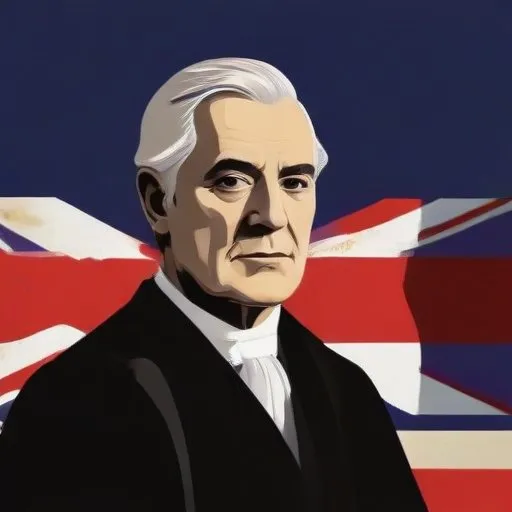
Thomas Erskine, 1st Baron Erskine: The Fearless Advocate for Liberty and Justice
A Champion of Human Rights and the Law
Thomas Erskine, 1st Baron Erskine, was a British Whig lawyer and politician who left an indelible mark on the legal and political landscape of his time. As a fearless advocate for liberty and justice, he served as Lord High Chancellor of Great Britain between 1806 and 1807, and his unwavering commitment to upholding the principles of human rights and the rule of law continues to inspire generations of lawyers, politicians, and social reformers.
Early Life and Education
Born on January 10, 1750, in Edinburgh, Scotland, Erskine was the third and youngest surviving son of Henry David Erskine, 10th Earl of Buchan, and Agnes Steuart. Despite his noble lineage, Erskine's family was not wealthy, and his mother undertook much of his early education. The family's financial constraints led to Erskine's decision to abandon formal education at the age of 14 and pursue a career at sea as a midshipman.
A Life of Service and Advocacy
Erskine's experiences at sea shaped his strong sense of justice and instilled in him a deep respect for human life. After resigning from the Navy at the age of 18, he began studying law and was eventually called to the Bar in 1778. Erskine's passion for advocacy and his unwavering commitment to the principles of justice quickly earned him a reputation as a formidable lawyer.
Major Cases and Advocacy Highlights
- Erskine's defense of Captain Thomas Baillie, accused of murder, marked a significant milestone in his career, showcasing his exceptional advocacy skills and earning him widespread recognition.
- He played a crucial role in the trial of Warren Hastings, the former Governor-General of India, accused of corruption and mismanagement.
- Erskine's impassioned defense of the rights of the accused in the treason trials of 1794, which followed the outbreak of the French Revolution, cemented his reputation as a champion of human rights.
Rise to Prominence and Political Career
Erskine's remarkable skills as an advocate and his unwavering commitment to justice led to his appointment as Attorney General in 1806. Soon after, he was elevated to the position of Lord High Chancellor of Great Britain, serving in the Ministry of All the Talents. During his tenure, Erskine introduced several significant legal reforms, including the abolition of the slave trade and the establishment of the Court of Exchequer.
Legacy and Impact on Modern Society
Thomas Erskine's tireless advocacy for human rights and his contributions to the development of the British legal system continue to inspire generations of lawyers, politicians, and social reformers. His commitment to upholding the principles of justice and his unwavering defense of the rights of the accused have left an indelible mark on the legal and political landscape of Britain and beyond.
Personal Life and Milestones
Erskine married Frances Moore in 1772, and the couple had six children together. Throughout his life, Erskine remained committed to his family and his faith, and his strong sense of morality and justice guided his personal and professional life.
Controversies and Public Perception
Erskine's unwavering commitment to his principles and his unrelenting advocacy for justice occasionally led to controversy and public scrutiny. However, his integrity, passion, and dedication to the rule of law earned him widespread respect and admiration from his contemporaries and future generations.
Quotes and Memorable Sayings
- "The greatest happiness of the greatest number is the foundation of morals and legislation."
- "Justice is the great interest of man on earth."
Historical Context and Legacy
Thomas Erskine, 1st Baron Erskine, lived during a tumultuous period in British history, marked by the French Revolution, the Napoleonic Wars, and the struggle for human rights and social reform. His contributions to the development of the British legal system, his unwavering commitment to justice, and his advocacy for human rights continue to inspire and influence generations of lawyers, politicians, and social reformers.
FAQ
Who was Thomas Erskine, 1st Baron Erskine and what was his role as a lawyer and politician?
Thomas Erskine, 1st Baron Erskine was a Scottish-English lawyer and politician who served as Lord Chancellor of Great Britain. He was known for his eloquence and his commitment to social justice.
What were Thomas Erskine, 1st Baron Erskines most notable legal cases?
Thomas Erskine, 1st Baron Erskine was involved in several notable legal cases, including the trial of Thomas Paine for treason and the trial of Captain John Stockdale for criminal libel.
How did Thomas Erskine, 1st Baron Erskine rise to prominence in British politics?
Thomas Erskine, 1st Baron Erskine rose to prominence in British politics through his skill as a lawyer and his commitment to social justice. He was appointed Lord Chancellor of Great Britain in 1806 and served in that role until 1807.
What was Thomas Erskine, 1st Baron Erskines relationship with the British Whig party?
Thomas Erskine, 1st Baron Erskine was a member of the British Whig party and served as one of its leaders. He was known for his support of liberal causes and his commitment to individual liberty.
What is Thomas Erskine, 1st Baron Erskines legacy in British legal history?
Thomas Erskine, 1st Baron Erskine is remembered as one of the most important lawyers and politicians of his time, known for his eloquence, his commitment to social justice, and his defense of individual liberty.