


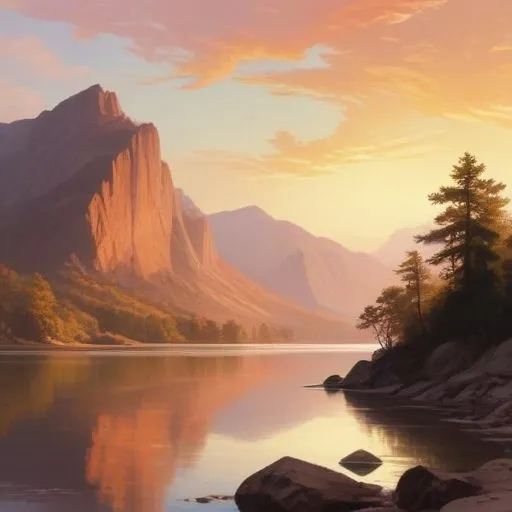
A prominent landscape painter and printmaker of the 19th century, capturing the majesty of the American West through his breathtaking works, particularly Yellowstone and the Grand Canyon. 42
Thomas Moran, a renowned American painter and printmaker, is best known for his breathtaking depictions of the American West, particularly the Rocky Mountains, which have become synonymous with the grandeur and majesty of the American landscape. His work, characterized by exquisite colorism and attention to detail, has left an indelible mark on the world of art, earning him a place among the most celebrated painters of the Hudson River School.
Born on February 12, 1837, in Bolton, Lancashire, England, Moran was the youngest of seven children to Mary and Thomas Moran Sr. His family migrated to the United States in 1844, settling in Baltimore before moving to Kensington, a suburb of Philadelphia. This formative experience had a lasting impact on Moran, who would later capture the essence of the sea in his sketches and paintings.
Moran's artistic journey began as a teenage apprentice to the Philadelphia wood-engraving firm Scattergood & Telfer. Although he found the engraving process tedious, he spent his free time honing his watercolor skills, which would eventually become a hallmark of his work. His encounter with illustrated books featuring the work of British artist J.M.W. Turner had a profound influence on Moran's style, and he began studying with local painter James Hamilton to further refine his craft.
In the late 1860s, Moran's talent as an illustrator earned him the position of chief illustrator for Scribner's Monthly, a prestigious magazine that provided him with a platform to showcase his work. This opportunity catapulted him to fame, solidifying his reputation as a premier painter of the American landscape.
Alongside Albert Bierstadt, Thomas Hill, and William Keith, Moran is often associated with the Rocky Mountain School of landscape painters, a group renowned for their captivating depictions of the Western wilderness. Moran's work during this period, characterized by its sense of grandeur and awe, has become synonymous with the American West.
Thomas Moran married Mary Nimmo Moran, a talented artist in her own right, and the couple had a daughter, Ruth. The family resided in New York, where Moran maintained a studio with his brother, Edward Moran, a prominent marine artist. Throughout his life, Moran remained dedicated to his craft, continuing to produce works of exceptional beauty and quality until his passing on August 25, 1926.
Today, Moran's legacy extends far beyond his own lifetime. His work has inspired generations of artists, and his contributions to the world of art have left an indelible mark on American culture. As a visionary painter of the American West, Thomas Moran's art continues to captivate and inspire, a testament to his enduring impact on the world of art.
Thomas Moran's art embodies a deep sense of reverence for the natural world. His work often conveyed a sense of awe and wonder, inviting the viewer to contemplate the majesty and beauty of the American landscape. Moran's philosophy, as reflected in his art, emphasizes the importance of preserving the natural world and celebrating its inherent beauty.
Thomas Moran's life serves as a testament to the power of dedication and perseverance. From his humble beginnings as a teenage apprentice to his rise as a celebrated artist, Moran's journey is a testament to the transformative power of art. His work continues to inspire generations, reminding us of the importance of preserving our natural heritage and celebrating the beauty that surrounds us.
Born in 1830
A renowned landscape painter of the American West, capturing the majesty of mountains, forests, and rivers in breathtaking detail, inspiring a sense of wonder and awe.
Born in 1826
A prominent landscape painter of the Hudson River School, capturing the majesty of the American wilderness and exotic locales in meticulously detailed, large-scale works. His paintings often conveyed a sense of awe and wonder.
Born in 1820
A prominent American landscape painter of the 19th century, capturing the beauty of the American wilderness and rural life in his works. His paintings often featured serene, idyllic scenes of the American countryside.
