


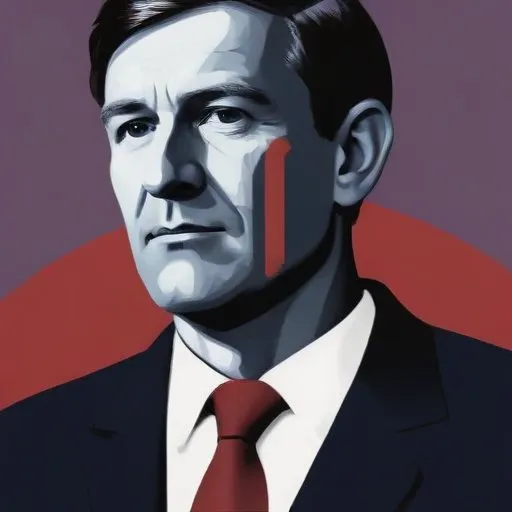
The 24th Premier of South Australia, a Welsh-Australian politician who served from 1905 to 1909 and implemented various reforms, including workers' compensation and electoral reform. He's also known for his role in shaping the state's economy and infrastructure.
Thomas Price, a Welsh-born Australian politician, is renowned for leading the world's first stable Labor government in South Australia from 1905 to 1909. As the Premier of South Australia, he formed a minority government and later secured a majority government, paving the way for labor reforms and social changes that would shape the country's future.
Born on January 19, 1852, in Brymbo, Denbighshire, Wales, Thomas Price grew up in Liverpool after his family moved there in 1853. He later emigrated to South Australia with his family in 1883, where he worked as a stonecutter, teacher, lay preacher, businessman, stonemason, and clerk of works. Notably, he helped build the Parliament House of South Australia, a building he would later serve in as an elected politician.
Price's involvement in trade union activity led to his election to the South Australian House of Assembly for Sturt in April 1893. He became the Labor leader in 1899 and contested the single statewide Division of South Australia at the 1901 federal election. Although he didn't win, he finished eighth with a 38.2% vote, demonstrating his growing influence in politics.
In 1905, Price led the Labor Party to victory, forming a minority government in South Australia. This milestone marked the world's first stable Labor government, which was re-elected with increased representation in 1906. During his premiership, Price implemented significant reforms, including:
Under Price's leadership, the government achieved successive budget surpluses and reduced the accumulated public debt.
Thomas Price's contributions to Australian politics and society are undeniable. His government's achievements paved the way for future labor reforms and social changes. After his death on May 31, 1909, John Verran led the Labor Party to form the state's first majority government in 1910.
Today, Thomas Price is remembered as a pioneer of labor government, a champion of workers' rights, and a visionary who shaped the course of Australian history.
Born in 1843
The 16th Premier of South Australia, serving from 1885 to 1887, known for his significant contributions to the state's education and infrastructure development. He played a crucial role in shaping the region's growth and progress.
86 Years Old
A renowned actor with a distinctive voice, known for iconic roles in sci-fi classics like Alien and Doctor Who.
65 Years Old
A former NFL wide receiver turned sportscaster, known for his charismatic commentary and analysis on ESPN and other networks. He's a familiar face and voice in American sports media.
Born in 1832
The 12th Premier of South Australia, serving from 1868 to 1870, known for his brief but significant tenure during a period of significant economic growth and infrastructure development in the state.
Born in 1850
The 18th Premier of South Australia, serving from 1898 to 1899, known for his role in shaping the state's early development and infrastructure. He was a key figure in Australian politics during the late 19th century.
Born in 1850
The 19th Premier of South Australia, serving from 1892 to 1899, known for his progressive reforms, including women's suffrage and education reform. He played a significant role in shaping the state's politics and social landscape.
