


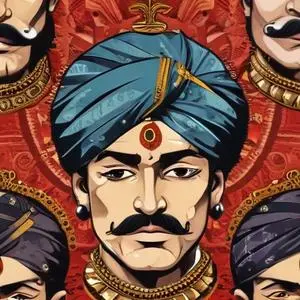
The 18th-century ruler of the Kingdom of Mysore, known for his military innovations, resistance to British colonization, and patronage of the arts and architecture. He's also famous for his use of rockets in warfare, inspiring the development of modern rocketry.
Tipu Sultan, also known as the Tiger of Mysore, was a pioneering Indian ruler who revolutionized warfare with his innovative use of rocket artillery. His military prowess and strategic alliances with European powers made him a formidable force in 18th-century India, earning him a permanent place in the annals of history.
Born on December 1, 1751, in Devanahalli, Tipu Sultan was the son of Hyder Ali, a military officer who rose to power in the Kingdom of Mysore. Following his father's death in 1782, Tipu Sultan ascended to the throne and continued his father's legacy of military conquests and administrative reforms.
Tipu Sultan is credited with deploying the first iron-cased rockets in warfare, which proved to be a game-changer in his battles against the British and other rival kingdoms. He commissioned the military manual Fathul Mujahidin, which highlighted the importance of rockets in modern warfare. Under his leadership, the Mysorean army became a force to be reckoned with, defeating the British in several battles, including the Battle of Pollilur and the Siege of Srirangapatna.
Tipu Sultan was a shrewd diplomat who forged alliances with European powers, including the French, to counter the growing influence of the British East India Company. He negotiated the Treaty of Mangalore in 1784, which ended the Second Anglo-Mysore War, and later signed the Treaty of Gajendragad to conclude the Maratha-Mysore War.
Tipu Sultan's reign was marked by several administrative innovations, including the introduction of a new coinage system, calendar, and land revenue system. These reforms paved the way for the growth of the Mysore silk industry and patronized the production of Channapatna toys, which remain a beloved cultural heritage of Karnataka.
Tipu Sultan's legacy is a subject of much debate, with some hailing him as a hero who resisted British colonialism and others condemning him as a tyrant who persecuted minority communities. Despite these controversies, his contributions to Indian history and his pioneering spirit in military warfare remain unquestionable.
"I am the tiger in the forest, and the forest is my domain." - Tipu Sultan
Tipu Sultan's innovations in rocket artillery paved the way for modern warfare, and his legacy continues to inspire Indian nationalism and resistance against colonialism. His administrative reforms and cultural patronage have left an indelible mark on Karnataka's cultural heritage.
Take a journey through Tipu Sultan's life and reign with this visual timeline, highlighting key events, battles, and reforms that shaped his legacy.
| Year | Event |
|---|---|
| 1751 | Born in Devanahalli, Karnataka |
| 1782 | Ascended to the throne of Mysore |
| 1784 | Signed the Treaty of Mangalore with the British |
| 1789 | Initiated an attack on Travancore, leading to the Third Anglo-Mysore War |
| 1799 | Killed in the Fourth Anglo-Mysore War while defending Seringapatam |
Tipu Sultan's remarkable journey, marked by military conquests, diplomatic alliances, and administrative reforms, continues to inspire generations, earning him a permanent place in the annals of Indian history.
Born in 1769
A French military leader who rose to prominence during the French Revolution and became Emperor of France, known for his military conquests and reorganization of Europe. He is also famous for his Napoleonic Code, which remains a foundation of modern law.
Born in 1732
British colonial administrator who oversaw the consolidation of British power in India, implementing reforms and expanding the empire, while also being accused of corruption and abuse of power.
