


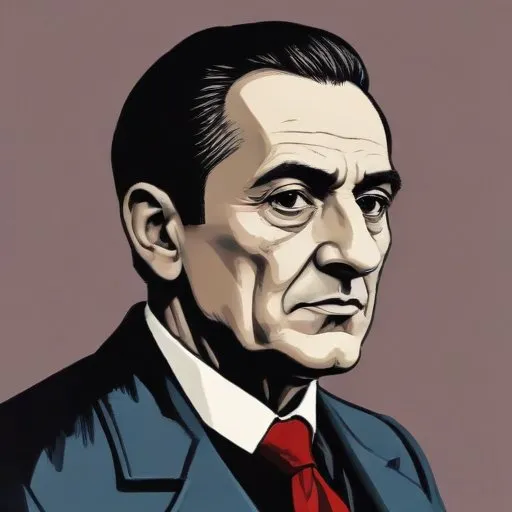
A Romanian philosopher, academic, and politician who served as Prime Minister of Romania, known for his contributions to the country's cultural and political development. He played a significant role in shaping Romania's national identity and education system.
Titu Liviu Maiorescu was a Romanian literary critic and politician who left an indelible mark on the country's cultural and political landscape in the late 19th and early 20th centuries. As the founder of the Junimea Society, a prestigious literary circle, Maiorescu played a pivotal role in shaping Romanian culture, earning him recognition as one of the most influential figures of his time.
Born on February 15, 1840, in Craiova, Romania, Maiorescu was the son of Ioan Maiorescu, a theologian and educator, and Maria Popazu, a member of the prominent Popazu family. His father's influence had a profound impact on Maiorescu's early life, instilling in him a passion for education and intellectual pursuits.
Maiorescu's literary career began to take shape in the 1860s, when he became a prominent figure in the Junimea Society. As a literary critic, he championed the development of Romanian culture, advocating for the promotion of national literature and the preservation of folk traditions. His incisive critiques and essays earned him widespread recognition, solidifying his position as a leading authority on Romanian literature.
Maiorescu's political career was marked by his involvement with the Conservative Party, which he joined in the late 19th century. He served as Foreign Minister from 1910 to 1914 and later as Prime Minister of Romania from 1912 to 1913. During his tenure, he represented Romania at the Peace Conference in Bucharest, which brought an end to the Second Balkan War.
Maiorescu's philosophical leanings were influenced by his German upbringing and education. He favored a more conservative approach to politics, which often put him at odds with his contemporaries. Despite this, he remained committed to promoting Romanian culture and preserving the country's national identity.
Maiorescu's impact on Romanian culture and politics cannot be overstated. As a literary critic, he played a crucial role in shaping the country's cultural identity, while his political career was marked by his dedication to promoting Romania's interests on the international stage.
Maiorescu's personal life was marked by several significant events, including his marriage to Maria Popazu and the birth of his two children, Emilia and Titu. He remained devoted to his family throughout his life, often sacrificing personal ambitions for the sake of his loved ones.
Maiorescu's political views and actions were not without controversy. His opposition to Romania's entry into World War I against Germany was met with criticism, and his refusal to collaborate with the German army during its occupation of Bucharest sparked both praise and condemnation.
Despite these controversies, Maiorescu's legacy remains untarnished, a testament to his unwavering commitment to promoting Romanian culture and interests.
Titu Maiorescu's remarkable life and achievements serve as a beacon of inspiration for future generations, cementing his place as one of Romania's most illustrious sons.
