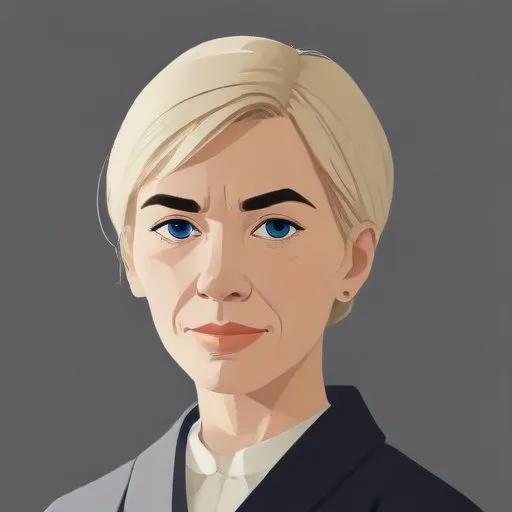
Tove Jansson: The Multifaceted Creative Force Behind the Moomins
A Life of Artistic Expression
Tove Jansson, a Finnish author, novelist, painter, illustrator, and comic strip author, is best known for creating the beloved Moomin characters, a series of books that has captivated readers of all ages. With a career spanning over six decades, Jansson's work has transcended cultural boundaries, and her Moomin creations have become a cultural phenomenon, inspiring numerous adaptations in film, theater, and opera.
Early Life and Artistic Influences
Born on August 9, 1914, in Helsinki, Finland, Jansson grew up in an artistic family. Her father, Viktor Jansson, was a sculptor, and her mother, Signe Hammarsten-Jansson, was a Swedish-born artist. This environment nurtured her creative talents from an early age. She studied art from 1930 to 1938 in Helsinki, Stockholm, and Paris, where she was exposed to the works of avant-garde artists like Picasso and Matisse.
From Fine Art to Children's Literature
Jansson's artistic career began with her first solo exhibition in 1943, showcasing her paintings. However, it was her foray into children's literature that catapulted her to international fame. The first Moomin book,
The Moomins and the Great Flood, was published in 1945, followed by
Comet in Moominland and
Finn Family Moomintroll in 1946 and 1948, respectively. These books not only solidified her position as a prominent children's author but also led to numerous adaptations, including television shows, films, and stage productions.
Awards and Accolades
Jansson's contributions to literature and art have been widely recognized. She received the prestigious
Hans Christian Andersen Medal in 1966, followed by numerous awards, including the
Selma Lagerlöf Prize in 1992. Her Moomin stories have been translated into over 50 languages, making her one of the most translated Finnish authors.
Branching Out: Novels, Short Stories, and Illustrations
In addition to her children's literature, Jansson wrote six novels for adults, including the semi-autobiographical
Bildhuggarens dotter (Sculptor's Daughter) in 1968, and five short story collections. Her writing often explored themes of love, family, and the human condition. Jansson's artistic talents also extended to illustrations, with her work adorning book covers, advertisements, and postcards. She even created illustrations for classic works like
Alice's Adventures in Wonderland and
The Hobbit.
Mural Commissions and Public Art
Throughout her career, Jansson received several commissions for murals in public buildings across Finland, showcasing her ability to create large-scale works that captivated audiences. These murals, often featuring Moomin characters, added to her reputation as a versatile artist.
Legacy and Impact
Tove Jansson's influence on modern society is undeniable. Her Moomin creations have become cultural icons, inspiring countless adaptations and merchandise. Her writing and art have inspired generations of artists, writers, and readers. As a testament to her legacy, the Moomin Museum in Tampere, Finland, was established in 1987 to preserve her work and legacy.
Personal Life and Relationships
Jansson's personal life was marked by her long-term relationship with Tuulikki Pietilä, a Finnish graphic designer. The couple lived together for over 40 years, until Jansson's passing on June 27, 2001.
Trivia and Fun Facts
- Jansson's love for nature was reflected in her art, often featuring the Finnish landscape.
- She was an avid sailor and spent summers sailing the Finnish archipelago.
- Jansson's Moomin characters have been adopted by the Finnish government as national symbols.
Tove Jansson's remarkable career, marked by her contributions to art, literature, and popular culture, continues to inspire and delight audiences worldwide. Her legacy serves as a testament to the power of creativity and imagination, leaving behind a rich cultural heritage that will be cherished for generations to come.