


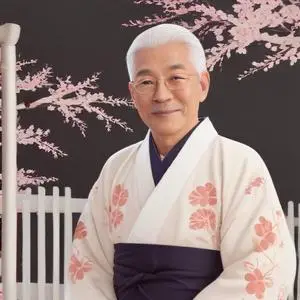
A Japanese engineer and businessman who survived the atomic bombings of Hiroshima and Nagasaki, and became a vocal advocate for nuclear disarmament. He is known for being the only person officially recognized as a survivor of both bombings.
Tsutomu Yamaguchi is perhaps the most remarkable survivor of World War II, having endured not one, but two atomic bombings in Hiroshima and Nagasaki. This Japanese marine engineer's extraordinary story is a testament to human resilience and a stark reminder of the devastating consequences of nuclear warfare.
Born on March 16, 1916, in Nagasaki, Yamaguchi joined Mitsubishi Heavy Industries in the 1930s, working as a draftsman designing oil tankers. As Japan plunged into war, Yamaguchi continued his work, but soon Japanese industry began to suffer heavily as resources became scarce and tankers were sunk.
In the summer of 1945, Yamaguchi was in Hiroshima for a three-month-long business trip. On August 6, he was preparing to leave the city with two colleagues when the atomic bomb "Little Boy" detonated at 8:15 AM, mere kilometers away from their location. Yamaguchi suffered severe burns and was temporarily blinded, but managed to escape the devastated city and return to Nagasaki the following day.
Despite his wounds, Yamaguchi returned to work on August 9, the day of the second atomic bombing. As he was describing the destruction caused by the Hiroshima bomb to his supervisor, the Nagasaki bomb "Fat Man" detonated. Yamaguchi was once again fortunate to escape with his life, albeit with further injuries.
In 1957, Yamaguchi was recognized as a hibakusha (explosion-affected person) of the Nagasaki bombing. However, it wasn't until March 24, 2009, that the Japanese government officially recognized him as a survivor of both the Hiroshima and Nagasaki bombings. Yamaguchi passed away on January 4, 2010, at the age of 93, leaving behind a legacy of resilience and a powerful anti-nuclear message.
Tsutomu Yamaguchi's extraordinary story has had a profound impact on the world. His experiences have served as a stark reminder of the devastating consequences of nuclear warfare and have inspired countless individuals to advocate for nuclear disarmament. Yamaguchi's legacy continues to inspire generations, serving as a testament to the human spirit's capacity for resilience and survival in the face of unimaginable adversity.
Born in 1910
A visionary filmmaker who crafted visually stunning and emotionally resonant movies that explored humanity, often blending Japanese culture with Western influences. His works continue to inspire generations of filmmakers and artists.
85 Years Old
A renowned animator, director, and screenwriter behind beloved films like Spirited Away and My Neighbor Totoro, known for imaginative storytelling and vibrant animation.
Born in 1884
Led the Imperial Japanese Navy during World War II, masterminding the surprise attack on Pearl Harbor, and later became a symbol of Japanese military power and strategy.
Born in 1913
Pioneering filmmaker behind socially conscious movies that tackled racism, nuclear war, and social justice, leaving a lasting impact on Hollywood's approach to serious issues.
