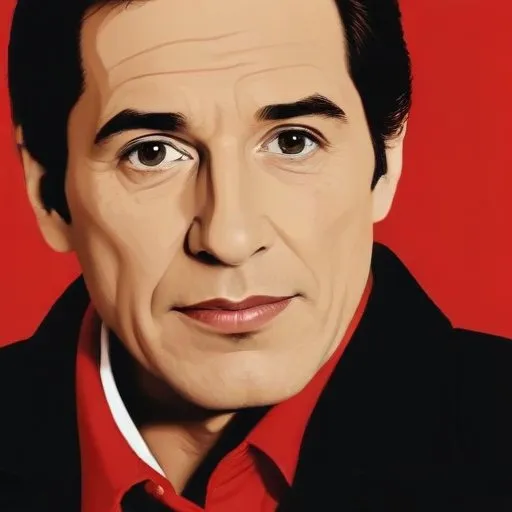
Udo Jrgens: The Maestro of Austrian Pop
The Eurovision Icon
Udo Jrgens is synonymous with Austrian pop music, having conquered the hearts of millions with his soulful melodies and heartfelt lyrics. With a career spanning over five decades, he is best known for winning the Eurovision Song Contest 1966 for Austria, cementing his status as a legend in the music industry.
Early Life and Career
Born on September 30, 1934, in Klagenfurt, Austria, Udo Jrgens Bockelmann was destined for greatness. He began his music journey in the 1950s, forming the Udo Bolan Quartet, which performed regularly at various dance and jazz venues in Austria. In 1950, he won a composer contest organized by Austria's public broadcasting channel ORF with the song "Je taime," an early indication of his exceptional talent.
Rise to Fame
Jrgens' big break came in 1961 with the worldwide hit "Reach for the Stars," sung by
Shirley Bassey. This success was followed by his representation of Austria at the Eurovision Song Contest 1964 with the song "Warum nur, warum," which finished sixth. Undeterred, he returned in 1965 with "Sag ihr, ich lass sie gren," which came fourth. Finally, on his third attempt, he won the Eurovision Song Contest 1966 with "Merci, Chrie," an English-language hit that catapulted him to international stardom.
Compositions and Collaborations
Udo Jrgens composed close to 1,000 songs, selling over 104 million records worldwide. He collaborated with renowned artists, including Shirley Bassey, Matt Monro, and
Vince Hill. His music transcended generations, appealing to fans of all ages.
Influence and Legacy
Jrgens' impact on German-language pop music was profound. He infused traditional Schlager hits with modern pop appeal and French chanson style, broadening the genre's scope and appeal. His compositions and arrangements continue to inspire new generations of musicians.
Awards and Honors
- Winner of the Eurovision Song Contest 1966
- Recipient of the Austrian Decoration for Science and Art (2004)
- Austrian Music Award for Lifetime Achievement (2007)
Personal Life and Later Years
In 2007, Jrgens obtained Swiss citizenship and legally changed his name to Udo Jrgens Bockelmann in 2010. He continued to perform and compose music until his passing on December 21, 2014, at the age of 80.
A Lasting Legacy
Udo Jrgens' remarkable career, spanning over 50 years, serves as a testament to his dedication to music and his people. His legacy continues to inspire new generations of musicians, solidifying his place as one of Austria's most beloved and respected artists.
FAQ
What made Udo Jürgens a famous Austrian-Swiss singer-songwriter?
Udo Jürgens gained fame in the 1960s and 1970s with his unique voice and hit songs like Merci, Chérie and Mit 66 Jahren, which won him several music awards and the hearts of millions of fans.
How did Udo Jürgens contribute to the Eurovision Song Contest?
Udo Jürgens represented Austria in the Eurovision Song Contest three times, winning the competition in 1966 with his song Merci, Chérie, and later serving as a conductor and composer for the contest.
What were Udo Jürgens most popular songs?
Some of Udo Jürgens most beloved songs include Mit 66 Jahren, Griechischer Wein, Aber bitte mit Sahne, and Bianca, which remain popular to this day.
What awards did Udo Jürgens receive for his music?
Udo Jürgens won numerous awards for his music, including two Echo Awards, a Bambi Award, and an Amadeus Austrian Music Award for Lifetime Achievement.
What was Udo Jürgens legacy in the music industry?
Udo Jürgens left a lasting legacy in the music industry, inspiring generations of musicians and entertaining millions of fans with his unique voice and style.