


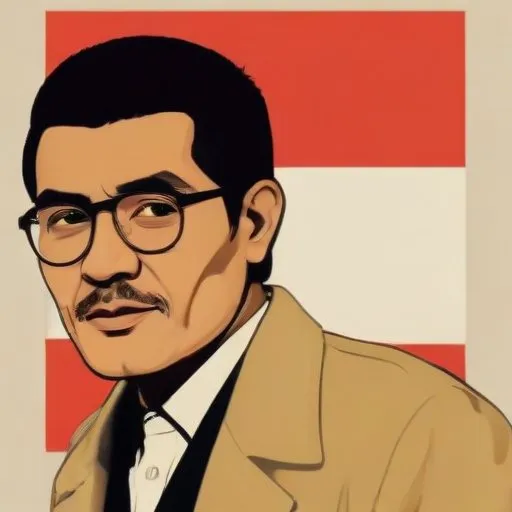
Pioneering filmmaker credited with creating Indonesia's national cinema, producing over 50 films that showcased the country's cultural identity and struggles.
Usmar Ismail, a visionary filmmaker, author, journalist, and revolutionary, is widely regarded as the native Indonesian pioneer of the cinema of Indonesia. Born on March 20, 1921, in Bukittinggi, West Sumatra, Ismail's contributions to the film industry have left an indelible mark on Indonesian culture and society.
Ismail's father, Datuk Tumenggung Ismail, was a teacher at the medical school in Padang, while his brother Abu Hanifah was a well-known revolutionary and writer. Ismail attended ASMA Yogyakarta and later obtained a B.A. in cinematography from the University of California, Los Angeles in 1952.
Ismail's films often reflected his passion for social justice and his commitment to promoting Indonesian culture. Through his work, he sought to inspire a sense of national identity and unity, bridging the gap between traditional and modern Indonesia.
Ismail's pioneering work in Indonesian cinema paved the way for future generations of filmmakers, inspiring a new wave of creative talent in the industry. His films continue to captivate audiences, offering a glimpse into Indonesia's rich cultural heritage.
Ismail received numerous awards and accolades for his contributions to Indonesian cinema, including the prestigious Bintang Mahaputra Adipradana, one of Indonesia's highest honors.
Usmar Ismail's legacy extends beyond his films and literary works. He played a pivotal role in shaping Indonesia's cultural identity, inspiring future generations to continue his work. Today, his films remain a testament to his innovative spirit and his unwavering commitment to promoting Indonesian culture.
"Film is not only a form of entertainment but also a means to educate and inspire people to strive for a better life."
Usmar Ismail's remarkable journey serves as a beacon of inspiration, reminding us of the power of art and creativity to shape our understanding of the world and our place in it.
Born in 1922
A pioneering Indonesian journalist and author, known for his courageous reporting and thought-provoking novels that explored the country's complex social and political landscape.
Born in 1901
A French historian, theorist, and author who wrote influential novels and essays on art, politics, and human condition, exploring the complexities of modern society.
Born in 1889
A renowned French creative force, celebrated for his innovative and surreal works that blurred the lines between literature, art, and cinema, leaving an indelible mark on 20th-century culture.
Born in 1890
Pioneering filmmaker behind iconic sci-fi and noir classics, influencing generations of directors with his visual style and storytelling. 82
Born in 1875
Pioneering filmmaker behind groundbreaking silent movies, credited with developing innovative camera techniques and narrative storytelling styles.
Born in 1894
Acclaimed filmmaker behind iconic Westerns and dramas, credited with shaping the American cinematic landscape with his visually stunning and emotionally charged storytelling.
Born in 1910
A visionary filmmaker who crafted visually stunning and emotionally resonant movies that explored humanity, often blending Japanese culture with Western influences. His works continue to inspire generations of filmmakers and artists.
Born in 1921
Acclaimed filmmaker behind iconic Indian movies that beautifully blend social commentary with poignant storytelling, earning numerous international accolades. 82
