


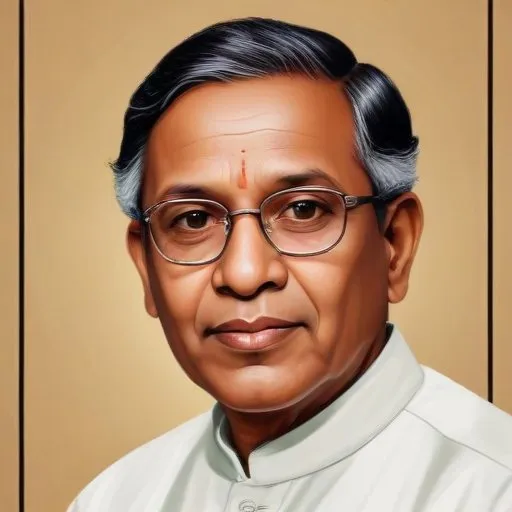
A renowned Indian economist and politician who made significant contributions to the country's economic development and education system, particularly in the fields of agricultural economics and rural development.
V. K. R. Varadaraja Rao, a renowned Indian economist, is widely recognized for his pivotal contributions to the field of development economics. As one of the founding fathers of development economics, Rao's work has had a profound impact on our understanding of economic growth and development in emerging economies.
V. K. R. Varadaraja Rao was born on August 12, 1908, in Kumbakonam, Tamil Nadu, India. He completed his Bachelor's degree in Economics from the University of Madras and later pursued his Master's degree in Economics from the University of Cambridge.
Rao's academic career spanned over four decades, during which he held various positions in esteemed institutions such as the University of Delhi, the Indian Statistical Institute, and the Institute of Economic Growth. His research focus on development economics led to the publication of several seminal works, including:
These works not only shaped the discipline of development economics but also informed policy decisions in India and other developing countries.
Rao's work has had a lasting impact on modern society, shaping the way we think about economic development and poverty reduction. His contributions have:
Rao received numerous awards and honors for his contributions to economics, including:
Rao's personal life was marked by significant events that shaped his academic journey. These include:
V. K. R. Varadaraja Rao's legacy extends far beyond his academic contributions. He inspired generations of economists and policymakers, leaving behind a rich body of work that continues to influence development economics today.
As we reflect on Rao's life and work, we are reminded of his own words: "Development economics is not just about statistics and models; it is about understanding the human condition and working towards a better future for all." His contributions serve as a testament to the power of economics in shaping a more equitable and prosperous world.
Born in 1889
India's first Prime Minister, a key figure in the country's struggle for independence from British rule, and a champion of democracy and secularism. He played a crucial role in shaping modern India's government and economy.
Born in 1917
The first female Prime Minister of India, serving from 1966 to 1977 and again from 1980 until her assassination in 1984, known for her strong leadership and economic reforms.
82 Years Old
The 6th Prime Minister of India, a key figure in Indian politics, known for introducing economic reforms and promoting technology in the country. He was also a strong advocate for social justice and equality.
94 Years Old
The 13th Prime Minister of India, a renowned economist who led the country through a period of rapid economic growth and liberalization, implementing reforms that transformed India's economy. He is credited with helping to lift millions of people out of poverty.
79 Years Old
The first female President of the Indian National Congress, leading the party to a landslide victory in 2004, and playing a crucial role in shaping India's political landscape.
56 Years Old
Indian National Congress leader and scion of the Nehru-Gandhi family, known for his efforts to revitalize the party and promote social justice.
90 Years Old
The 13th President of India, a seasoned politician and journalist, served as the head of state from 2012 to 2017, playing a key role in shaping the country's economy and foreign policy. He's known for his diplomatic skills and ability to build consensus.
84 Years Old
A legendary Indian film icon, known for his charismatic on-screen presence and versatility in over 190 films, earning him the title "Shahenshah of Bollywood".
