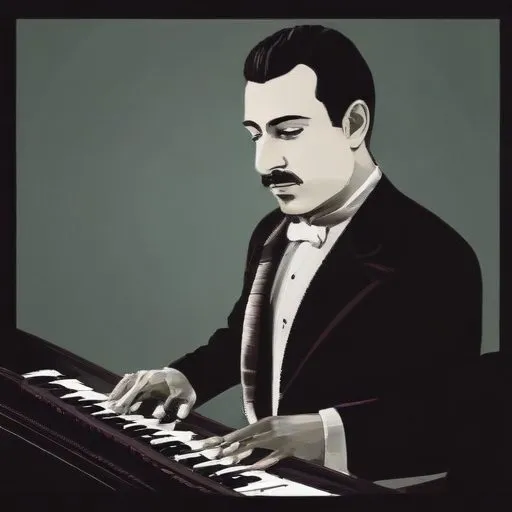
Vagif Mustafazadeh

Vagif Mustafazadeh

Vagif Mustafazadeh was born on March 16th, 1940

Full Name: Vagif Mustafazadeh
Place of Birth: Baku, Azerbaijan
Nationality: Azerbaijani
Profession: Pianist, composer
Genre: Jazz, mugham
Influences: Traditional Azerbaijani music
Notable Work: Azerbaijani jazz
Awards: Azerbaijan State Prize

A virtuosic jazz pianist and composer, blending traditional Azerbaijani folk with modern jazz, creating a unique sound that mesmerized audiences worldwide.

Written by: Liam O'Sullivan Liam O'Sullivan

Vagif Mustafazadeh: The Architect of Azerbaijani Jazz

Vagif Mustafazadeh, a pioneering Soviet-Azerbaijani jazz pianist and composer, is renowned for fusing jazz with traditional Azerbaijani folk music, known as mugham. His innovative style earned him recognition as one of the most influential musicians in Azerbaijan, and his legacy continues to inspire generations of jazz enthusiasts.

Early Life and Education

Born on March 16, 1940, in the historic Old City of Baku, Mustafazadeh's name was chosen by the prominent poet Samed Vurgun, at the request of his mother, a piano teacher who played a significant role in his success. He graduated from the Baku State Musical School named after Asaf Zeynally in 1963 and later enrolled in the Azerbaijan State Conservatoire.

Breaking Barriers: Fusing Jazz and Mugham

During the Stalinist era, jazz was banned in the USSR, including Azerbaijan. However, this didn't deter Mustafazadeh from pursuing his passion. He learned jazz pieces by listening to movies and BBC radio broadcasts, and even attempted to recreate the music on the piano with his friend Vagif Samadoglu. This determination led to the development of his unique style, blending jazz with mugham.

Rise to Fame

As the prohibitions on jazz music were gradually lifted in the 1960s, Mustafazadeh's popularity grew. He began performing at parties, evenings, and clubs, mainly playing classical jazz, blues, and dance music. His talent and innovative style soon made him a household name in Azerbaijan, and he became one of the most influential musical performers in the country.

Philosophical Contributions and Beliefs

Mustafazadeh's music was not only a fusion of styles but also a reflection of his philosophical beliefs. He believed that music should be a bridge between cultures, and his work embodied this idea. His compositions showcased the beauty of Azerbaijani folk music, while also introducing jazz elements, creating a unique and captivating sound.

Personal Milestones and Key Life Events

Legacy and Influence

Vagif Mustafazadeh's innovative style and contributions to the world of jazz have inspired countless musicians and composers. He is remembered as the architect of Azerbaijani jazz, and his legacy continues to shape the country's music scene. His unique fusion of jazz and mugham has paved the way for future generations of musicians to explore and experiment with new sounds.

Historical Context and Comparative Analysis

John Coltrane and Charlie Parker. However, his unique blend of jazz and mugham sets him apart, making him a true innovator in the world of jazz. His work reflects the cultural and historical context of Azerbaijan during the Soviet era, highlighting the country's rich musical heritage.

Trivia and Fun Facts

  • Mustafazadeh's mother, a piano teacher, played a significant role in his early musical development.
  • He learned jazz pieces by listening to movies and BBC radio broadcasts during the Soviet era.
  • Mustafazadeh's music was often performed at underground jazz clubs in Baku, which became popular gathering places for jazz enthusiasts.

Conclusion

Vagif Mustafazadeh's remarkable life and career are a testament to his passion, determination, and innovative spirit. His legacy continues to inspire and influence jazz musicians around the world, cementing his place as one of the most important figures in Azerbaijani jazz.

Timeline
1940
Born in Baku
Vagif Mustafazadeh was born on March 16th in Baku, Azerbaijan SSR, Soviet Union.
1964
Studied at Moscow Conservatory
Mustafazadeh studied at the Moscow Conservatory from 1964 to 1968, learning piano and composition.
1971
Won International Competition
Mustafazadeh won the first prize at the 1971 International Competition of Pianists in Rio de Janeiro.
1977
Became Professor at Baku Conservatory
Mustafazadeh became a professor at the Baku Conservatory, teaching piano and composition.
1979
Died in Baku
Mustafazadeh died on December 16th in Baku, at the age of 39.
Vagif Mustafazadeh

Vagif Mustafazadeh Quiz

Vagif Mustafazadeh's music style can be best described as a fusion of

Score: 0/5
FAQ
What is Vagif Mustafazadehs contribution to Azerbaijani jazz?
Vagif Mustafazadeh was a pioneering Azerbaijani jazz pianist and composer who helped establish Azerbaijan as a major center for jazz in the former Soviet Union.
What is the significance of Vagif Mustafazadehs music?
Vagif Mustafazadehs music is significant for its unique blend of jazz, classical, and traditional Azerbaijani elements. His compositions have been praised for their technical complexity and emotional depth.
What is Vagif Mustafazadehs most famous composition?
Vagif Mustafazadehs most famous composition is Waiting for Aziza, a jazz piece that showcases his mastery of improvisation and melodic invention.
What is Vagif Mustafazadehs legacy in Azerbaijani music?
Vagif Mustafazadehs legacy in Azerbaijani music is immense, inspiring generations of musicians and composers. He remains one of the most celebrated figures in Azerbaijani jazz and classical music.
What is Vagif Mustafazadehs influence on contemporary Azerbaijani music?
Vagif Mustafazadehs influence on contemporary Azerbaijani music is profound, with many musicians drawing on his style and compositions for inspiration. His music continues to be performed and celebrated around the world.

Related People:

Uzeyir Hajibeyov

Born in 1885

A renowned composer, conductor, and playwright who merged traditional Azerbaijani music with Western classical styles, creating a unique cultural identity. He's credited with founding the nation's classical music and opera traditions.