


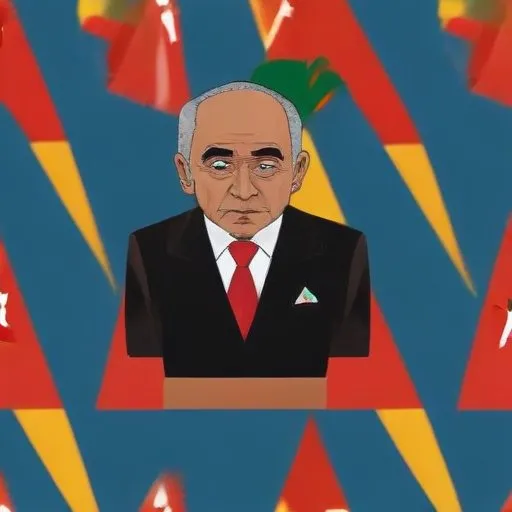
Led the country to independence from British colonial rule and served as its first prime minister, implementing policies to promote economic growth and social welfare.
Sir Vere Cornwall Bird, also known as V.C. Bird, is revered as the first Prime Minister of Antigua and Barbuda, serving from 1981 to 1994. He is most notable for leading the country to independence from British colonial rule in 1981.
Born on December 9, 1909, in a poor area of St. John's, the capital of Antigua, Bird had limited formal education, only attending primary school at St. John's Boys School (now known as the T.N. Kirnon Primary School). This humble beginning did not deter him from becoming a champion of the working class and a prominent figure in Antiguan politics.
Bird's political journey began as an officer in the Salvation Army for two years, where he witnessed the injustices faced by the local black Antiguans and Barbudans. This experience sparked his desire to fight for their freedom and rights. He later became an executive member of the Antigua Trades and Labour Union (ATLU), founded in 1939, and eventually rose to become its president in 1943.
In 1945, Bird was elected to the colonial legislature, marking the beginning of his national acclaim. He formed the Antigua Labour Party and went on to hold various positions, including chief minister, premier, and prime minister. His leadership played a significant role in Antigua and Barbuda's struggle for independence.
Bird's resignation in 1994 was due to failing health and internal issues within the government. His son, Lester Bryant Bird, succeeded him as Prime Minister.
Bird's personal life was marked by his commitment to the working class and his unwavering dedication to the struggle for independence. His decision to leave the Salvation Army to fight for his people's freedom is a testament to his strong convictions.
Sir Vere Cornwall Bird's legacy extends beyond his political achievements. He has inspired generations of Antiguans and Barbudans to strive for a better life, free from colonial rule and oppression. His contributions to the country's development and growth are still felt today.
As a champion of the working class, Bird's influence on modern society is a reminder of the importance of fighting for social justice and equality. His life's work is a testament to the power of dedication, perseverance, and leadership.
Though there are no direct quotes from Sir Vere Cornwall Bird, his actions and achievements speak louder than words. His legacy is a testament to his unwavering commitment to the people of Antigua and Barbuda.
Sir Vere Cornwall Bird's life and achievements are a significant part of Antigua and Barbuda's history. His contributions to the country's struggle for independence and his commitment to the working class have cemented his place as a national hero.
His legacy serves as a reminder of the importance of leadership, dedication, and perseverance in the fight for social justice and equality. As a pioneering figure in Antiguan politics, Bird's impact on modern society is a testament to the power of one individual to make a difference.
