


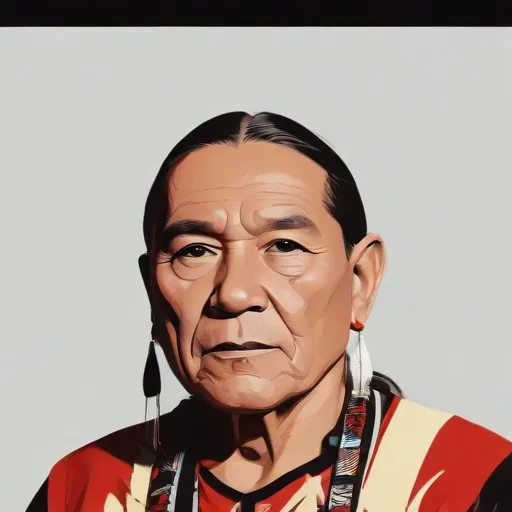
A prominent Indigenous leader and advocate for Native Canadian rights, known for his tireless efforts to preserve Indigenous culture and fight for social justice.
Vern Harper, a Canadian First Nations Cree Elder, medicine man, and Aboriginal rights activist, dedicated his life to promoting indigenous rights, cultural preservation, and environmental sustainability. Born on June 17, 1936, in Regent Park, Toronto, Ontario, Harper's remarkable journey spanned over eight decades, leaving an indelible mark on the lives of countless individuals and communities.
Harper's childhood was marked by trauma and hardship. After his mother's passing, he was placed into the foster care system, where he was raised in a Protestant foster home. However, in his early teens, he returned to his mother's traditional territory in Mistawasis, Saskatchewan, where he rediscovered his roots and learned his traditions and language.
At just 17, Harper enlisted in the United States military, serving in the 82nd Airborne Division during the Korean War. After his military service, he became deeply involved in the American Indian Movement (AIM) in San Francisco, where he befriended legendary musicians Janis Joplin and Jim Morrison. In 1972, he became the vice-president of the Ontario Metis and Non-Status Indian Association, further solidifying his commitment to indigenous rights.
In 1974, Harper co-founded the Native Peoples Caravan, a cross-country trek aimed at raising awareness about broken treaties and grievances against the Canadian government. This pivotal moment in Canadian history galvanized support for indigenous rights and paved the way for future generations of activists. Harper's leadership and vision inspired a new wave of Native American and Canadian Indigenous rights movements.
Harper's literary contributions include his book, Following The Red Road: The Native Peoples Caravan, 1974-1979, which chronicles the Caravan's journey and its significance in the struggle for indigenous rights. His work as a medicine man and cultural preservationist has inspired countless individuals to reconnect with their heritage and cultural traditions.
Throughout his life, Harper received numerous awards and honors for his tireless advocacy and cultural contributions. His legacy continues to inspire new generations of indigenous rights activists, artists, and community leaders.
Harper's life's work embodied a profound commitment to indigenous rights, cultural preservation, and environmental sustainability. He believed in the importance of preserving traditional knowledge and cultural practices, while also promoting understanding and reconciliation between indigenous and non-indigenous communities.
Vern Harper's legacy extends far beyond his own community. His tireless advocacy and cultural contributions have inspired a new wave of indigenous rights activists, artists, and community leaders. His work serves as a testament to the power of grassroots activism and the importance of preserving cultural heritage.
Vern Harper's passing on May 12, 2018, marked the end of an era, but his legacy will continue to inspire and motivate future generations. As a champion of indigenous rights and cultural preservation, Harper's impact on modern society will be felt for years to come.
54 Years Old
The 23rd Prime Minister of Canada, known for his progressive policies and charismatic leadership, has been a prominent figure in Canadian politics since 2015. He has been a strong advocate for climate action, diversity, and inclusion.
72 Years Old
A pioneering environmentalist, lawyer, and politician who has dedicated her life to advocating for climate action, sustainable development, and social justice. She is a prominent leader in the Canadian Green Party and a vocal critic of fossil fuel extraction.
