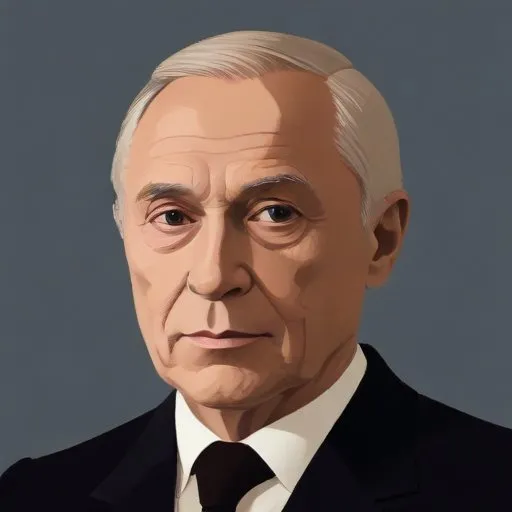
Vernon Duke: The Russian-Born American Composer and Songwriter Extraordinaire
Legendary Works That Left an Indelible Mark
Vernon Duke, aka Vladimir Dukelsky, is renowned for his iconic compositions that have become an integral part of the American musical heritage. His repertoire boasts timeless classics like "Taking a Chance on Love," "I Can't Get Started," "April in Paris," and "What Is There to Say," which continue to captivate audiences to this day.
Early Life and Education
Born on October 10, 1903, in Parfyanovka, Pskov Governorate, Russian Empire, into a Belarusian noble family, Vernon Duke's life was steeped in music from an early age. His family's aristocratic background and connections to the royal families of Georgia and Austria instilled in him a sense of discipline and creativity. At the age of eleven, Duke was admitted to the prestigious Kiev Conservatory, where he honed his skills under the guidance of esteemed mentors Reinhold Glire and Boleslav Yavorsky.
Collaborations that Shaped His Legacy
Vernon Duke's remarkable career was marked by fruitful collaborations with renowned lyricists, including Ted Fetter, John Latouche,
Ira Gershwin, E. Y.
Yip Harburg,
Johnny Mercer,
Ogden Nash, and
Sammy Cahn. These partnerships resulted in some of his most celebrated works, which continue to be performed and admired by music enthusiasts worldwide.
"Autumn in New York": A Masterpiece that Transcends Time
Composed in 1934, "Autumn in New York" is widely regarded as one of Duke's most ambitious and poignant works. The song's intricate verse structure and melodic nuances have been praised by critics and musicians alike. Alec Wilder, a prominent composer and musicologist, has hailed the song as a masterpiece, stating, "The verse may be the most ambitious I've ever seen."
Influence on Modern Music and Society
Vernon Duke's contributions to American popular music have had a profound impact on the industry and society as a whole. His songs have been covered by legends like
Billie Holiday,
Ella Fitzgerald, and
Frank Sinatra, cementing his legacy as a master composer and songwriter. Moreover, his work has influenced generations of musicians, including composer Jack Gottlieb, who has spoken about Duke's enduring impact on his own career.
Philosophical Contributions and Beliefs
Vernon Duke's life and work were guided by a deep sense of artistic expression and a commitment to creative freedom. His music embodies a philosophy that emphasizes the beauty of simplicity, the power of emotional depth, and the importance of collaboration. Duke's beliefs about the role of art in society continue to inspire musicians, composers, and music enthusiasts today.
Legacy and Impact on the Music World
Vernon Duke's remarkable life and career have left an indelible mark on the music world. His timeless compositions, collaborations, and philosophical contributions have inspired generations of musicians and continue to shape the American musical landscape. As a testament to his enduring legacy, Duke's music remains a cherished part of our cultural heritage, a reflection of his boundless creativity and dedication to his craft.
Trivia and Fun Facts
- Vernon Duke's paternal grandmother was a direct descendant of the kings of Georgia.
- He wrote the oratorio "The End of St. Petersburg" (1931-1937), inspired by his visit to Moscow and Saint Petersburg in 1915.
- Duke's family escaped the Russian Revolution and settled in the United States, where he became a naturalized citizen.
Vernon Duke: A Life of Passion, Creativity, and Timeless Music
Vernon Duke's remarkable journey, marked by creative genius, perseverance, and dedication, continues to inspire generations of musicians and music enthusiasts. As we celebrate his life and legacy, we are reminded of the enduring power of music to transcend time, touch hearts, and bring people together.