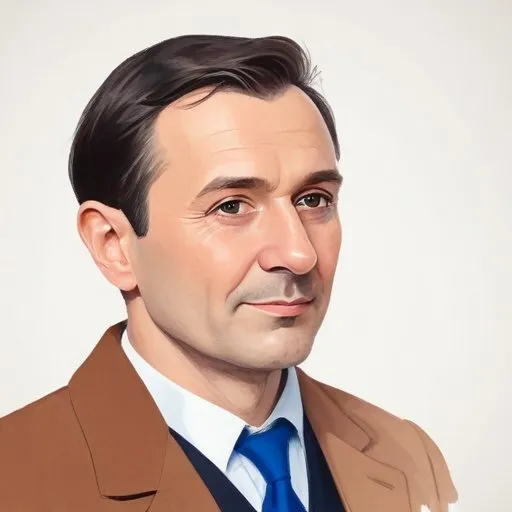
Victor Babe: The Pioneer of Modern Microbiology
A Trailblazer in the World of Bacteriology
Victor Babe is renowned for being one of the founders of modern microbiology, and his groundbreaking work in the field of bacteriology has left an indelible mark on the scientific community. As the author of one of the first treatises on bacteriology, "Bacteria and their role in pathological anatomy and histology of infectious diseases," published in 1885, Babe's contributions to the field are nothing short of remarkable.
Early Life and Education
Born on July 28, 1854, in Vienna, Austria, Victor Babe was the son of Vinceniu Babe, a Romanian magistrate, teacher, journalist, and politician, and Sophia Goldschneider. His father's influential stature in the Romanian Academic Society and the Romanian National Party played a significant role in shaping Babe's early life and interests. Victor had a sister, Alma, and a brother, Aurel, who would later become a chemist and collaborator at the Institute of Bucharest.
Career Highlights and Major Works
Babe's illustrious career was marked by several milestones, including:
- Co-authoring "Bacteria and their role in pathological anatomy and histology of infectious diseases" with French scientist Victor Andr Cornil in 1885.
- Discovering more than 50 unknown germs and developing new methods of staining bacteria and fungi.
- Introducing rabies vaccination and founding serotherapy in Romania.
- Enunciating the principle of antibiosis and underlying the principle of passive immunity in 1888.
Philosophical Contributions and Beliefs
Babe's work was guided by his deep understanding of the intricate relationships between microorganisms and human diseases. His research focused on the role of bacteria in causing infectious diseases, and he was driven by a passion to develop effective treatments and prevention methods. His philosophical approach to science emphasized the importance of collaboration and knowledge-sharing, as evident in his joint work with Cornil.
Personal Milestones and Key Life Events
Babe's personal life was marked by significant events, including his marriage to Iosefina Thorma and the birth of their son, Mircea. His brother, Aurel, was a chemist who worked with him at the Institute of Bucharest, and Aurel's son, Aurel A. Babe, went on to become a physician and discover a screening test for cervical cancer.
Legacy and Impact on Modern Society
Victor Babe's contributions to the field of microbiology have had a lasting impact on modern society. His work on rabies vaccination, serotherapy, and the discovery of unknown germs has saved countless lives and paved the way for future generations of scientists. The Babe-Bolyai University in Cluj-Napoca and the University of Medicine and Pharmacy in Timișoara bear his name, a testament to his enduring legacy in Romania and beyond.
Inspirational Stories and Motivations
Babe's life and work serve as a powerful inspiration to aspiring scientists and researchers. His dedication to his craft, his passion for discovery, and his commitment to improving human lives are a testament to the transformative power of science and education. As we look back on his remarkable achievements, we are reminded of the boundless potential that lies within us, waiting to be unleashed.
FAQ
What were Victor Babeșs contributions to medicine?
Victor Babeș was a Romanian physician and biologist who made significant contributions to the fields of microbiology, immunology, and parasitology, and was a pioneer in the development of vaccines.
What was Victor Babeșs work on rabies?
Victor Babeș worked on the development of a vaccine against rabies, and was one of the first scientists to demonstrate the importance of antibodies in combating infectious diseases.
How did Victor Babeșs work influence the development of modern medicine?
Victor Babeșs work had a significant impact on the development of modern medicine, shaping our understanding of infectious diseases, and paving the way for the development of vaccines and treatments for a range of diseases.
What was Victor Babeșs role in the establishment of the Institute of Microbiology in Bucharest?
Victor Babeș was instrumental in the establishment of the Institute of Microbiology in Bucharest, which became a major center for medical research and education in Romania.
What is Victor Babeșs legacy in medicine?
Victor Babeșs legacy in medicine is that of a pioneering scientist, who helped lay the foundations for modern medicine, and continues to inspire and influence medical research and practice today.