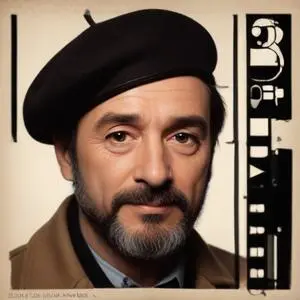
Vilmos Zsigmond: The Cinematographer Behind the American New Wave
A Master of Light and Composition
Vilmos Zsigmond was a Hungarian-American cinematographer who helped shape the look of American movies in the 1970s, earning him a place as one of the leading figures in the American New Wave movement. With his work on films like
Close Encounters of the Third Kind and
The Deer Hunter, he cemented his status as a master of light and composition.
Early Life and Career
Born on June 16, 1930, in Szeged, Hungary, Zsigmond's interest in photography began at the age of 17 after receiving a book of black-and-white photographs taken by Hungarian photographer Eugene Dulovits. Under the Soviet-imposed government of the Hungarian People's Republic, he was not allowed to study photography due to his family's bourgeois background. Undeterred, Zsigmond worked in a factory, bought a camera, and taught himself how to take pictures, eventually organizing a camera club for the workers.
Rise to Prominence
Zsigmond's big break came when he emigrated to the United States in the 1950s, where he began working as a cinematographer on low-budget films and television shows. His early work caught the attention of director
Robert Altman, with whom he collaborated on several films, including
M*A*S*H (1970) and
McCabe and Mrs. Miller (1971).
Awards and Accolades
Zsigmond's work on
Close Encounters of the Third Kind (1977) earned him the Academy Award for Best Cinematography, while his work on
The Deer Hunter (1978) won him the BAFTA Award for Best Cinematography. He also won the Emmy Award for Outstanding Individual Achievement in Cinematography for a Miniseries or a Special for the HBO miniseries
Stalin (1992).
Influence and Legacy
Zsigmond's influence on modern cinematography is undeniable. In 2003, he was voted as one of the ten most influential cinematographers in history by the members of the International Cinematographers Guild. The American Society of Cinematographers (ASC) awarded him their Lifetime Achievement Award in 1998, and his work on
McCabe and Mrs. Miller,
Close Encounters of the Third Kind, and
The Deer Hunter made the ASC's list of the top 50 best-shot films from 1950 to 1997.
Personal Life and Milestones
Zsigmond passed away on January 1, 2016, leaving behind a legacy that continues to inspire cinematographers and filmmakers around the world. Throughout his career, he worked with some of the most renowned directors in the industry, including
Steven Spielberg,
Brian De Palma,
Michael Cimino, and Woody Allen.
Quotes and Memorable Sayings
"Cinematography is not just about lighting and camera angles. It's about telling a story and creating a mood."
Impact on Pop Culture
Zsigmond's work on
Close Encounters of the Third Kind helped to create a sense of realism and wonder that has become synonymous with science fiction films. His influence can be seen in many modern films and television shows, from
Stranger Things to
Arrival.
Philosophical Contributions and Beliefs
Zsigmond believed in the importance of collaboration and experimentation in filmmaking. He was known for his ability to work closely with directors to create a unique visual style that elevated the story and characters.
Trivia and Fun Facts
- Zsigmond was the first Hungarian-born cinematographer to win an Academy Award.
- He was a member of the American Society of Cinematographers (ASC) and the Academy of Motion Picture Arts and Sciences (AMPAS).
- Zsigmond's work on The Deer Hunter was done using a special camera lens that he had designed himself.
Conclusion
Vilmos Zsigmond's contributions to the world of cinematography are immeasurable. His legacy continues to inspire and influence filmmakers around the world, and his work remains a testament to the power of light and composition in storytelling.
FAQ
What was Vilmos Zsigmonds career as a cinematographer like?
Vilmos Zsigmond was a Hungarian-American cinematographer and producer who worked on numerous films, including Deliverance and Close Encounters of the Third Kind. He was known for his innovative use of lighting and camera techniques.
What awards did Vilmos Zsigmond win for his cinematography?
Vilmos Zsigmond won several awards for his cinematography, including the Academy Award for Best Cinematography and the American Society of Cinematographers Award.
What was Vilmos Zsigmonds early life and education like?
Vilmos Zsigmond was born in 1930 in Szeged, Hungary. He studied cinematography at the Hungarian Academy of Drama and Film and began working in the film industry in Hungary.
What themes did Vilmos Zsigmond explore in his cinematography?
Vilmos Zsigmonds cinematography often explored themes of light and shadow, using innovative techniques to create mood and atmosphere in his films.
How is Vilmos Zsigmond remembered in the film industry?
Vilmos Zsigmond is remembered as a pioneering cinematographer who made significant contributions to the art of filmmaking. He died in 2016, leaving behind a legacy in the film industry.