


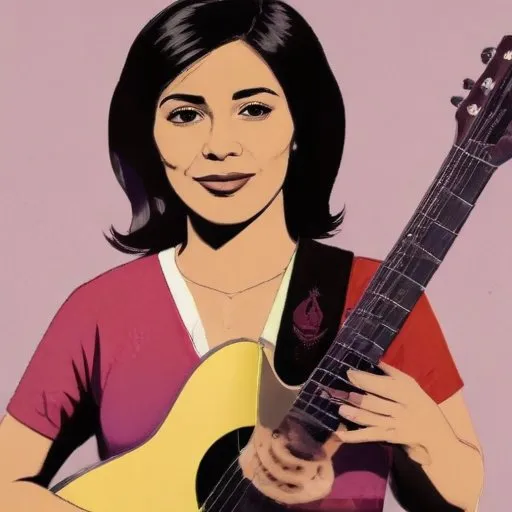
Violeta Parra was a Chilean composer, singer-songwriter, folklorist, ethnomusicologist, and visual artist who pioneered the Nueva Canción Chilena (Chilean New Song) movement, reinvigorating and reinventing Chilean folk music to reach a broader audience. Her contributions to Chilean culture are so profound that her birthdate, October 4, is celebrated as Chilean Musicians' Day.
Violeta Parra was born on October 4, 1917, in either San Carlos or San Fabin de Alico, southern Chile, to a family of modest means. Her father, Nicanor Parra Alarcón, was a music teacher, and her mother, Clarisa Sandoval Navarrete, was a seamstress who sang and played the guitar, teaching Violeta and her siblings traditional folk songs.
Parra was one of nine children in the prolific Parra family, which included notable figures such as the modern poet Nicanor Parra and folklorist Roberto Parra. Her family's love for music and performance played a significant role in shaping her artistic destiny.
Violeta Parra's music was deeply rooted in Chilean folk traditions, but she sought to modernize and popularize it to appeal to a wider audience. She traveled throughout Chile, collecting and documenting folk songs, stories, and myths, which she then incorporated into her own music.
Her efforts led to the creation of the Nueva Canción Chilena movement, a genre that blended traditional folk music with contemporary styles and lyrics. This movement not only revitalized Chilean folk music but also inspired a new generation of musicians to explore their cultural heritage.
Violeta Parra was a multifaceted artist who made significant contributions to various fields. She was a prolific composer, writing over 300 songs that explored themes of love, social justice, and Chilean culture. Her music was characterized by its simplicity, authenticity, and emotional depth.
As a visual artist, Parra created vibrant tapestries and embroideries that reflected her love for Chilean folklore and mythology. Her artwork was exhibited in various galleries and museums, earning her recognition as a talented artist.
Violeta Parra's legacy extends beyond her own music and art. She inspired a generation of Chilean musicians, including her own children, Ángel and Isabel Parra, who are prominent figures in the Nueva Canción Chilena movement.
In 2011, a biopic about her life, titled Violeta Went to Heaven, was released, further cementing her status as a cultural icon. The film showcased her struggles and triumphs, offering a glimpse into the life of a true innovator.
Today, Violeta Parra's music and art continue to inspire new generations of artists, musicians, and Chileans alike. Her pioneering spirit and dedication to preserving Chilean culture have earned her a permanent place in the country's cultural heritage.
"I don't sing for the ones who are already awake, but for those who are still sleeping, so that they can wake up."
Violeta Parra's life was a testament to her passion for Chilean culture and her dedication to preserving its rich heritage. Her music, art, and legacy continue to inspire and enrich the lives of people around the world.
Born in 1904
A Chilean poet and diplomat who wrote passionate and evocative poetry that explored love, politics, and the human condition, and was awarded the Nobel Prize in Literature in 1971.
Born in 1914
A Chilean polymath who excelled in physics, mathematics, and poetry, creating a unique blend of art and science that inspired generations. He's known for his anti-poetry movement, which rejected traditional poetic forms.
Born in 1889
A Chilean poet and educator who was the first Latin American to win the Nobel Prize in Literature, known for her passionate and introspective poetry that explores themes of love, nature, and social justice.
Born in 1894
A provocative and influential poet who challenged Chile's literary establishment with his avant-garde style and socially conscious themes. He's known for his bold, innovative poetry that explores the human condition.
