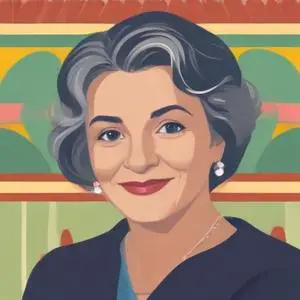
Virginia Satir

Virginia Satir

Virginia Satir was born on June 26th, 1916

Full Name: Virginia M. Satir
Nationality: American
Profession: Psychotherapist and Author
Place of Birth: Neillsville, Wisconsin
Active Years: 1950s-1988
Notable Work: Conjoint Family Therapy
Theory: Satir Model
Awards: American Academy of Psychotherapists

A pioneering family therapist and author who developed the Satir Model, a holistic approach to family therapy that emphasizes self-esteem, communication, and coping skills. Her work has had a lasting impact on the field of family therapy.

Timeline
1916
Born in Nebraska
Virginia Satir was born on June 26, 1916, in Omaha, Nebraska, USA, starting her life as a future psychotherapist and author.
1943
Earned Masters Degree
Satir earned her Masters degree in social work from the University of Chicago, laying the foundation for her future work in psychotherapy.
1964
Published Conjoint Family Therapy
Satir published her influential book Conjoint Family Therapy, which introduced her innovative approach to family therapy.
1977
Founded the Avanta Network
Satir founded the Avanta Network, a global organization dedicated to promoting her approach to family therapy and personal growth.
1988
Passed Away
Virginia Satir passed away on September 10, 1988, at the age of 72, leaving behind a legacy in the field of psychotherapy.
Virginia Satir

Virginia Satir Quiz

What is the primary focus of Virginia Satir's approach to family therapy?

Score: 0/5
FAQ
What was Virginia Satirs approach to therapy?
Virginia Satirs approach to therapy focused on family dynamics, self-esteem, and communication, emphasizing the importance of self-awareness and personal growth.
What was Virginia Satirs most famous book?
Virginia Satirs most famous book is Conjoint Family Therapy, which outlined her approach to family therapy.
What was Virginia Satirs impact on psychotherapy?
Virginia Satirs work had a significant impact on psychotherapy, influencing the development of family therapy and humanistic psychology.
How did Virginia Satirs personal life influence her work?
Virginia Satirs personal experiences, including her adoption and her work with marginalized communities, shaped her approach to therapy and informed her writing.
What kind of training did Virginia Satir provide?
Virginia Satir provided training and workshops for therapists, counselors, and other mental health professionals, focusing on her Satir Model of therapy.

Related People:

Carl Rogers

Born in 1902

Developed person-centered therapy, emphasizing empathy and genuineness to promote personal growth and self-actualization. Focused on creating a non-judgmental space for individuals to explore their thoughts and feelings.

Abraham Maslow

Born in 1908

Developed the Hierarchy of Needs, a pyramid-shaped model that prioritizes human needs, from basic physiological needs to self-actualization and personal growth. His work focuses on human motivation and the pursuit of happiness.

Erik Erikson

Born in 1902

Developed the theory of psychosocial development, which proposes that individuals go through eight stages of development from infancy to old age, each with its own unique challenges and opportunities. His work has had a significant impact on our understanding of human development and identity formation.

Jean Piaget

Born in 1896

Developed groundbreaking theories on child cognitive development and learning, emphasizing active discovery and hands-on experience. His work has shaped modern education and parenting practices.

B. F. Skinner

Born in 1904

Developed the theory of operant conditioning, which explores the relationship between behavior and environment, and invented the "Skinner box" to study learning and behavior.

Albert Bandura

Born in 1925

Developed the theory of social learning, which suggests that people learn new behaviors by observing and imitating others, and is known for his Bobo doll experiment.

Carl Jung

Born in 1875

Developed the concept of collective unconscious and archetypes, and founded analytical psychology, which emphasizes the integration of opposites and the process of individuation.