


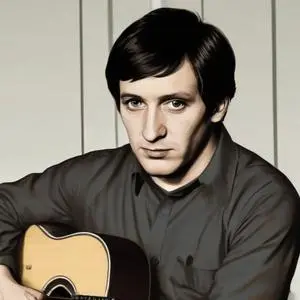
A Russian cultural icon, renowned for his poignant, socially conscious songwriting and acting, which captured the essence of Soviet life and resonated with the masses.
Vladimir Vysotsky was a Russian singer-songwriter, poet, and actor who left an indelible mark on Soviet culture. With his unique singing style and lyrics that often used humorous street jargon to comment on social and political issues, he became a cultural icon of the Soviet era.
Vysotsky was born on January 25, 1938, in Moscow to a Jewish father and a Russian mother. His mother, Nina Maksimovna, was a German translator and a great fan of theatre, often taking him to performances from a young age. This exposure sparked Vysotsky's passion for the arts, which was further nurtured by his paternal grandmother, Dora Bronshteyn.
Vysotsky's talent for songwriting and performance quickly gained him recognition in the Soviet underground music scene. His songs, often written in a raw, documentary style, spoke to the everyday struggles and hopes of the Soviet people. His music was banned from official Soviet media, but it spread like wildfire through underground channels, earning him a devoted following.
Vysotsky's lyrics often tackled taboo subjects like government corruption, bureaucratic red tape, and the struggles of daily life under communism. His music became a beacon of hope for those disillusioned with the Soviet system, and he was hailed as the "Bard of Soviet Counterculture."
Vysotsky's influence on Soviet culture cannot be overstated. He inspired a generation of musicians, poets, and actors, and his music continues to be celebrated and performed to this day. His unflinching portrayal of Soviet life also helped to humanize the Soviet people, challenging the official propaganda machine's rosy portrayal of communism.
Vysotsky's personal life was marked by controversy and struggle. He was known for his heavy drinking and womanizing, and his marriages were tumultuous. Despite his flaws, however, Vysotsky remained a deeply compassionate and empathetic person, using his music to speak truth to power and give voice to the voiceless.
Vladimir Vysotsky's legacy extends far beyond his music. He helped to galvanize a generation of Soviets who sought greater freedom and creativity. His music remains a testament to the power of art to challenge and transform society, and his spirit continues to inspire artists and activists around the world.
Vysotsky's words continue to resonate with audiences today. One of his most famous quotes is: "I don't write for the State, I write for the people." This sentiment encapsulates his commitment to using his art to speak truth to power and to give voice to the marginalized.
Although Vysotsky's work was largely ignored by the Soviet establishment during his lifetime, he has since been recognized for his contributions to Russian culture. In 1996, he was posthumously awarded the title of People's Artist of Russia.
Born in 1924
A renowned Russian bard, known for his poignant lyrics and soothing melodies that captured the essence of Soviet life, inspiring generations of musicians and writers.
93 Years Old
A prominent Russian poet and playwright, known for his bold and provocative works that often critiqued Soviet politics and society, earning him both acclaim and controversy.
89 Years Old
A celebrated poet, short story writer, and translator, known for her lyrical and introspective works that explored themes of love, nature, and the human condition.
94 Years Old
A celebrated poet and author of Soviet-era literature, known for his unique blend of lyricism and social commentary, exploring themes of love, politics, and Russian identity.
Born in 1924
A visionary filmmaker celebrated for his poetic and visually stunning movies that often explored the intersection of art, culture, and politics. His innovative storytelling style continues to inspire generations of filmmakers.
