


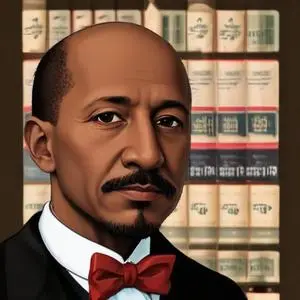
A pioneering figure in the struggle for racial equality, advocating for civil rights and social justice through groundbreaking research and powerful writings.
W. E. B. Du Bois, a renowned American sociologist, historian, and civil rights activist, is best known for his tireless efforts to promote racial equality, challenge systemic racism, and advocate for social justice. Throughout his remarkable life, Du Bois remained a vocal critic of discrimination, inequality, and oppression, leaving an indelible mark on the struggle for human rights and dignity.
Born on February 23, 1868, in Great Barrington, Massachusetts, Du Bois grew up in a relatively integrated community that instilled in him a strong sense of self-worth and encouraged his intellectual curiosity. He went on to graduate from Fisk University in 1888 and later earned his Ph.D. from Harvard University in 1895, becoming the first African American to do so.
In 1905, Du Bois co-founded the Niagara Movement, a group of African American activists seeking to promote civil rights and challenge the racist policies of the time. This movement laid the foundation for the National Association for the Advancement of Colored People (NAACP), which Du Bois helped establish in 1909. As a prominent NAACP leader, Du Bois played a crucial role in shaping the organization's agenda, advocating for voting rights, equal education, and an end to racial segregation.
Du Bois believed that the intellectual elite, which he referred to as the "Talented Tenth," held the key to elevating the African American community. He argued that this group, comprised of educated and talented individuals, had a moral obligation to use their skills and knowledge to uplift and empower their community.
Du Bois was a committed Pan-Africanist, advocating for the unity and empowerment of people of African descent worldwide. He participated in several Pan-African Congresses, fighting for the independence of African colonies from European powers. His commitment to global social justice extended to his support for anti-colonial movements in Asia and Africa.
Du Bois was a prolific author, publishing numerous books and articles that challenged racism, promoted social justice, and celebrated African American culture. His influential works, such as The Souls of Black Folk (1903) and Dusk of Dawn (1940), continue to inspire and educate people today.
Du Bois's remarkable life spanned nearly a century, during which he traveled extensively, including to Europe, Africa, and the Soviet Union. He died on August 27, 1963, in Accra, Ghana, where he had lived in exile since 1961. Du Bois's courageous activism, literary contributions, and unwavering commitment to social justice have inspired generations of civil rights leaders, scholars, and advocates.
W. E. B. Du Bois's remarkable life and legacy continue to inspire individuals around the world to strive for a more just and equitable society, where all people can live with dignity and respect.
97 Years Old
A prominent leader in the civil rights movement, advocating for racial equality and social justice through nonviolent means, leaving a lasting impact on American history.
Born in 1925
A prominent figure in the Civil Rights Movement, advocating for African American rights and self-defense, and a powerful orator who inspired a generation.
Born in 1913
Refused to give up her seat on a Montgomery, Alabama bus to a white person, sparking the Montgomery Bus Boycott, a pivotal event in the Civil Rights Movement.
Born in 1908
A trailblazing lawyer and civil rights champion who broke racial barriers in the US justice system, serving as the first African American on the Supreme Court. He fought tirelessly for equality and justice, leaving a lasting impact on American history.
Born in 1902
A renowned poet, novelist, and playwright who powerfully voiced the experiences and struggles of African Americans during the Harlem Renaissance, using jazz and blues rhythms to convey the spirit of his people.
Born in 1891
A celebrated author and anthropologist who explored African-American culture through novels, stories, and folklore, particularly in the rural South during the early 20th century.
Born in 1903
A prominent figure of the Harlem Renaissance, he crafted poignant poetry and novels that explored the African American experience, earning a lasting legacy in American literary history.
Born in 1889
A prominent figure of the Harlem Renaissance, known for powerful poetry and novels that explored the experiences of black people in America and the Caribbean, advocating for racial equality and social justice.
