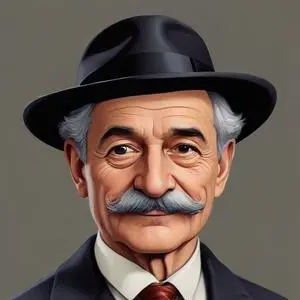
Walther Bothe: The Pioneer of Coincidence Methods in Particle Physics
A Life Devoted to Unraveling the Secrets of Nuclear Reactions
Walther Bothe was a German nuclear physicist renowned for his groundbreaking work in developing coincidence methods to study particle physics. His pioneering efforts in this field earned him a share of the Nobel Prize in Physics in 1954, solidifying his position as a leading figure in the world of nuclear physics.
Early Life and Education
Born on January 8, 1891, in Oranienburg, Germany, Bothe was the son of Friedrich Bothe and Charlotte Hartung. He pursued his higher education at the Friedrich-Wilhelms-Universität (now known as the Humboldt University) from 1908 to 1912.
War Years and Early Career
Bothe's academic journey was interrupted by World War I, during which he served in the military from 1914 to 1918. He was subsequently captured by the Russians and held as a prisoner of war until 1920. Upon his return to Germany, he resumed his research career, focusing on nuclear reactions and particle physics.
The Coincidence Method and Its Applications
Bothe's most significant contribution to science was the development of coincidence methods, which enabled the simultaneous detection of multiple particles in nuclear reactions. This innovative approach allowed him to study the Compton effect, cosmic rays, and the wave-particle duality of radiation with unparalleled precision. His work in this area paved the way for numerous breakthroughs in nuclear physics.
Academic Appointments and Honors
Bothe's academic career was marked by several prestigious appointments. In 1930, he became a full professor and director of the physics department at the University of Giessen. Two years later, he took on the role of director of the Physical and Radiological Institute at the University of Heidelberg. Despite being driven out of this position by the Deutsche Physik movement, he continued to make significant contributions to the field. In 1946, he was reinstated as a professor at the University of Heidelberg.
The German Nuclear Energy Project and the Uranverein
In 1939, Bothe became a principal in the German nuclear energy project, also known as the Uranverein (Uranium Club), under the supervision of the Army Ordnance Office. His involvement in this project highlights his significance in the development of nuclear research in Germany during World War II.
Legacy and Impact
Bothe's contributions to nuclear physics have had a lasting impact on the scientific community. After his death in 1957, his Physics Institute at the KWImF was elevated to the status of a new institute under the
Max Planck Society, and it was later renamed the Max Planck Institute for Nuclear Physics. The institute's main building was named the Bothe Laboratory in his honor.
- Bothe's pioneering work in coincidence methods has inspired generations of nuclear physicists.
- His research has led to significant advances in our understanding of nuclear reactions and particle physics.
- His involvement in the German nuclear energy project highlights the complex and often controversial role of scientists in wartime research.
Awards and Honors
Bothe received numerous awards and honors for his contributions to science, including:
- 1954 Nobel Prize in Physics (shared with Max Born)
- 1946 Elected as a member of the German Academy of Sciences Leopoldina
Walther Bothe's remarkable life and work have left an indelible mark on the world of nuclear physics. His pioneering spirit, innovative approach, and dedication to scientific inquiry continue to inspire researchers today.
FAQ
What were Walther Bothes scientific contributions?
Walther Bothe was a German physicist who made significant contributions to the fields of nuclear physics and radiation biology. He was awarded the Nobel Prize in Physics in 1954 for his discovery of the coincidence method, a technique for detecting gamma radiation.
What was Walther Bothes role in the development of nuclear physics?
Walther Bothe played a key role in the development of nuclear physics, helping to establish it as a distinct field of study. He was one of the first scientists to demonstrate the existence of nuclear reactions and developed techniques for detecting and measuring nuclear radiation.
How did Walther Bothes work impact the field of medicine?
Walther Bothes work had a significant impact on the field of medicine, as his research on radiation biology helped to establish the risks and benefits of radiation therapy for cancer treatment. His discoveries also led to the development of new medical applications for radiation, such as radiation sterilization of medical instruments.
What were Walther Bothes views on the responsible use of nuclear energy?
Walther Bothe was a strong advocate for the responsible use of nuclear energy, believing that it had the potential to provide clean and sustainable energy sources. He worked to promote international cooperation on nuclear safety and non-proliferation.
What is Walther Bothes legacy?
Walther Bothes legacy is that of a pioneering physicist who made significant contributions to our understanding of nuclear physics and radiation biology. His discoveries and advocacy helped to promote the responsible use of nuclear energy and paved the way for future generations of scientists.