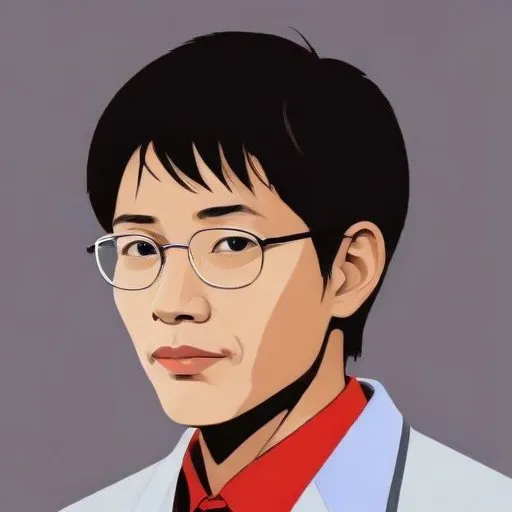
Wang Xuan: The Pioneer of Chinese Language Laser Typesetting
A Trailblazer in Computer Science
Wang Xuan, a renowned Chinese computer scientist, is revered as the "Father of Chinese Language Laser Typesetting" for his groundbreaking contributions to the development of laser typesetting systems in the Chinese language. With a stellar career spanning over four decades, Wang Xuan has left an indelible mark on the field of computer science, revolutionizing the way Chinese characters are processed and printed.
Early Life and Education
Born on February 5, 1937, in Wuxi, Jiangsu, China, Wang Xuan graduated from the Department of Mathematics and Mechanics at Peking University in 1958. His fascination with computer science led him to devote himself to education and research in this field.
Pioneering Achievements
Wang Xuan's most notable achievement is the development of the fourth-generation laser typesetting system, which surpassed Japan's second-generation optical designation and the third-generation CRT designation. This innovative system enabled the efficient processing and printing of Chinese characters, earning him international recognition and accolades.
Career Highlights and Major Works
- Research into computer processing of words, graphics, and images
- Development of laser typesetting systems in the Chinese language
- In charge of research and development of electronic publishing systems in 1975
- Founder of the major technology conglomerate company Founder Group in 1986
- Vice-president of the Chinese People's Political Consultative Conference (CPPCC)
Awards and Honors
Wang Xuan's outstanding contributions to computer science have been recognized with numerous awards and honors, including:
- State Preeminent Science and Technology Award in 2001, presented by President Jiang Zemin
- Asteroid 4913 Wangxuan, discovered in 1965, was named in his memory
Legacy and Impact
Wang Xuan's pioneering work has had a profound impact on the development of computer science and technology in China. His innovations have enabled the widespread use of Chinese language processing and printing, facilitating communication and cultural exchange worldwide. As a testament to his legacy, Wang Xuan's contributions continue to inspire future generations of computer scientists and engineers.
Personal Milestones and Key Life Events
Wang Xuan's remarkable life was marked by several significant events, including:
- Academician at the Chinese Academy of Sciences and the Chinese Academy of Engineering
- Founder of the Founder Group, a major technology conglomerate company
- Vice-president of the CPPCC
Historical Context and Legacy
Wang Xuan's remarkable achievements are set against the backdrop of China's rapid industrialization and technological advancement. His work has not only boosted China's computer science capabilities but has also contributed to the country's economic growth and global competitiveness. As a trailblazer in computer science, Wang Xuan's legacy continues to inspire innovation and progress in the field.
FAQ
What is Wang Xuans most famous contribution?
Wang Xuan is best known for her work on artificial intelligence, machine learning, and data mining, making significant contributions to the development of human-computer interaction and natural language processing.
What is Wang Xuans research focus?
Wang Xuans research focuses on developing intelligent systems that can understand and interact with humans in a more natural way, using AI and machine learning techniques.
What awards has Wang Xuan won?
Wang Xuan has won several awards for her contributions to computer science, including the China National Science Fund for Distinguished Young Scholars and the IEEE Computer Society Technical Achievement Award.
What is Wang Xuans academic background?
Wang Xuan earned her PhD in computer science from Tsinghua University and held faculty positions at the University of Science and Technology of China before becoming a professor at Tsinghua University.
What is Wang Xuans legacy?
Wang Xuans legacy is as a leading researcher in AI and human-computer interaction, inspiring future generations of computer scientists to explore the potential of AI and machine learning.