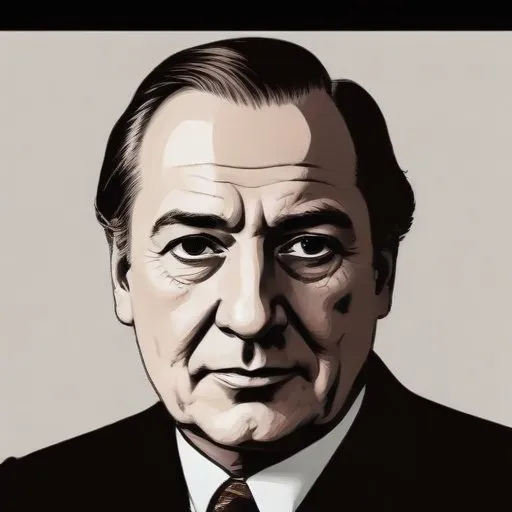
The Controversial Legacy of Ward Churchill
A Provocative Voice on Native American Rights and Government Criticism
Ward Churchill, a renowned American activist and author, is best known for his provocative writings on the historical treatment of Native Americans by the United States government and his critique of American foreign policy. His theories and ideas, often expressed in a direct and confrontational style, have sparked heated debates and controversies throughout his career.
Early Life and Education
Born on October 2, 1947, in Urbana, Illinois, Churchill's early life was marked by the divorce of his parents, Jack LeRoy Churchill and Maralyn Lucretia Allen, before he turned two. He grew up in Elmwood, Illinois, and attended local schools. In 1966, he was drafted into the United States Army, where he served as a public information specialist.
The "Little Eichmanns" Controversy
Churchill's 2001 essay, "On the Justice of Roosting Chickens," catapulted him into the national spotlight. In this work, he argued that the September 11 attacks were a natural and unavoidable consequence of unlawful U.S. foreign policy over the latter half of the 20th century. The essay is infamous for Churchill's use of the phrase "little Eichmanns" to describe the technocratic corps working in the World Trade Center. This provocative statement sparked widespread outrage and earned him both praise and scorn from various quarters.
Academic Career and Controversies
Churchill was a professor of ethnic studies at the University of Colorado Boulder from 1990 until 2007. During his tenure, he was embroiled in several controversies, including allegations of research misconduct, which led to his firing in 2007. Churchill filed a lawsuit against the University of Colorado, claiming unlawful termination of employment. In 2009, a Denver jury found in his favor, awarding him $1 in damages, but a District Court judge later vacated the monetary award and declined his request for reinstatement.
Philosophical Contributions and Beliefs
Churchill's work is characterized by his critique of American imperialism and its treatment of Native Americans. He has written extensively on the historical injustices perpetrated by the U.S. government, arguing that these actions have led to ongoing social and economic disparities. His philosophical contributions have been influential in shaping discussions on Native American rights, government accountability, and social justice.
Influence on Modern Society
Churchill's ideas have had a significant impact on modern society, inspiring a new generation of scholars, activists, and thinkers. His work has encouraged critical thinking about American history, politics, and culture, fostering a more nuanced understanding of the complex relationships between dominant and marginalized groups.
Major Works and Career Highlights
Churchill has authored numerous books, including "Agents of Repression: The FBI's Secret Wars Against the Black Panther Party and the American Indian Movement," " Fantasies of the Master Race: Literature, Cinema, and the Colonization of American Indians," and "On the Justice of Roosting Chickens: Reflections on the Consequences of U.S. Imperial Arrogance and Criminality."
Personal Milestones and Key Life Events
Churchill's personal life has been marked by controversy and criticism. Despite these challenges, he has remained committed to his work, refusing to back down from his principles. His determination and resilience have inspired many, earning him a reputation as a passionate advocate for social justice.
Awards and Honors
Churchill has received several awards and honors for his work, including the American Book Award for "Agents of Repression" and the Gustavus Myers Outstanding Book Award for "Fantasies of the Master Race."
Legacy and Impact
Ward Churchill's legacy is complex and multifaceted. While controversy has often dogged his career, his work has also inspired a new generation of thinkers and activists. His critiques of American power and his advocacy for Native American rights have helped shape contemporary discussions on social justice and government accountability. As a provocative voice in American intellectual and political circles, Churchill's ideas continue to resonate, challenging us to reexamine our assumptions about history, power, and social justice.