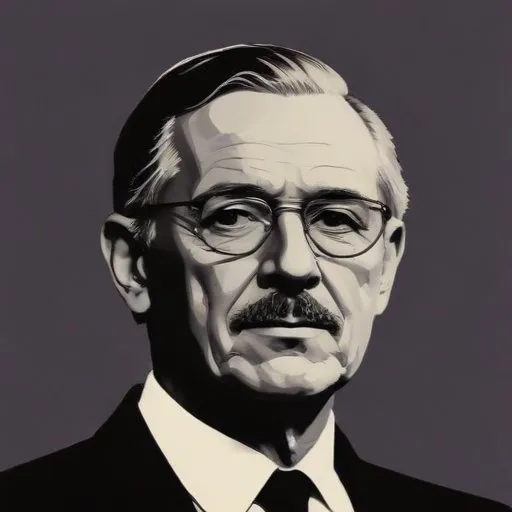
Werner Hoyer: A Pioneering Economist and Politician
A Leading Figure in European Politics and Finance
Werner Hoyer is a renowned German economist and politician who has left an indelible mark on European politics and finance. As the former President of the European Investment Bank (EIB), Hoyer has been instrumental in shaping the continent's economic landscape and fostering growth and development.
Early Life and Education
Born on November 17, 1951, in Germany, Hoyer graduated as an economist from the University of Cologne in 1974. He went on to earn his PhD in economics from the same university in 1977, with a dissertation titled "Wealth Effects of Money: Theoretical Approaches to the Role of Money as a Capital Property in the Economic Process."
Early Career and Academic Pursuits
Hoyer began his career as a scientific assistant at the University of Cologne, where he worked until 1984. During this period, he also taught international economics at the university until 1994. His academic pursuits led him to work with the Carl Duisberg Society in Cologne from 1985 to 1987.
Political Career and Rise to Prominence
Hoyer's foray into politics began in 1972, when he became a member of the Free Democratic Party (FDP). He quickly rose through the ranks, becoming a board member of the Young Liberals from 1983 to 1986 and chairing the local party board in Cologne from 1984 to 1992. In 1994, he became a member of the federal FDP board.
Union of European Federalists
Hoyer is also a member of the Union of European Federalists (UEF), a non-governmental organization that aims to promote European integration and federalism.
Key Roles and Positions
- Secretary General of the FDP (1993-1994)
- Vice President of the European Liberal Democrat and Reform Party (1997-2000)
- President of the European Liberal Democrat and Reform Party (2000-2005)
- Member of the German Bundestag (1987-2012)
- Chief Whip of the FDP parliamentary group (1989-1993)
- Spokesman for security policy (1990-1994)
- Deputy Chair of the FDP parliamentary group (2002-2009)
- Deputy Chairman of the German-American Parliamentary Friendship Group (2005-2009)
- President of the European Investment Bank (2012-2023)
Legacy and Impact
Throughout his distinguished career, Hoyer has been instrumental in shaping European politics and finance. As President of the EIB, he has played a crucial role in promoting economic growth and development in Europe, particularly during times of crisis. His leadership has been marked by a commitment to fostering a more integrated and prosperous Europe.
Personal Milestones and Key Life Events
- Married with two children
- Speaks fluent English and French
Quote
"The European Investment Bank is a key player in promoting economic growth and job creation in Europe. As its President, I am committed to ensuring that the bank continues to play a vital role in supporting European integration and development."
Werner Hoyer's legacy as a pioneering economist and politician continues to inspire and influence European politics and finance. His commitment to fostering a more integrated and prosperous Europe has earned him a reputation as a visionary leader and a champion of European values.
FAQ
What is Werner Hoyers role in the European Investment Bank?
Werner Hoyer has been the President of the European Investment Bank since 2012, overseeing the banks investments in the European Union and beyond.
What is Werner Hoyers background in economics?
Werner Hoyer has a strong background in economics, having studied economics and politics at the University of Cologne. He has held various positions in the German government and international organizations.
Did Werner Hoyer hold any political offices?
Yes, Werner Hoyer held various political offices, including Minister of State for European Affairs in the German Foreign Office and a member of the German Bundestag.
What is Werner Hoyers view on sustainable development?
Werner Hoyer is a strong advocate for sustainable development and has promoted the European Investment Banks investments in green projects and climate action.
What awards has Werner Hoyer received?
Werner Hoyer has received several awards, including the Order of the Aztec Eagle, the highest Mexican honor for foreigners, and the European Prize for Economic Research.