


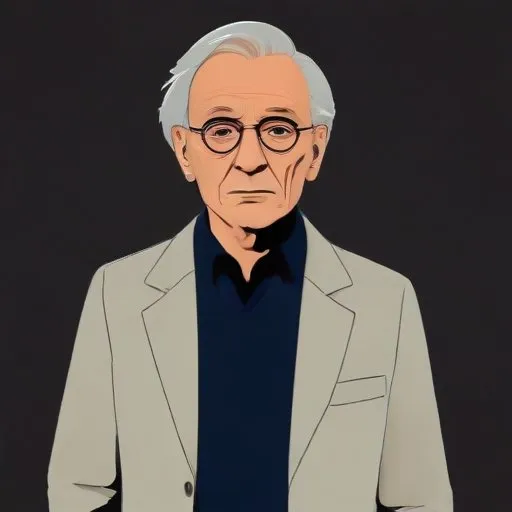
A pioneering filmmaker known for his avant-garde and experimental approach to cinema, creating visually stunning and emotionally charged works that explored the human condition.
Werner Schroeter, the German film director, screenwriter, and opera director, is renowned for his stylistic excess, defying categorization, and pushing the boundaries of avant-garde and art cinema. His unwavering commitment to artistic expression led to a distinctive body of work that continues to inspire and provoke audiences worldwide.
Schroeter's journey began in 1967, when he started creating underground films, amassing a devoted cult following and making his mark on the international festival circuit. His feature debut, Eika Katappa, showcased his unique blend of pop and opera, setting the tone for a career that would consistently challenge conventions.
Schroeter's creative process was often influenced by his muses, particularly Magdalena Montezuma, a German underground star who appeared in many of his films until her untimely death in 1985. Other notable actors, such as Bulle Ogier, Carole Bouquet, and Isabelle Huppert, also lent their talents to his projects, resulting in some of his most iconic works.
Schroeter's innovative approach to filmmaking led to the creation of some of his most provocative works, including The Bomber Pilot 70, Salome 71, and Macbeth 71. These films, often produced by the experimental department of the German public-service station, showcased his ability to merge bold narrative choices with unapologetic artistic expression.
The 1970s marked a significant turning point in Schroeter's career, as he began to focus on more plot-driven films, exemplified by The Reign of Naples. This critically acclaimed work demonstrated his capacity to balance artistic vision with commercial appeal, solidifying his position as a master of his craft.
Beyond his directorial accomplishments, Schroeter worked as a producer, cinematographer, editor, and actor, appearing in several films by his friend and fellow filmmaker, Rainer Werner Fassbinder. This versatility further underscores his significance as a cinematic innovator, unafraid to venture beyond the boundaries of traditional filmmaking roles.
Werner Schroeter's impact on German cinema, as acknowledged by Rainer Werner Fassbinder, is a testament to his unwavering dedication to artistic expression. As a true original, Schroeter's work continues to inspire generations of filmmakers, ensuring his influence will be felt for years to come.
Werner Schroeter's cinematic legacy serves as a testament to the power of artistic vision, defying categorization and inspiring generations of creative minds. As a true pioneer, his impact on the world of film will continue to be felt for years to come.
"It is much more radical to play with the content than with the aesthetics of the image."
"The era of independence is over. Our society has not fulfilled the promises hoped for around 1967-70."
These quotes, taken from Schroeter's interviews and statements, provide a glimpse into the mind of a true visionary, forever committed to pushing the boundaries of cinematic storytelling.
81 Years Old
A prolific filmmaker who explored themes of social inequality, identity, and human relationships through his provocative and emotionally charged movies, leaving an indelible mark on New German Cinema.
80 Years Old
A renowned filmmaker acclaimed for his poignant and visually stunning works that often explore the human condition, particularly in the context of identity, culture, and social change.
87 Years Old
German New Wave pioneer behind films like "The Tin Drum" and "Death of a Salesman", known for adapting literary classics into cinematic masterpieces.
84 Years Old
A pioneering female filmmaker who has made significant contributions to German New Wave cinema, known for her thought-provoking and emotionally charged films that explore the human condition.
93 Years Old
A pioneering filmmaker known for experimental, avant-garde works that challenge traditional narrative structures and explore the relationship between sound and image. His films often focus on the human condition, politics, and social issues.
85 Years Old
A pioneering female filmmaker who broke ground in the New German Cinema movement, known for her provocative and lyrical films that explored themes of identity, history, and social change.
